How a new AI agent is transitioning from solving elite competition problems to independently conquering open mathematical conjectures.
- The Leap to Professional Research: While AI recently achieved a gold-medal standard at the International Mathematical Olympiad, moving from self-contained contest problems to open research requires synthesizing vast literature and overcoming model hallucinations.
- Introducing Aletheia: A novel AI math research agent powered by GeminiDeepThink uses iterative generation, natural language verification, and an inference-time scaling law to solve complex problems end-to-end.
- A Collaborative Future: Having already produced publication-grade papers and solved open conjectures, AI is evolving into an essential, collaborative tool designed to enhance—not replace—the modern mathematician.
Recent years have witnessed a breathtaking acceleration in the reasoning capabilities of natural language-based artificial intelligence. Nowhere is this more evident than in the realm of competition mathematics. By 2025, AI models reached a monumental milestone: achieving gold-medal performance at the International Mathematical Olympiad (IMO), widely regarded as the world’s most prestigious and demanding math competition. Yet, this remarkable triumph immediately begs a deeper, fundamental question regarding the future of AI-driven scientific discovery. If artificial intelligence can conquer the world’s toughest math contests, can it autonomously discover, formulate, and rigorously prove entirely new mathematical theorems?
Transitioning from competition mathematics to professional, frontier-level research presents immense and unique challenges. Contest problems, no matter how profoundly difficult, are inherently self-contained puzzles with known solutions. Professional research, on the other hand, is an open-ended expedition. It requires synthesizing highly advanced, often esoteric techniques from an extensive, continuously evolving body of academic literature. Historically, this leap has posed a significant hurdle for foundation and large language models. Constrained by a scarcity of highly specialized training data, these models often exhibit only a superficial understanding of advanced topics and are prone to confidently hallucinating incorrect mathematical logic.
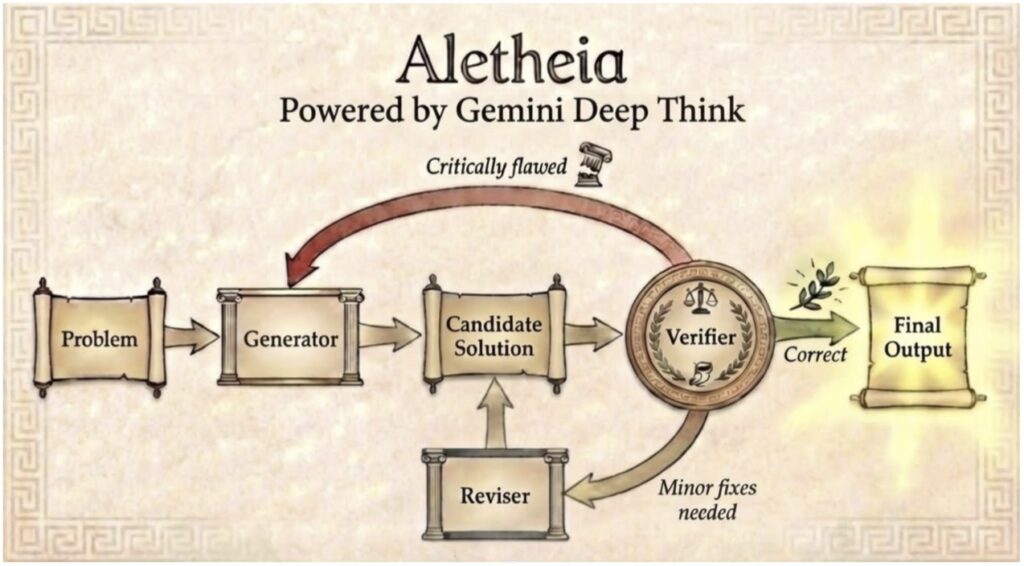
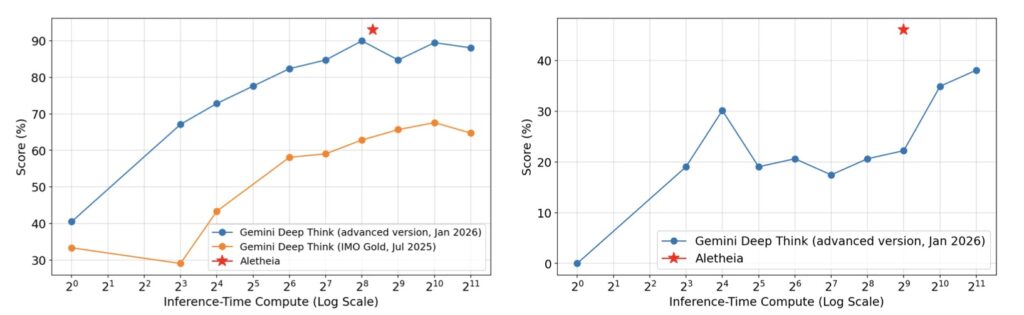
To bridge this formidable gap, researchers have developed Aletheia, a specialized math research agent designed specifically for the rigors of autonomous discovery. Unlike standard conversational models, Aletheia operates by iteratively generating, verifying, and meticulously revising its own mathematical solutions end-to-end in natural language. This breakthrough is driven by a novel inference-time scaling law built upon the GeminiDeepThink architecture. By combining advanced generation capabilities with rigorous internal fact-checking, Aletheia transforms raw computational power into structured, reliable mathematical deduction.
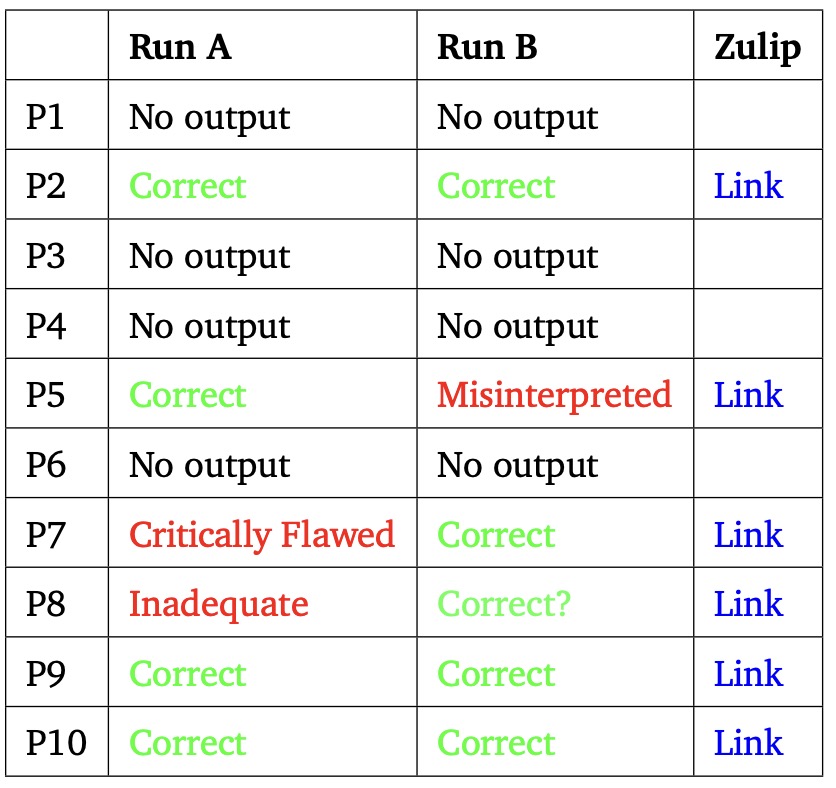
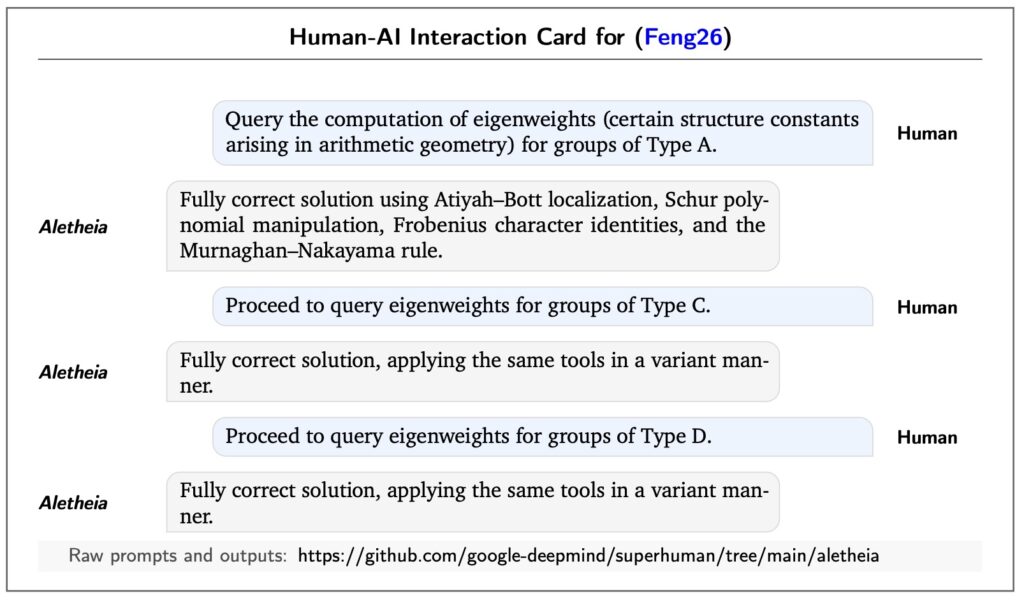
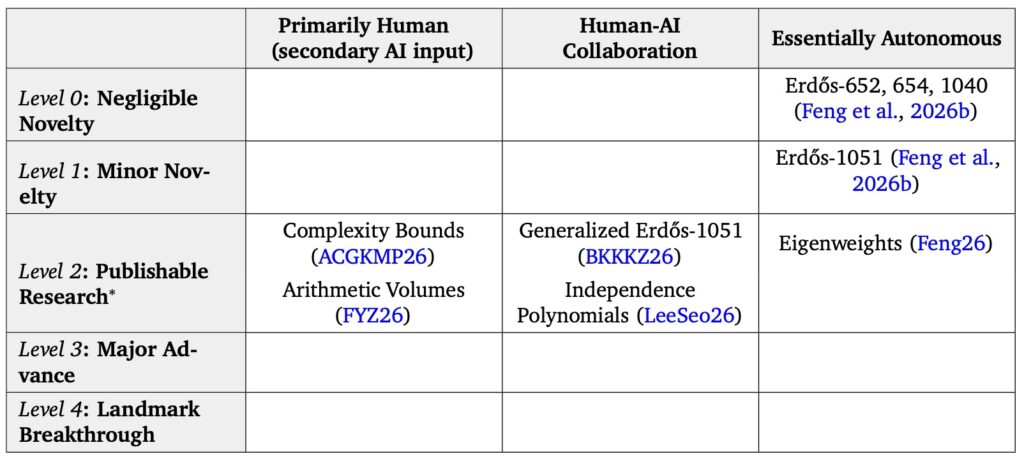
The capabilities of this new system have already been demonstrated through a series of unprecedented milestones in autonomous mathematics research. Most notably, Aletheia has generated multiple publication-grade academic papers, including one landmark paper produced entirely without human intervention. Furthermore, in an extensive semi-autonomous evaluation involving 700 open problems from Bloom’s Erdős Conjectures database, the agent successfully engineered autonomous solutions to four previously unsolved open questions. Aletheia has also achieved leading performance on FirstProof, a rigorous benchmark of research-level problems proposed by leading mathematicians specifically to assess the frontier capabilities of artificial intelligence.
The goal of developing systems like Aletheia is not to render human mathematicians obsolete, but rather to forge a powerful new paradigm of collaboration. Currently, standard natural language models still struggle to reason reliably without human oversight to correct subtle mistakes, while formal, code-based verification systems lack the intuition required to even formulate the most interesting questions on the research frontier. By introducing specialized math reasoning agents that incorporate informal, natural language verification, we are equipping mathematicians with an extraordinary new tool. AI is poised to become a tireless research partner, helping human minds navigate the complexities of modern mathematics and accelerating the pace of scientific discovery.