
Labelled a “supply chain risk” and facing hundreds of millions in lost revenue, the AI giant is fighting back against what it calls an “unlawful” attack on its business and principles.
- Unprecedented Designation: Anthropic has filed a federal lawsuit against the Trump administration after the Pentagon blacklisted the company as a “supply chain risk”—a severe designation historically reserved for foreign adversaries.
- An Ethical Clash: The rift ignited over contract negotiations; the Department of Defense demanded unfettered access to Anthropic’s AI, while the company insisted on guardrails prohibiting its use in fully autonomous weapons and domestic mass surveillance.
- Massive Financial Fallout: The blacklisting threatens to wipe out hundreds of millions of dollars in near-term revenue, prompting Anthropic to seek immediate judicial relief to save both its government and commercial contracts.
In a dramatic escalation of a brewing conflict between Silicon Valley’s ethical frameworks and Washington’s military ambitions, artificial intelligence leader Anthropic sued the Trump administration on Monday. Filed in the U.S. District Court for the Northern District of California, the lawsuit seeks to reverse a sudden and severe Pentagon blacklisting that has cast the American AI developer as a national security threat.
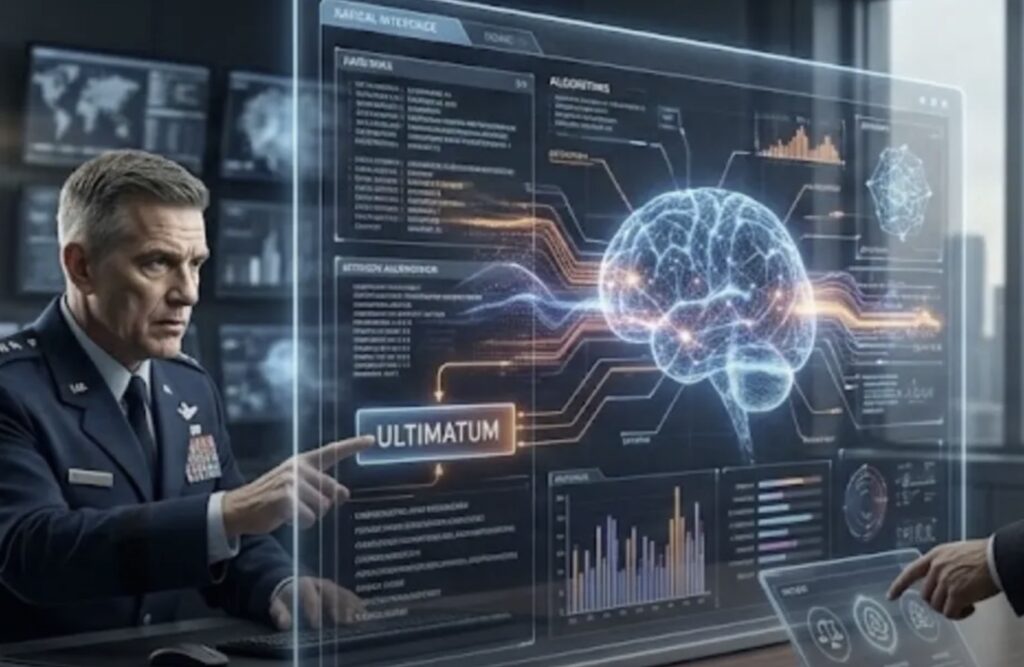
The lawsuit is the culmination of a tense, two-week saga that transformed Anthropic from a trusted early partner in the government’s technological modernization efforts into an exiled contractor. Just months ago, in July, Anthropic signed a landmark $200 million contract with the Department of Defense (DOD), becoming the first AI lab to deploy its cutting-edge technology across the agency’s highly classified networks.
The partnership fractured when it came time to renegotiate the terms of that agreement. According to the unfolding narrative, the DOD demanded unfettered access to Anthropic’s AI models for all lawful purposes. Anthropic balked, seeking concrete assurances that its technology would not be utilized for fully autonomous weapons or domestic mass surveillance.
The administration’s response to this ideological standoff was swift and decisive. On Thursday, Anthropic confirmed it had been officially designated a “supply chain risk.” This extraordinary administrative maneuver effectively forces defense vendors and contractors to certify they do not use Anthropic’s models in their Pentagon-related work. President Donald Trump amplified the freeze last month, taking to social media to direct federal agencies to “immediately cease” all use of Anthropic’s technology.
“WE will decide the fate of our Country — NOT some out-of-control, Radical Left AI company run by people who have no idea what the real World is all about,” the President wrote, signaling a stark ideological divide between the administration and the tech firm.

The financial and reputational damage to Anthropic has been immediate. In its legal complaint, the company notes that federal contracts are already being canceled and that its commercial agreements are now in jeopardy, threatening “hundreds of millions of dollars in the near-term.” Beyond the economic hemorrhage, Anthropic argues that its core First Amendment freedoms are under attack and that the government’s actions are “unprecedented and unlawful.”
Despite the sweeping ban, the practical realities of modern warfare have created a stark irony: Anthropic’s models are reportedly still actively supporting U.S. military operations in Iran.
To combat the blacklist, Anthropic is fighting a multi-front legal battle. In addition to the California lawsuit asking the court to vacate the supply chain risk designation and grant a stay, the company has separately filed for a formal review of the DOD’s determination in the U.S. Court of Appeals in Washington D.C. The legal action names over a dozen federal agencies as defendants, including the DOD, the Treasury Department, the State Department, and the General Services Administration. (A DOD spokesperson declined to comment, citing ongoing litigation).
“Seeking judicial review does not change our longstanding commitment to harnessing AI to protect our national security, but this is a necessary step to protect our business, our customers, and our partners,” an Anthropic spokesperson stated on Monday, emphasizing a desire to continue dialogue with the government.
This lawsuit represents much more than a contract dispute; it is a bellwether case for the future of artificial intelligence in the public sector. As the complaint ominously warns: “The consequences of this case are enormous. Defendants are seeking to destroy the economic value created by one of the world’s fastest-growing private companies, which is a leader in responsibly developing an emergent technology of vital significance to our Nation.”