
A Tennessee woman spent nearly six months behind bars for crimes committed 1,200 miles away, raising urgent alarms about the unchecked use of facial recognition in law enforcement.
- A Devastating Glitch: Angela Lipps, a 50-year-old grandmother from Tennessee, was wrongfully imprisoned for nearly six months after facial recognition software falsely linked her to a bank fraud scheme in North Dakota—a state she had never visited.
- Irreparable Losses: While held without bail and fighting extradition, Lipps lost her home, her car, and her dog, only to be cleared on Christmas Eve when basic financial records proved her whereabouts.
- A Growing Systemic Threat: Marking the eighth documented wrongful arrest in the U.S. tied to AI facial recognition, Lipps’ ordeal highlights the severe, life-altering dangers of relying on algorithmic matches without rigorous human verification.
The nightmare began on a quiet summer day, July 14, while fifty-year-old Angela Lipps was babysitting four children. Without warning, a team of U.S. Marshals descended on her Tennessee home, arresting the grandmother of five at gunpoint. She was swiftly booked into her local county jail, classified as a fugitive from justice wanted in a state she had never set foot in: North Dakota.
“It was so scary, I can still see it in my head, over and over again,” Lipps recalled. Her arrest was the terrifying culmination of an investigation entirely misdirected by a line of code, underscoring a growing crisis at the intersection of criminal justice and artificial intelligence.

The Algorithmic Accusation
The chain of events that upended Lipps’ life began in April and May of 2025, roughly 1,200 miles away in Fargo, North Dakota. Detectives were investigating a sophisticated, organized bank fraud scheme where a female suspect used a fake U.S. Army military ID to withdraw tens of thousands of dollars from various bank accounts.
To identify the woman caught on surveillance footage, Fargo police turned to facial recognition software. The algorithm returned a match, pointing authorities to Lipps. Court documents reveal that the lead detective subsequently reviewed Lipps’ social media accounts and her Tennessee driver’s license photo. Based on facial features, body type, hairstyle, and hair color, the detective concluded they had their suspect. Strikingly, investigators in Fargo never attempted to contact Lipps prior to seeking criminal charges.
Lipps, whose travel history was strictly limited to neighboring states within driving distance, was bewildered. “I’ve never been to North Dakota, I don’t know anyone from North Dakota,” she said, noting she had never even been on an airplane. Yet, she was formally charged with four counts of unauthorized use of personal identifying information and four counts of theft.
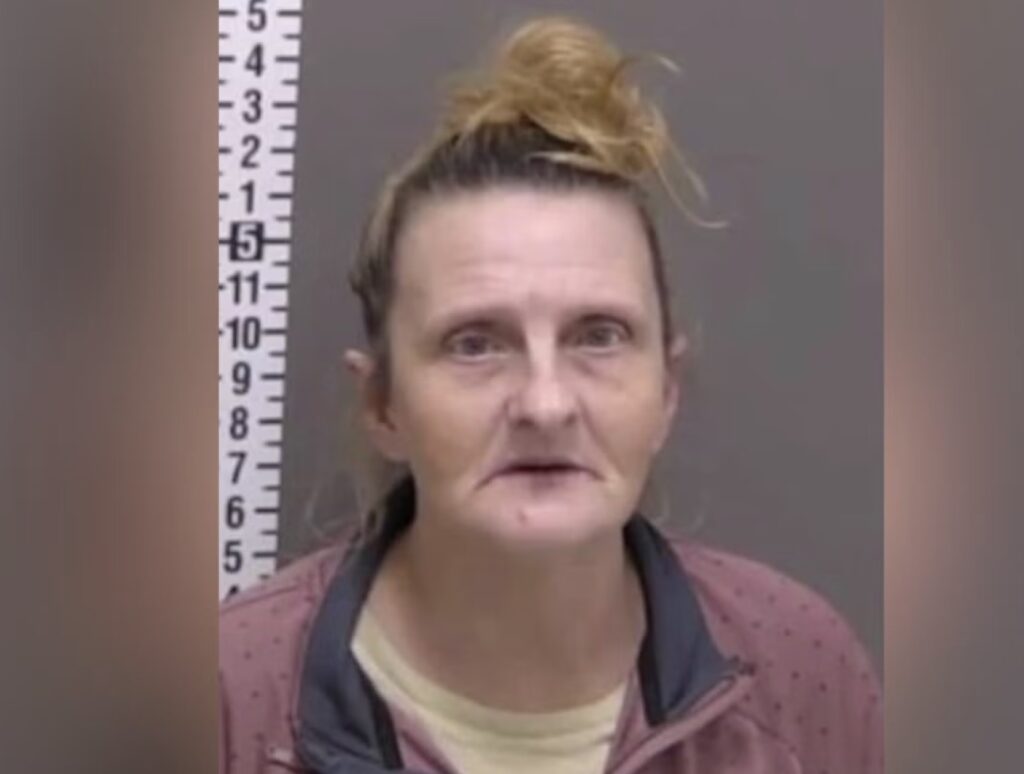
The Cost of a False Positive
Because she was labeled an out-of-state fugitive, Lipps was held without bail. She languished in a Tennessee jail cell for 108 days—nearly four months—while extradition proceedings slowly played out. During this agonizing period, her life on the outside systematically collapsed. Unable to pay her bills, she lost her home, her car, and her dog.
On October 30, she was picked up from the Tennessee facility and transported to Fargo. She appeared in a North Dakota courtroom the very next day. It was there that her court-appointed attorney, Jay Greenwood, began untangling the digital error with simple, undeniable paper trails.
Greenwood obtained Lipps’ financial records, which provided an airtight alibi, proving she was in Tennessee living a remarkably ordinary life at the exact moments the high-stakes fraud was occurring in Fargo.
“Around the same time she’s depositing Social Security checks … she is buying cigarettes at a gas station, around the same time, she is buying a pizza, she is using a cash app to buy an Uber Eats,” Greenwood explained, exposing the glaring holes in the prosecution’s algorithm-driven case.

A Cold Reality and a Broader Warning
Despite the mounting evidence of her innocence, Fargo police did not interview Lipps until December 19 at the Cass County Jail. Five days later, on Christmas Eve, prosecutors finally dismissed the case, and Lipps was released.
However, her sudden freedom brought a new kind of crisis. Lipps was released in the dead of a North Dakota winter, thousands of miles from her family, wearing only the clothes she had been arrested in months prior. “I had my summer clothes on, no coat, it was so cold outside, snow on the ground, scared, I wanted out, but I didn’t know what I was going to do, how I was going to get home,” she said.
Fortunately, the local legal community stepped in where the justice system had failed. Local defense attorneys provided Lipps with money for a hotel room and food for the holidays. Adam Martin, founder of the Fargo-based F5 Project, personally drove her to Chicago so she could finally make her way home to Tennessee.
Today, the bank fraud investigation in Fargo remains open, and no actual arrests have been made. The Fargo Police Department has not issued an apology to Lipps for the ordeal. “I’m just glad it’s over,” Lipps stated. “I’ll never go back to North Dakota.”
Lipps’ harrowing experience is the eighth documented wrongful arrest in the United States tied directly to facial recognition software. Her story serves as a chilling, broader warning from privacy advocates and legal experts alike: as law enforcement agencies increasingly adopt AI technologies, the lack of human diligence and independent verification can turn a single algorithmic glitch into a life-destroying event.