
The first AI model to build itself marks a turning point in the software lifecycle and the journey toward the technological singularity.
- Self-Evolution Realized: GPT-5.3-Codex is OpenAI’s first model instrumental in its own creation, used by engineers to debug training, manage deployment, and diagnose test results.
- Beyond Code Generation: The model has evolved from a simple programmer into a universal agent capable of handling the entire software lifecycle, including research, UI design, and real-world computer navigation.
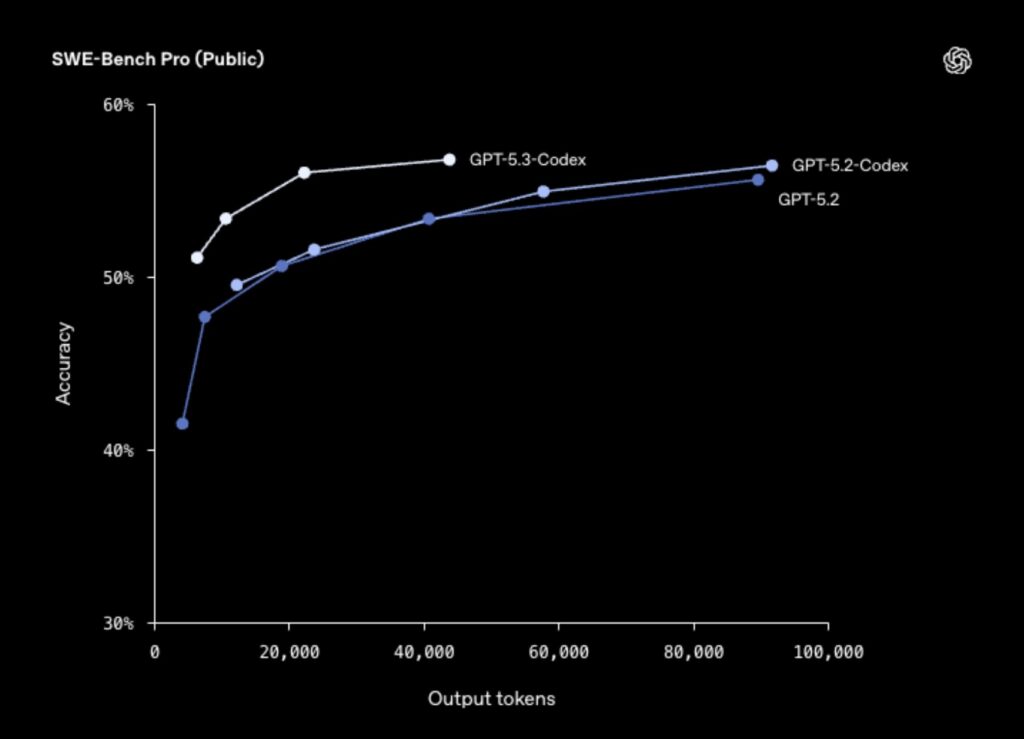
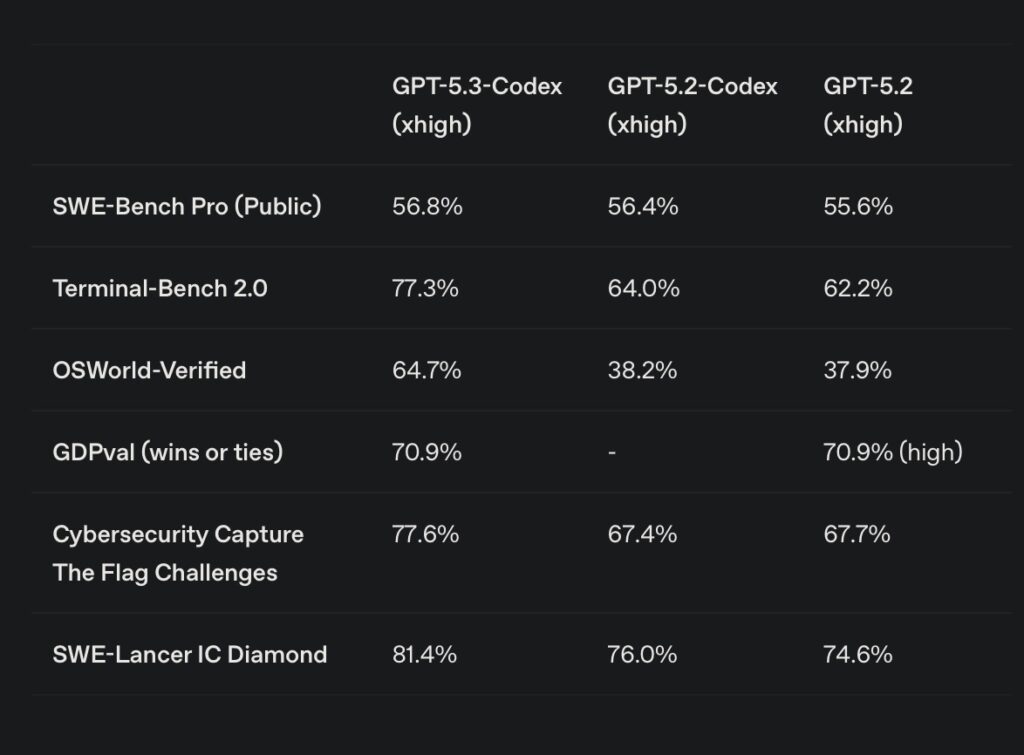
- Unprecedented Efficiency: Operating 25% faster than its predecessors, the model achieves new industry highs in benchmarks like SWE-Bench Pro while utilizing fewer tokens to produce complex, production-ready applications.
The landscape of software development shifted permanently today as OpenAI announced the release of GPT-5.3-Codex. While the tech world is accustomed to incremental updates, this release is fundamentally different. GPT-5.3-Codex isn’t just a tool built by humans to write code; it is a model that played a “key role in its own birth.” By using early versions of the model to refine its own training and optimize its infrastructure, OpenAI has moved closer to the “technological singularity”—a tipping point where AI begins to drive its own advancement.
A Universal Agent for the Professional Spectrum
GPT-5.3-Codex represents a leap from a specialized coding assistant to a universal technical agent. It merges the high-frontier coding performance of previous iterations with the advanced reasoning and professional knowledge found in the GPT-5.2 series. This fusion allows the AI to act as a digital colleague rather than a static script generator. It understands complete repositories, navigates visual desktop environments via the OSWorld benchmark, and can execute long-term tasks that require autonomous research and tool usage.
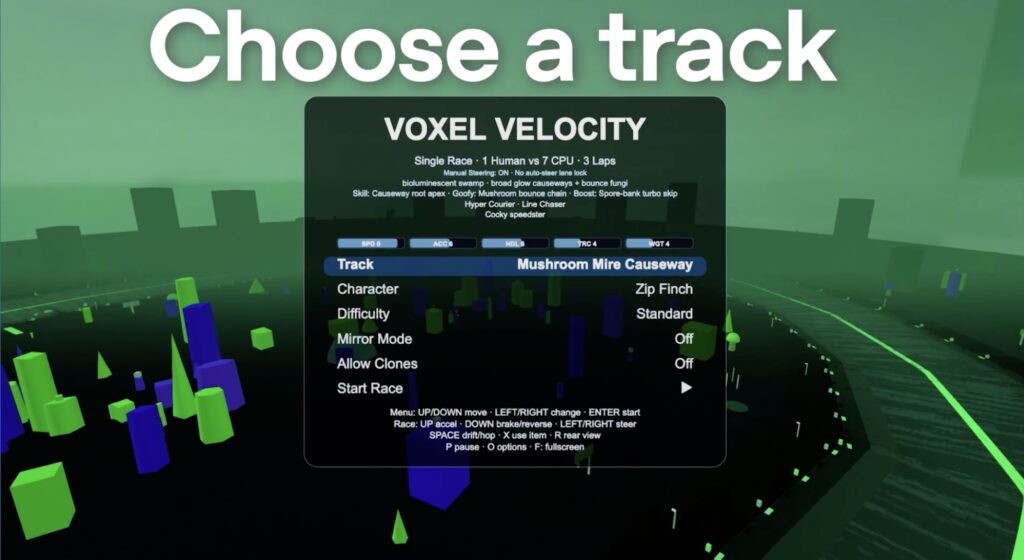
The practical results are striking. In internal tests, the model was tasked with creating complex web games and applications from scratch. Unlike previous versions that required step-by-step guidance, GPT-5.3-Codex iterated autonomously over millions of tokens, fixing bugs and enhancing features without losing context. For professionals, this means the AI can now handle daily tasks like creating landing pages with “reasonable defaults”—automatically calculating discounts or building interactive UI elements—that feel production-ready from the first prompt.
The AI That Built Itself
Perhaps the most significant revelation in OpenAI’s announcement is the role the model played in its own development. The Codex team utilized early versions of GPT-5.3 to debug training runs, identify context-rendering errors, and dynamically scale GPU clusters to handle traffic. This meta-application of AI has fundamentally changed the workflow at OpenAI, with researchers reporting that their daily tasks are unrecognizable compared to just months ago.
This trend isn’t isolated. Anthropic, OpenAI’s chief rival, recently released Claude Opus 4.6 and made similar claims regarding AI-assisted development. This suggests an industry-wide shift where the bottleneck of human engineering is being bypassed by the very systems being engineered.
Security in the Age of Autonomous Agents
With great power comes a renewed focus on “Cyber Frontier” security. GPT-5.3-Codex is the first model classified as “highly capable” for cybersecurity tasks under OpenAI’s Preparedness Framework. It has been specifically trained to identify software vulnerabilities, a double-edged sword that OpenAI is managing through its new “Trusted Access for Cyber Defense” program.
To ensure the ecosystem remains resilient, OpenAI is allocating $10 million in API credits to accelerate defensive research and providing free codebase scanning for critical open-source projects. This proactive stance aims to ensure that as AI becomes better at finding exploits, the defenders have the superior tools to patch them first.
Availability and the Path Forward
GPT-5.3-Codex is currently available through ChatGPT’s paid plans and across the Codex platform, including the desktop app, terminal, and IDE extensions. Optimized for NVIDIA’s GB200 NVL72 systems, the model provides a 25% speed increase, allowing for real-time, interactive collaboration where users can direct the agent as it works.
As we look toward the future, the distinction between “writing code” and “using a computer” is blurring. GPT-5.3-Codex is no longer just a window into a language model; it is a foundation for a future where AI can reason, create, and execute across the entire spectrum of human technical activity.