
By combining advanced artificial intelligence with historic lunar samples, Chinese researchers have created the first high-precision chemical map of the Moon’s elusive far side, shedding new light on its ancient geological history.
- Historic Data Meets Modern Tech: The 2024 Chang’e-6 mission returned over 4 lbs of the first-ever physical samples from the lunar far side, which scientists combined with machine learning to analyze previously unmapped terrain.
- A First-of-Its-Kind Map: Researchers generated the first high-precision global distribution map of six major element oxides, revealing the deep compositional differences between the Moon’s near and far sides.
- Validating Ancient Theories: The breakthrough findings offer crucial evidence for early lunar evolution—including an unevenly cooling global magma ocean—while paving the way for future mission planning.
For decades, nearly half of the Moon’s surface has remained a tantalizing mystery. Because the Moon is tidally locked to Earth, its far side permanently faces away from us, making it notoriously difficult to study using traditional remote sensing techniques. While historic missions like Apollo, Luna, and Chang’e-5 successfully mapped the chemistry of the near side, the rugged, crater-pocked terrain of the hidden hemisphere largely kept its chemical secrets. Now, the convergence of historic space exploration and cutting-edge artificial intelligence is finally cracking the lunar chemical code.
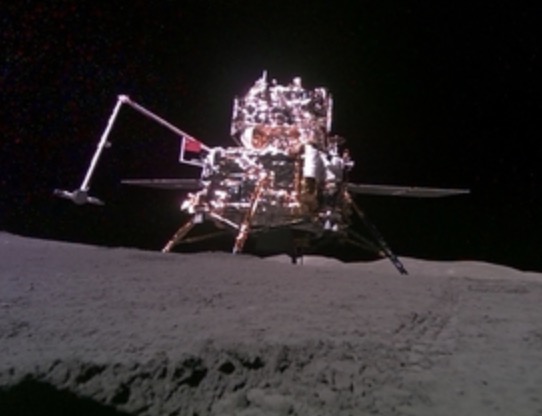
The Chang’e-6 Catalyst
The breakthrough traces back to China’s historic 2024 Chang’e-6 mission. In a monumental first for lunar exploration, the mission successfully retrieved over 4 lbs of material from the South Pole–Aitken basin—the Moon’s largest and oldest known impact crater, spanning approximately 1,550 miles across the far side.
Armed with these unprecedented physical samples, a team of researchers led by the Shanghai Institute of Technical Physics (SITP)—an affiliate of the Chinese Academy of Sciences—teamed up with peers from Tongji University and several other Chinese institutes. Their goal was ambitious: to extrapolate the data from these physical samples across the entire unmapped hemisphere.
An “AI Plus Remote Sensing” Approach
To bridge the gap between isolated physical samples and global mapping, the researchers developed an innovative system that trained an AI model on a wealth of spectral and geological data. By feeding the AI the new Chang’e-6 measurements, existing near-side sample data, and high-resolution imagery from Japan’s Kaguya multiband imager, the team taught the system to decode how sunlight reflecting off the lunar surface relates to the underlying mineral makeup.
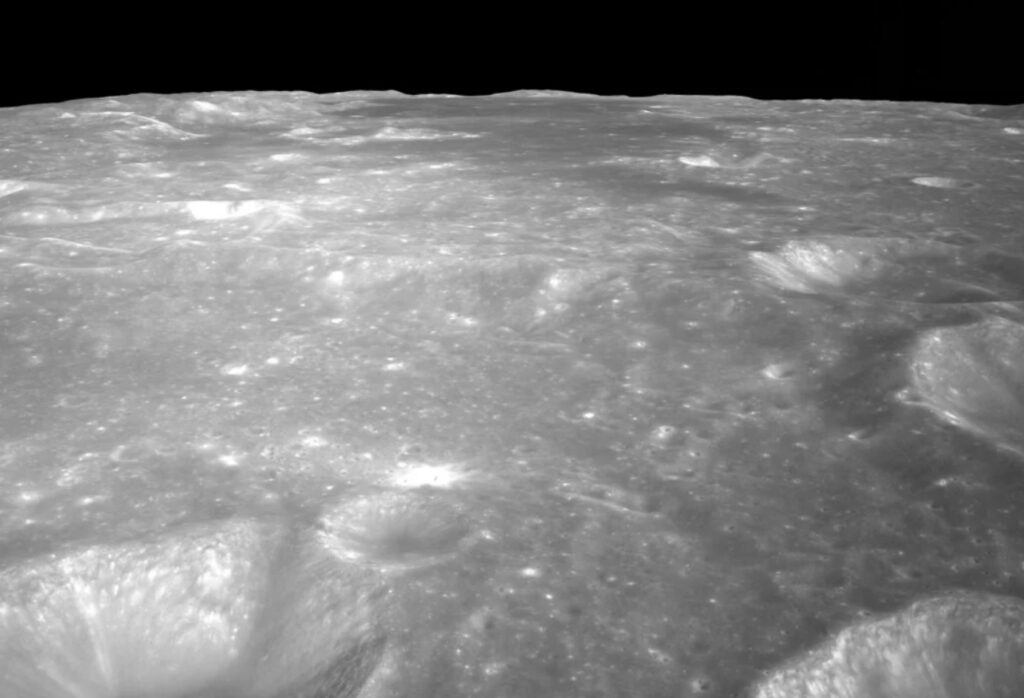
The AI model successfully inferred the chemical composition of vast swaths of uncharted territory, culminating in the creation of the first high-precision global distribution map of the Moon. This map accurately charts six major element oxides across the lunar surface: iron, titanium, aluminum, magnesium, calcium, and silicon.
Rewriting Lunar History
Beyond just plotting elements on a map, this comprehensive view of the Moon’s surface chemistry is fundamentally shifting our understanding of its geological evolution. The study vividly highlighted the elemental differences across the Moon’s three main chemical provinces:
- The maria (dark, basaltic volcanic plains).
- The highlands (the bright, ancient lunar crust).
- The South Pole–Aitken basin (exposing deep planetary materials).
By analyzing the exposure characteristics of deep materials in the South Pole-Aitken basin and the compositional patterns of the far-side terrains, scientists are finding strong evidence to support long-standing theories of lunar evolution. Specifically, the chemical disparities between the near and far sides point to the ancient existence of an early global magma ocean. As this ocean cooled unevenly billions of years ago, it left behind distinct variations in crust formation, mantle composition, and volcanic activity that permanently divided the two hemispheres.
As humanity looks toward the next frontier of space exploration, these insights are more than just a look into the past; they are a roadmap for the future. Researchers note that these high-precision maps will serve as an invaluable guide for selecting optimal landing sites and planning future lunar exploration missions. By finally illuminating the “dark side” of the Moon, AI has proven to be just as vital a tool for space exploration as the rockets that get us there.