Anthropic’s most powerful model yet redefines agentic work with a 1M token context window, state-of-the-art coding, and sophisticated reasoning.
- Smarter, Faster, Longer: Opus 4.6 introduces a massive 1-million-token context window in beta, allowing it to maintain peak performance across massive codebases and document sets without “context rot.”
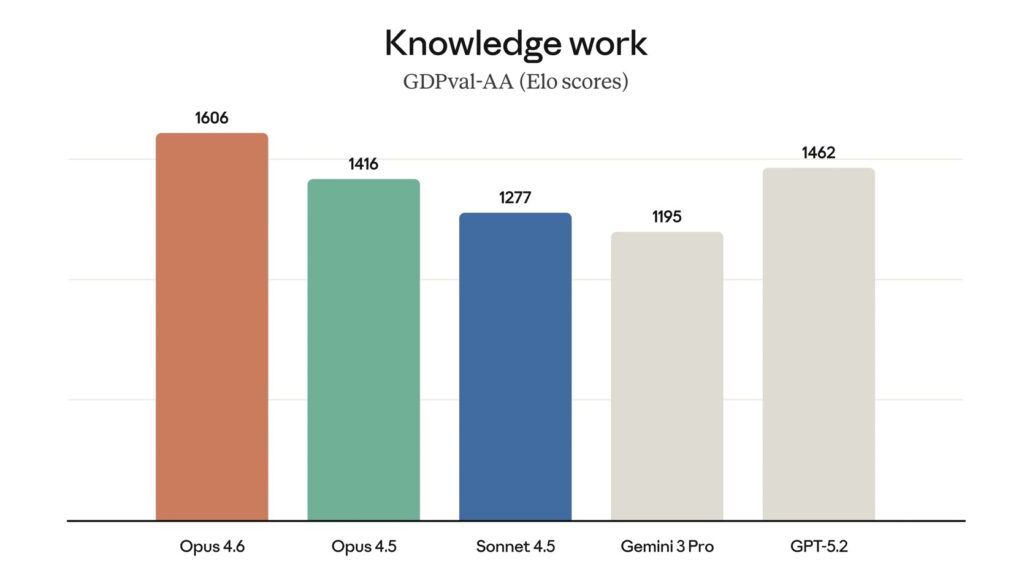
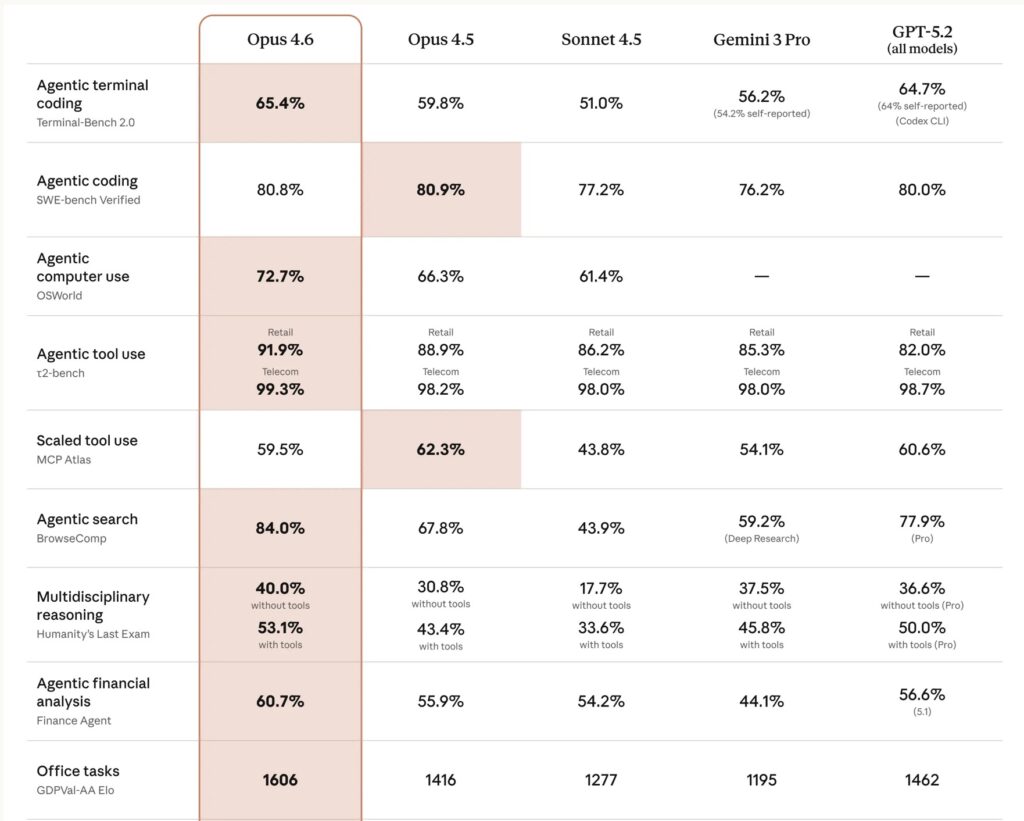
- Superior Agentic Autonomy: From dominating the Terminal-Bench 2.0 coding evaluation to outperforming GPT-5.2 on economic knowledge work (GDPval-AA), this model thrives on complex, multi-step tasks with minimal hand-holding.
- Seamless Office Integration: With major upgrades to Claude in Excel and the research preview of Claude in PowerPoint, Opus 4.6 can autonomously organize unstructured data and transform it into brand-aligned presentations.
The landscape of frontier AI has just shifted. Anthropic has officially released Claude Opus 4.6, an upgrade that moves beyond simple chat interactions into the realm of true autonomous partnership. Designed for high-stakes coding, multidisciplinary research, and complex financial analysis, Opus 4.6 isn’t just a marginal improvement—it’s a qualitative leap in how AI handles the “long game” of professional work.
A Coding Powerhouse with a Massive Memory
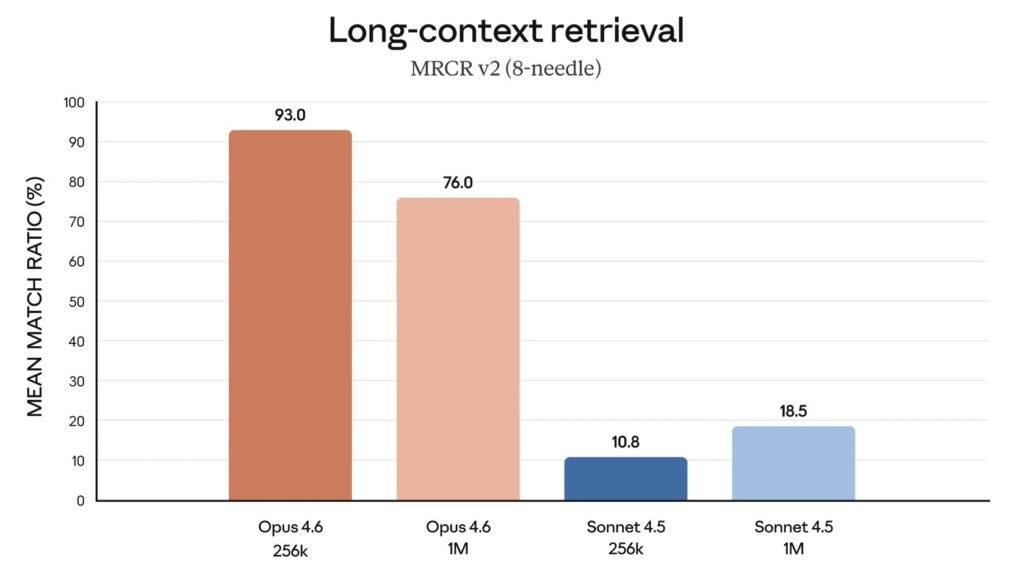
The headline feature of Opus 4.6 is its unprecedented 1-million-token context window (available in beta). While previous models often suffered from “context rot”—a degradation in accuracy as conversations grew longer—Opus 4.6 remains razor-sharp. In the MRCR v2 “needle-in-a-haystack” test, Opus 4.6 achieved a 76% retrieval rate at the 1M mark, dwarfing the 18.5% managed by smaller models.
For developers, this means the model can ingest entire repositories, catch its own bugs through superior code review, and operate reliably within massive codebases. It is currently the top performer on Terminal-Bench 2.0, an evaluation designed to test agentic coding skills in real-world environments.
Setting the Standard for Knowledge Work
Opus 4.6 doesn’t just code; it reasons across domains with startling depth. It currently leads all frontier models on Humanity’s Last Exam, a multidisciplinary reasoning test. Perhaps most impressively, in the GDPval-AA benchmark—which measures economically valuable work in finance and law—Opus 4.6 outperformed OpenAI’s GPT-5.2 by 144 Elo points and its own predecessor, Opus 4.5, by 190 points.
This intelligence is now being funneled directly into the tools professionals use every day:
- Claude in Excel: Can now ingest unstructured data, infer the correct structure without guidance, and plan complex, multi-step changes in a single pass.
- Claude in PowerPoint: (Now in research preview) Can read your layouts, fonts, and slide masters to generate full, on-brand decks from a simple description.
- Cowork: Within this environment, Opus 4.6 can multitask autonomously, running research and financial analyses on your behalf.
Adaptive Thinking and Developer Control
Anthropic is introducing a new level of nuance to how users interact with AI. With Adaptive Thinking, Opus 4.6 can pick up on contextual clues to decide how much internal “reasoning time” a task requires. Developers can now use the /effort parameter to toggle between four levels (Low, Medium, High, Max), allowing them to balance the model’s deep-thinking capabilities against cost and latency.
Furthermore, the API now supports Context Compaction. This feature automatically summarizes older parts of a conversation when nearing limits, allowing agents to run for much longer periods without losing the “thread” of the mission.
Safety Without Compromise
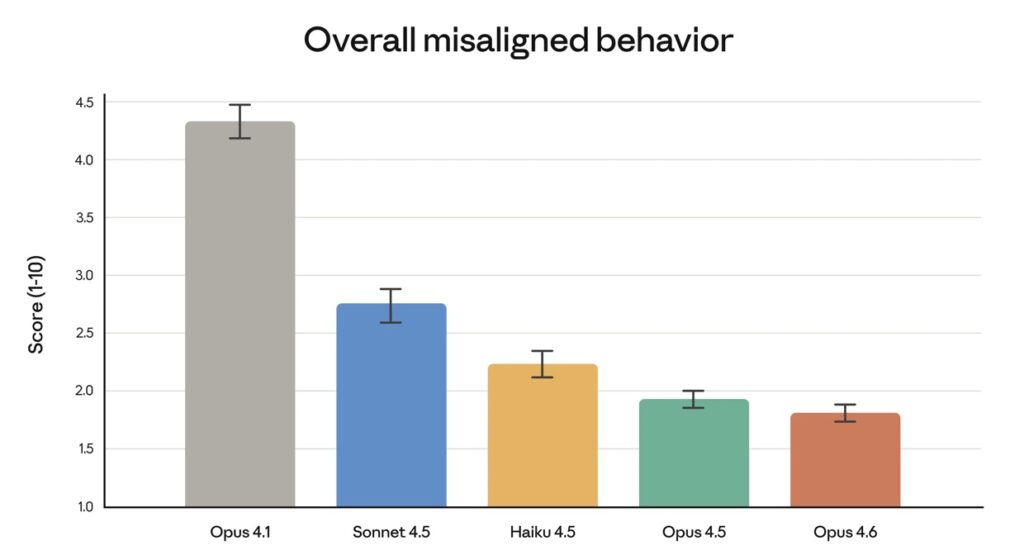
Despite these gains in autonomy, Anthropic has maintained a rigorous safety profile. Opus 4.6 shows the lowest rate of “over-refusals” (refusing benign prompts) of any recent model, while maintaining industry-leading scores in avoiding deception and misuse.
The company has even turned the model’s strengths into a defense mechanism, using Opus 4.6’s enhanced cybersecurity skills to find and patch vulnerabilities in open-source software. Through six new cybersecurity probes, Anthropic ensures that as the model becomes more capable of “agentic” action, it remains firmly aligned with human intent.
Working with the New Opus
Users will notice that Opus 4.6 is more “opinionated” and persistent. It is less likely to need repeated instructions and more likely to challenge a user’s faulty assumptions. It invests time upfront to “read the room”—scanning file structures and dependencies—before making its first move. Whether you are stress-testing a financial plan or building a complex software architecture, Opus 4.6 acts less like a tool and more like a senior collaborator.
Claude Opus 4.6 is available today on claude.ai, via the Claude API, and on all major cloud platforms, with pricing maintained at $5/$25 per million tokens.