

Reframing the Future of Work from “Sudden Displacement” to “Gradual Transformation”
- Dispelling the “Crashing Wave”: New MIT research suggests AI is not a sudden, sector-clearing event but a “rising tide” that lifts automation levels broadly and gradually across all industries.
- The “Good Enough” Gap: While AI may handle up to 95% of text tasks by 2029, a significant gap remains between “minimally acceptable” work and the high-quality, reliable output required for professional deployment.
- Human-in-the-Loop Necessity: Success rates vary wildly—from 73% in maintenance admin to only 47% in legal work—proving that human judgment, precision, and strategic guidance remain irreplaceable.
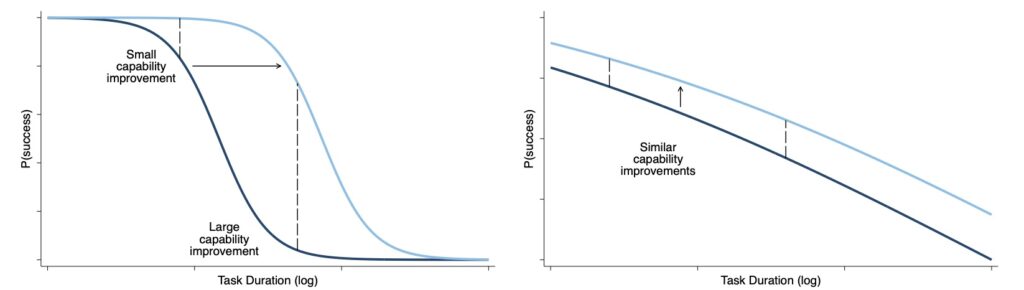
For years, the prevailing narrative surrounding Artificial Intelligence has been one of an impending “employment cliff.” Visionaries and skeptics alike have warned of a “crashing wave” of automation—a sudden, violent surge where AI capabilities abruptly overtake human tasks, leaving specific sectors decimated overnight. However, a landmark study from MIT’s Computer Science and Artificial Intelligence Laboratory (CSAIL) suggests we are looking at the wrong metaphor. According to the research, AI is behaving less like a tsunami and more like a rising tide.
Measuring Real-World Utility
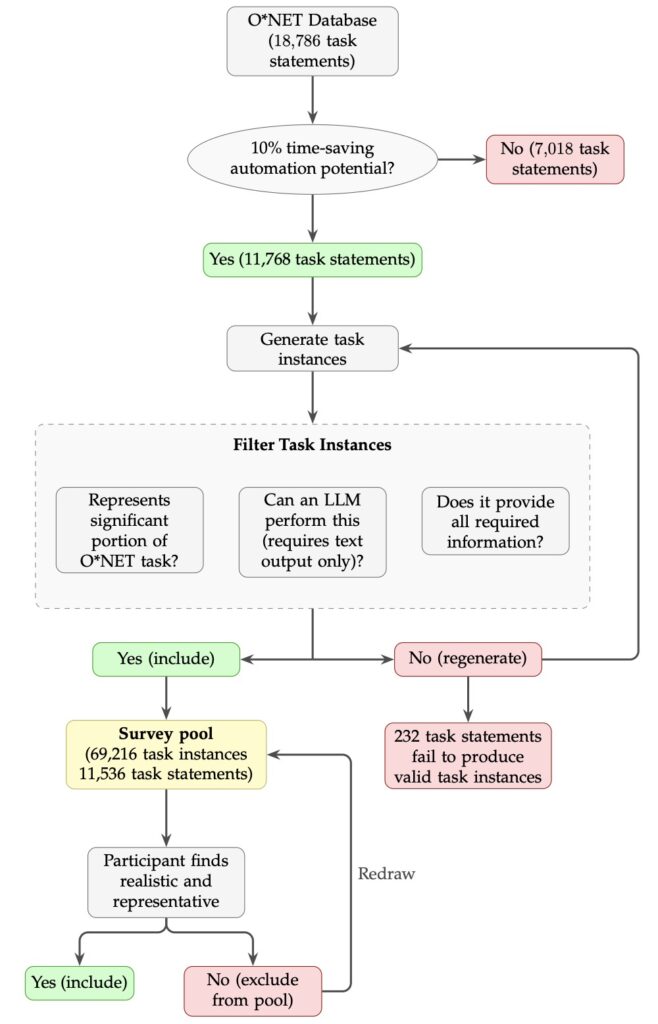
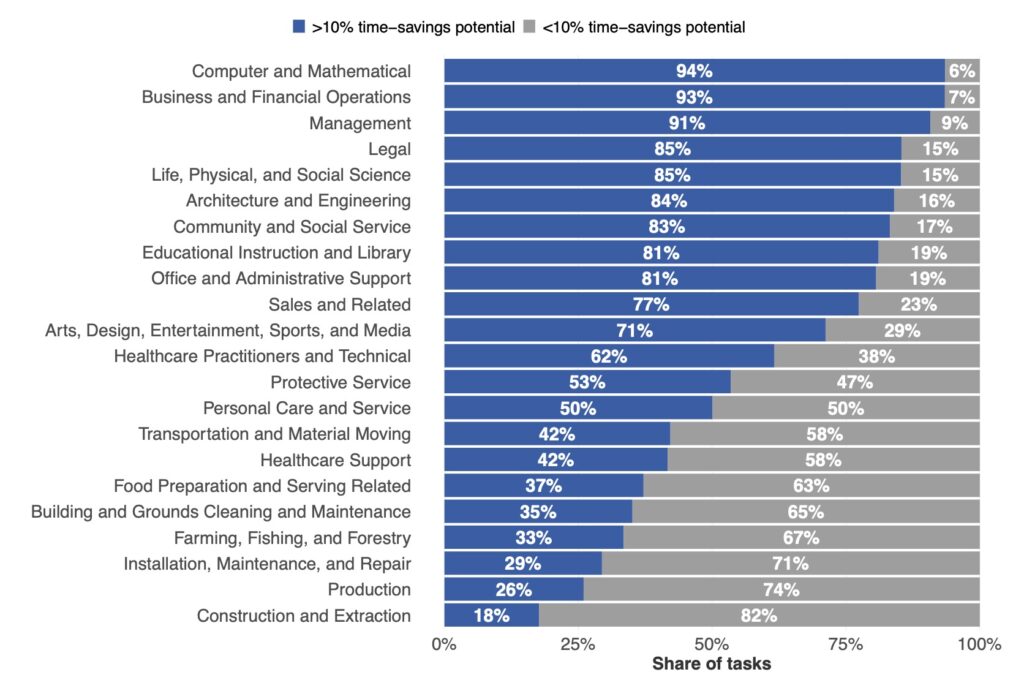
Instead of relying on abstract benchmarks, MIT researchers took a “boots-on-the-ground” approach. They identified 11,500 tasks from the U.S. Labor Department’s database and tested them against over 40 AI models using workplace-style prompts. Most importantly, they didn’t just ask if the AI could do the work; they had over 17,000 real-world workers evaluate whether the AI-generated outputs were “good enough” to use without edits.
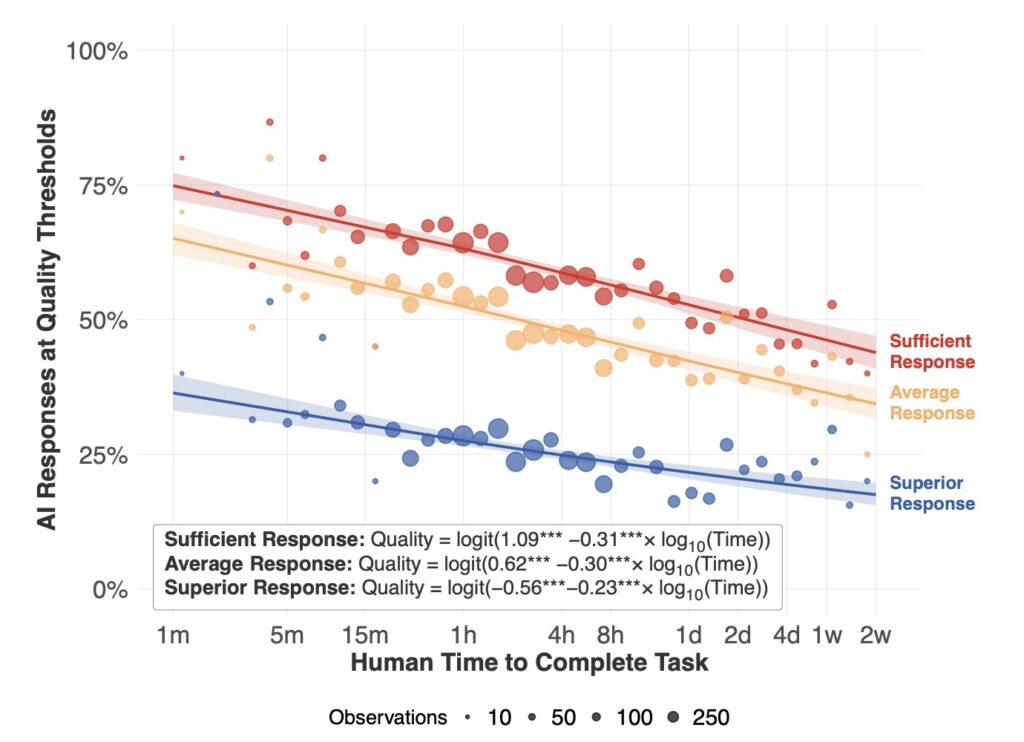
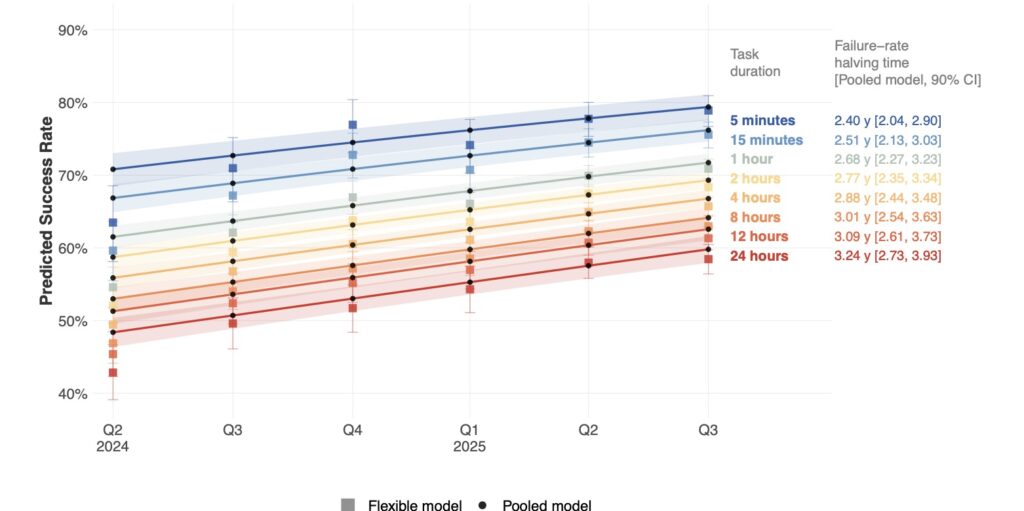
The results reveal a steady, broad-based climb in capability. In 2024, AI models could successfully complete about 50% of text-based tasks at a minimally acceptable level. By 2025, that number is expected to hit 65%. If trends continue, AI could handle between 80% and 95% of these tasks by 2029. While these numbers seem staggering, they come with a major caveat: “minimally acceptable” is a far cry from “professional grade.”
The Precision Problem
The study highlights a critical “reliability gap” that continues to stall full-scale AI adoption. While an AI can draft a memo or brainstorm a marketing slogan, it often falters when the stakes are high. High-profile failures, such as Deloitte’s error-riddled AI report or Klarna’s recent pullback from AI-led customer service, underscore that high-quality, error-free work remains a human-dominated domain.
This disparity is best seen when zooming in on specific industries. In legal work, where precision and strategic judgment are paramount, AI has a success rate of only 47%. Conversely, in maintenance and repair, the success rate jumps to 73%—not because robots are fixing pipes, but because AI is highly effective at the administrative “scaffolding” of manual labor, such as troubleshooting and documentation.
A Buffer for Adaptation
The “rising tide” model offers a sliver of hope for the global workforce. Because the progress is horizontal—lifting performance slightly across a vast range of tasks rather than perfecting a few—workers are less likely to be “blindsided” by a sudden loss of relevance. This flatter relationship between task success and task duration gives organizations and individuals a crucial window of several years to adapt.
However, the researchers warn against complacency. Even a rising tide can be disruptive if it moves quickly enough. We are currently seeing “AI-washing,” where companies blame layoffs on technology to mask broader restructuring. While 10% of job cuts in February were linked to AI, we have yet to see the mass “apocalypse” many predicted.
The Bottom Line
The MIT study shifts the debate from when jobs will disappear to how tasks will shift. The transition to an AI-integrated economy will be a marathon of integration rather than a sprint to replacement. For now, the “human-in-the-loop” isn’t just a safety preference—it’s a functional requirement. AI is not replacing the worker today; it is gradually, and sometimes clumsily, redefining what it means to work.