

From seamless background orchestration to a self-writing plugin ecosystem, how the experience of millions of users shaped the next generation of AI coding.
- A Unified, Always-On Architecture: OpenCode 2.0 introduces a default background service and a powerful new SDK, allowing any client—from web interfaces to custom server environments—to seamlessly connect, autodiscover tools, and collaborate.
- Next-Level Agent Orchestration: With a lightweight JavaScript interpreter for efficient single-round-trip tool execution and robust asynchronous background subagents, complex workflows are no longer blocked by heavy sequential processing.
- A Self-Extending Plugin Ecosystem: Built on an architecture of over 80 internal plugins, the new system supports immediate hot-reloading, allowing the AI to write, integrate, and execute custom plugins for itself mid-session.
The landscape of artificial intelligence is rapidly evolving from simple conversational bots to autonomous, action-driven agents. Recognizing this shift, OpenCode 2.0 has been engineered from the ground up as a major overhaul, drawing directly on the daily experiences and friction points of millions of users. The result is a highly flexible, intelligent system designed to morph into whatever kind of agent a developer needs. By reimagining its core infrastructure, API, and tool integration, OpenCode 2.0 transcends the limitations of traditional AI assistants, offering a comprehensive suite of performance improvements, bug fixes, and deeply impactful user-facing features that redefine the coding experience.
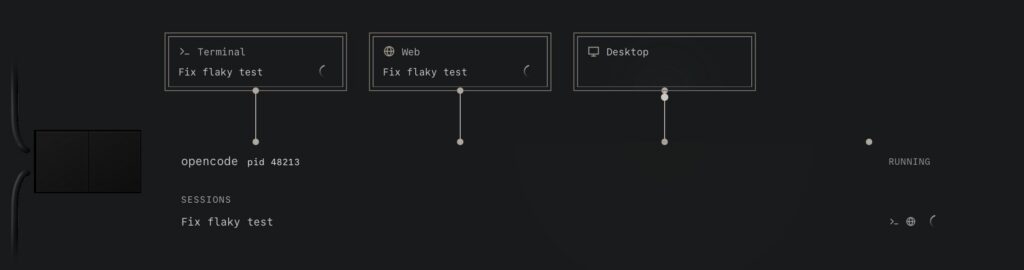
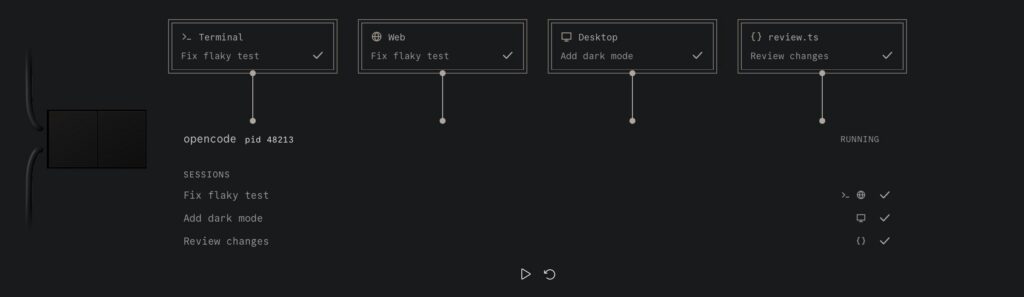
At the heart of this transformation is a fundamental shift in how the software operates. While OpenCode always supported a client/server model, it was previously relegated to power users. In version 2.0, the server automatically runs as a single background process on your local machine. Whether you are opening a terminal user interface (TUI), a web interface, or the upcoming native desktop app, every client talks to this same central engine. This unified approach vastly simplifies automation. Programmatic clients using @opencode/client can now autodiscover the local service instantly, making it incredibly effective for scheduled tasks or automated CLI interactions via opencode api commands. Furthermore, this service can be exposed to other hosts using the /pair or opencode pair commands, laying the groundwork for collaborative, multi-application agent workflows.
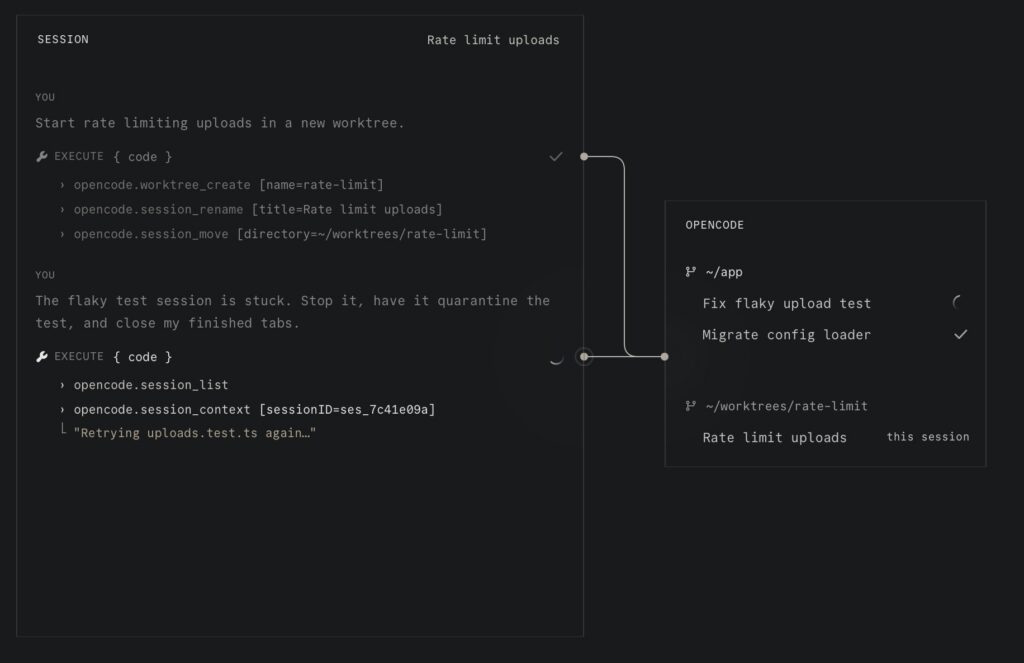
Complementing this new architecture is a completely overhauled API. The original API grew haphazardly as the industry collectively discovered what AI agents should actually do. To fix this, the development team started from scratch, meticulously examining the myriad of unusual use cases generated by users every day. The result is a robust framework that supports virtually any required action. Notably, OpenCode is now self-aware of its own API; it can call its own functions to perform useful repository management, such as automatically moving a current session into a new Git worktree when initiating fresh work.
Because modern language models excel at writing code, OpenCode 2.0 capitalizes on this capability through a revolutionary feature known as Code Mode. Powered by the @opencode/codemode package, the system features a custom, minimal JavaScript interpreter. This interpreter can ingest Model Context Protocol (MCP) servers or OpenAPI endpoints and convert them into functions the agent can natively call within a script. By avoiding the heavy complexity of Node.js VMs or embedded engines like QuickJS, agents can execute complex logic—like calling a tool, mapping over the results, and passing them to another tool—in a single round trip rather than a slow, sequential crawl. Because all MCP servers are opted into Code Mode by default, developers can add thousands of external tools with minimal context window bloat, leaving the agent to dynamically discover and compose them to get things done.
This efficiency is further amplified by advanced background orchestration capabilities. Modern models are exceptionally good at delegating tasks, and OpenCode 2.0 harnesses this by introducing background subagents and asynchronous shell commands. A primary agent can now seamlessly kick off parallel work—such as spawning a background “fable” subagent to review a specific piece of code using an entirely different model—while you continue to prompt the main thread. Similarly, long-running shell commands will no longer block your workflow; the agent simply receives a notification when the task is complete. If a foreground task unexpectedly drags on, a quick hotkey instantly pushes it to the background, keeping the user in a state of uninterrupted flow.
To ensure the platform remains infinitely extensible, the plugin system has been completely revitalized. Acknowledging that the 1.0 plugin architecture lacked attention, the team forced themselves to implement nearly every feature of OpenCode 2.0 as an internal plugin. With over 80 internal plugins currently driving the system, the Plugin API is guaranteed to remain robust and strictly maintained. TUI plugins, powered by OpenTUI, have been promoted from experimental to stable, unlocking limitless customization for terminal users. Most impressively, the entire system is built to be hot-reloaded. This means you can literally ask OpenCode to build a custom plugin for you mid-session, and it will write the code, load it, and begin using its new capabilities immediately without ever needing a restart.