
From Pong to Phobos: How biological computing is turning the “Can it run Doom?” meme into a scientific milestone.
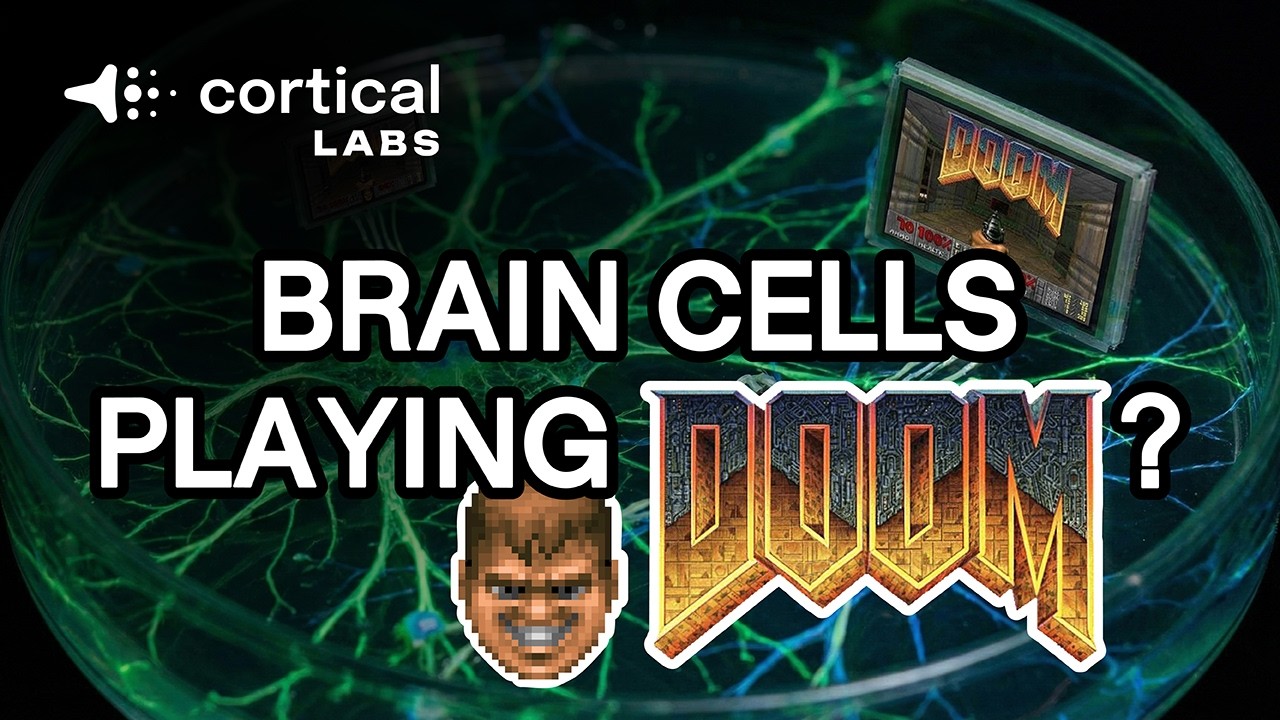
- Biological Integration: Researchers at Cortical Labs have successfully interfaced approximately 200,000 living human neurons with a silicon chip (the CL1), allowing the cells to “see” and interact with the 1993 cult classic Doom.
- Adaptive Learning: Unlike traditional static code, these neurons use reinforcement learning to navigate 3D environments, locate enemies, and fire weapons, proving that lab-grown brain cells can exhibit goal-directed behavior.
- The Future of AI: While still “dying a lot,” this biocomputer reached its current performance level faster than some silicon-based machine learning systems, signaling a new era of hybrid organic-digital technologies.
A New Kind of Resident Evil
In the world of computing, there is an unwritten law: if it has a screen and a processor, someone will try to make it run Doom. We have seen the iconic demon-slayer ported to calculators, tractors, and even ATM machines. However, Australian biotech firm Cortical Labs has just shattered the hardware ceiling by moving the game from the motherboard to the “meat-ware.”
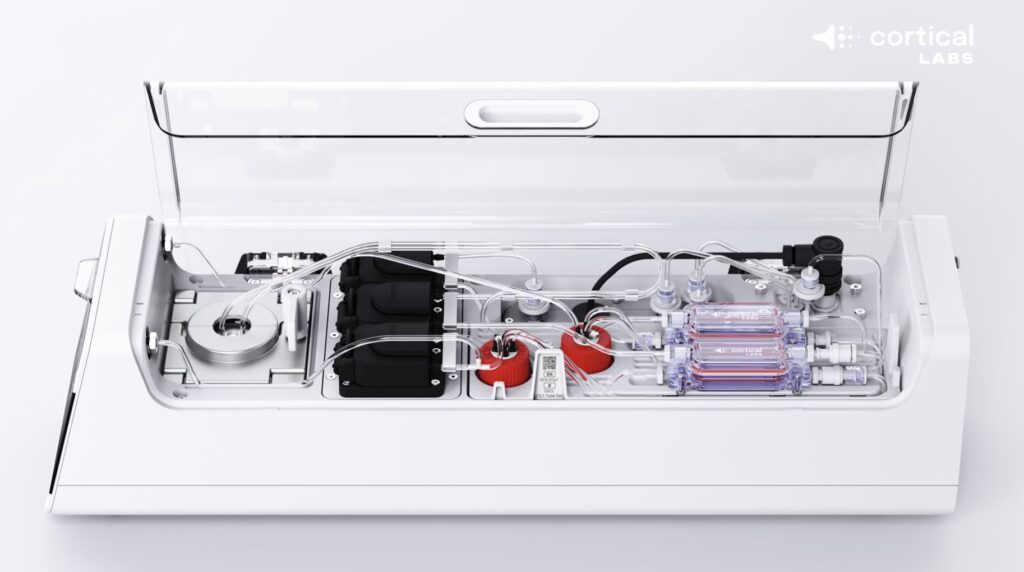
By wiring a clump of living human neurons onto a microelectrode array, they have created the CL1, a biological computer that literally thinks its way through the corridors of Mars. This isn’t just a gimmick; it is a profound demonstration of adaptive, real-time goal-directed learning—a feat that bridges the gap between raw biology and digital processing.

Silicon Meets Synapse
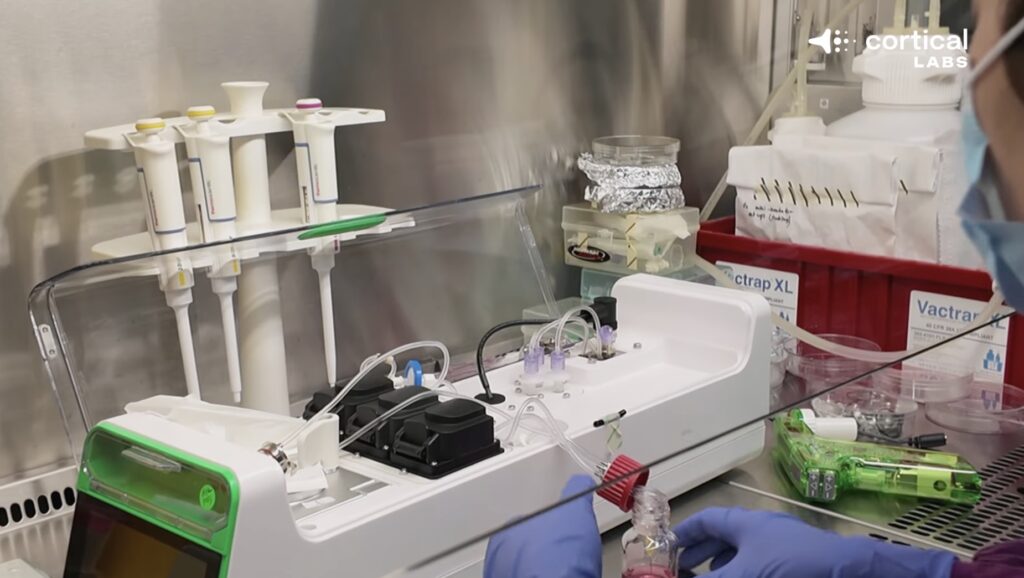
The setup sounds like something out of a science fiction novel. The neurons sit on a specialized chip, submerged in a nutrient bath to keep them alive. To the neurons, the game isn’t a visual experience; it’s a language of electricity. Software translates game events into electrical pulses: if a demon appears on the left, electrodes zap a specific region of the neural culture.
The cells respond by firing back their own electrical spikes. The system interprets these biological signals as commands—move, turn, or fire. Through a process of reinforcement learning, the neurons gradually reorganize their activity based on feedback. If they “die” or miss a target, the structured feedback nudges the network to adapt, effectively teaching a dish of cells that actions have consequences.
Beyond the Bouncing Ball
This breakthrough builds on the company’s 2022 success with DishBrain, an earlier iteration that made headlines by playing Pong. While Pong required simple up-and-down coordination, Doom represents a massive leap in complexity. As Cortical Labs scientist Alon Loeffler noted, Pong was a direct input-output relationship. Doom, by contrast, involves a chaotic 3D environment and exploration.
Interestingly, the barrier to entry was lowered by the CL1’s new interface, which allows programmers to interact with the neurons using Python. This allowed independent developer Sean Cole to bridge the gap between the game and the biology in just about a week. While the neurons currently play like a complete beginner—occasionally wandering aimlessly and dying frequently—they are already performing better than systems that fire randomly.
The Dawn of Hybrid Tech
Why go through the trouble of teaching brain cells to shoot pixelated demons? The implications go far beyond gaming. Because biological neurons are inherently designed to be energy-efficient and highly adaptive, they may eventually outperform traditional silicon in specific types of machine learning. Cortical Labs has already noted that their biocomputer reached its current skill level faster than some purely digital AI models.
In the long term, this “biological code” could revolutionize drug research, allowing scientists to see how living neural networks react to medication in real time. It could also lead to organic controllers for robotic limbs or more efficient AI. For now, the “Bio-Slayer” is still finding its footing, but the fact that a cluster of cells can learn to fight back against the legions of Hell is a definitive sign that the future of computing is very much alive.