

Researchers have proven what CEOs already suspect: replacing workers with AI is a competitive necessity that will systematically destroy the consumer economy.
- The Macroeconomic Trap: Cutting costs via AI layoffs creates a lethal Prisoner’s Dilemma. Companies are forced to automate to survive competition, collectively destroying the consumer demand they need to stay in business.
- The Vulnerability Zone: Counterintuitively, the threat is most severe in highly competitive, fragmented industries (like customer support and software services) rather than among Big Tech monopolies.
- The Only Way Out: Mathematical modeling shows that popular safety nets like Universal Basic Income (UBI) and corporate taxes will fail to stop the collapse. Only a targeted Pigouvian “robot tax” can rewrite the incentives driving the arms race.
With over 100,000 tech layoffs in 2025 alone and 80% of the US workforce exposed to AI displacement, the narrative around automation has largely focused on human tragedy versus corporate triumph. We picture displaced workers struggling while tech-enabled megacorporations rake in unprecedented profits.
But a glaringly important game theory paper from researchers at UPenn and Boston University reveals a much darker reality: the corporations aren’t winning either. In fact, they are mathematically trapped in a suicide pact.
The paper, titled The AI Layoff Trap, models a stark economic reality. If AI displaces human workers faster than the economy can reabsorb them, it erodes the very consumer demand that firms depend on to survive. And the terrifying part? Knowing this is happening isn’t enough to stop any single CEO from pulling the trigger.
The Prisoner’s Dilemma of Automation
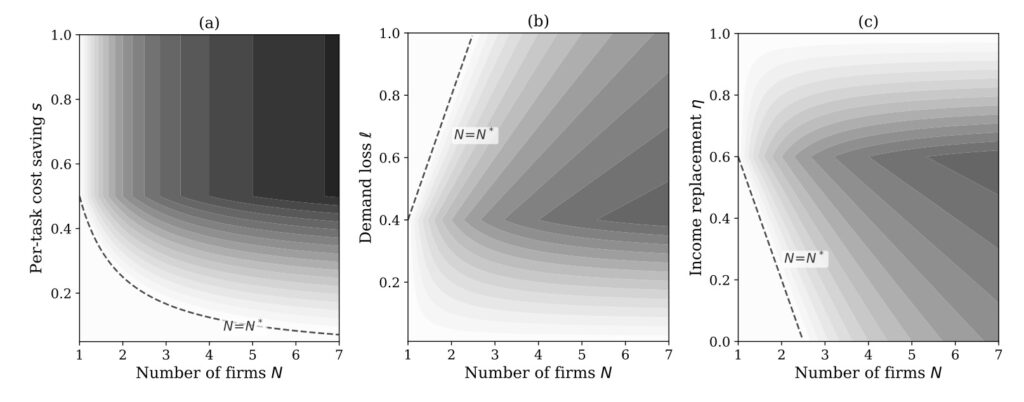
The mechanism driving this collapse is an undeniable demand externality. Every company fires workers to cut overhead. Every fired worker loses their paycheck and stops buying products. Revenue subsequently collapses across every sector, eventually bankrupting the companies that initiated the layoffs.
Yet, no firm can afford to step off the gas.
If Firm A automates and Firm B does not, Firm A can slash prices, dominate the market, and put Firm B out of business in the short term. Therefore, automating is a dominant strategy for both firms. As the researchers note: “Each firm reaps the full savings of replacing its own workers yet bears only a sliver of the demand it destroys; the rest lands on rivals.”
This creates a hyper-accelerated automation arms race. It is a mathematical trap where rational, self-interested decisions at the corporate level lead to collective economic devastation, displacing workers well beyond what is actually optimal for the market.
Where the Cracks Will Show First
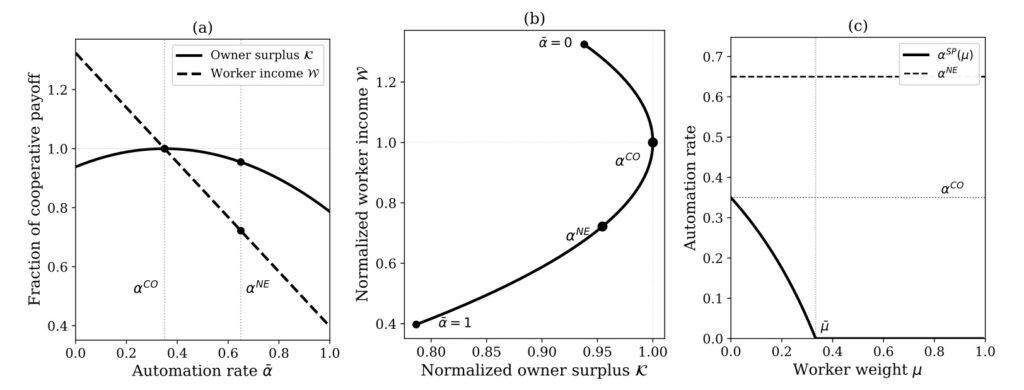
Anthropic CEO Dario Amodei has warned that AI-driven displacement will be “unusually painful,” “much broader,” and “much faster” than previous technological shifts. If reabsorption into new jobs fails to keep pace with these layoffs, the first signs of systemic failure won’t be isolated to standard economic indicators—they will show up as a paradoxical corporate profit collapse.
Standard economic models dictate that cost-reducing technologies should raise profits. However, the UPenn/BU paper predicts a distinct empirical signature of the AI Layoff Trap: profit erosion that coincides with mass layoffs.
The researchers point to three industries where this dynamic is already unfolding:
- Customer Support: Thousands of highly competitive firms are simultaneously swapping human agents for agentic AI.
- Software Services: AI coding tools now allow a single engineer to replace a multi-person development team, drastically shifting headcount-to-output ratios.
- Back-Office Financial Operations: Regulatory transparency makes it easy to watch institutions rapidly adopt AI while simultaneously fighting for a shrinking pool of consumer capital.
The most severe damage won’t necessarily stem from dominant monopolies like Google or Microsoft, but from these highly fragmented, competitive sectors where the pressure to cut costs is absolute.
Why UBI and Retraining Won’t Save Us
The standard policy playbook for the AI revolution is entirely reactive: retrain the workforce, distribute equity, or implement Universal Basic Income (UBI). The paper’s mathematical model proves these are all dead ends.
While UBI might raise living standards and prevent immediate starvation, it does not change a single firm’s baseline incentive to automate. Retraining fails if the speed of AI capability simply outpaces human adaptability. Even collective bargaining is doomed; because automation remains the dominant competitive strategy, no voluntary agreement among firms to hold onto human workers is self-enforcing. Someone will always break the truce to gain a pricing advantage.
The problem isn’t just that firms are profiting at the workers’ expense—it’s that over-automation harms both groups. Correcting it isn’t just about redistributing wealth; it is about eliminating an existential market failure.
The Pigouvian Tax: The Only Mathematical Exit
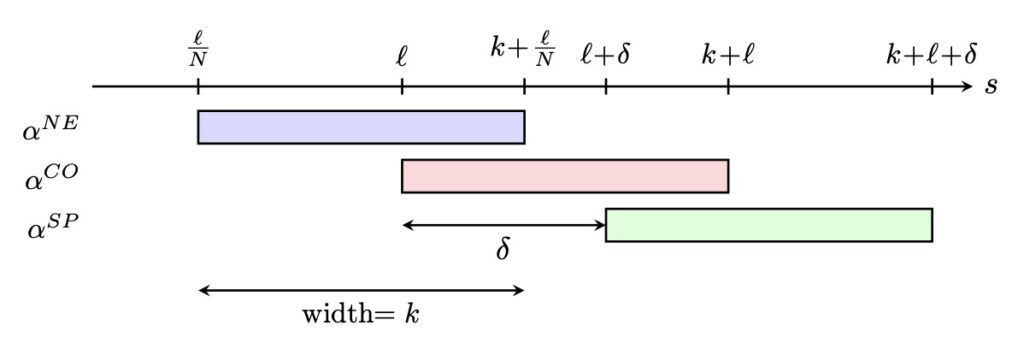
By Tinbergen’s principle, a distinct market failure requires a distinct policy instrument. The researchers found exactly one solution that breaks the math of the AI Layoff Trap: a Pigouvian automation tax.
A Pigouvian tax is designed to penalize negative externalities—much like a carbon tax penalizes pollution. By taxing the act of automation itself, policymakers can artificially alter the corporate calculus, making it less profitable to blindly replace humans. It is the only lever that directly attacks the competitive incentives driving the arms race, rather than just attempting to clean up the aftermath.
Implementing this tax carries a massive practical hurdle. Because the global economy is deeply interconnected, a unilateral “robot tax” enacted by one country would simply push AI adoption offshore. Surviving the AI Layoff Trap won’t just require a radical rethinking of corporate taxation; it will require unprecedented multilateral coordination or strict border-adjustment mechanisms.
The math is settled. The automation arms race is unwinnable for both labor and capital. The only question remaining is whether policymakers will act before the trap snaps shut.