

Google’s new Gemini for Science tools point toward AI systems that help researchers generate, test, and organize scientific ideas, but the strongest evidence still frames them as collaborators that need human validation.
- – Google says Gemini for Science includes experimental prototypes for Hypothesis Generation, Computational Discovery, and Literature Insights.
- – The Hypothesis Generation prototype is built with Co-Scientist, a Gemini-based multi-agent system described in a Nature paper published on May 19, 2026.
- – Nature reports biomedical validations, including acute myeloid leukemia drug candidates validated in vitro, but the paper is still an early-access, unedited manuscript.
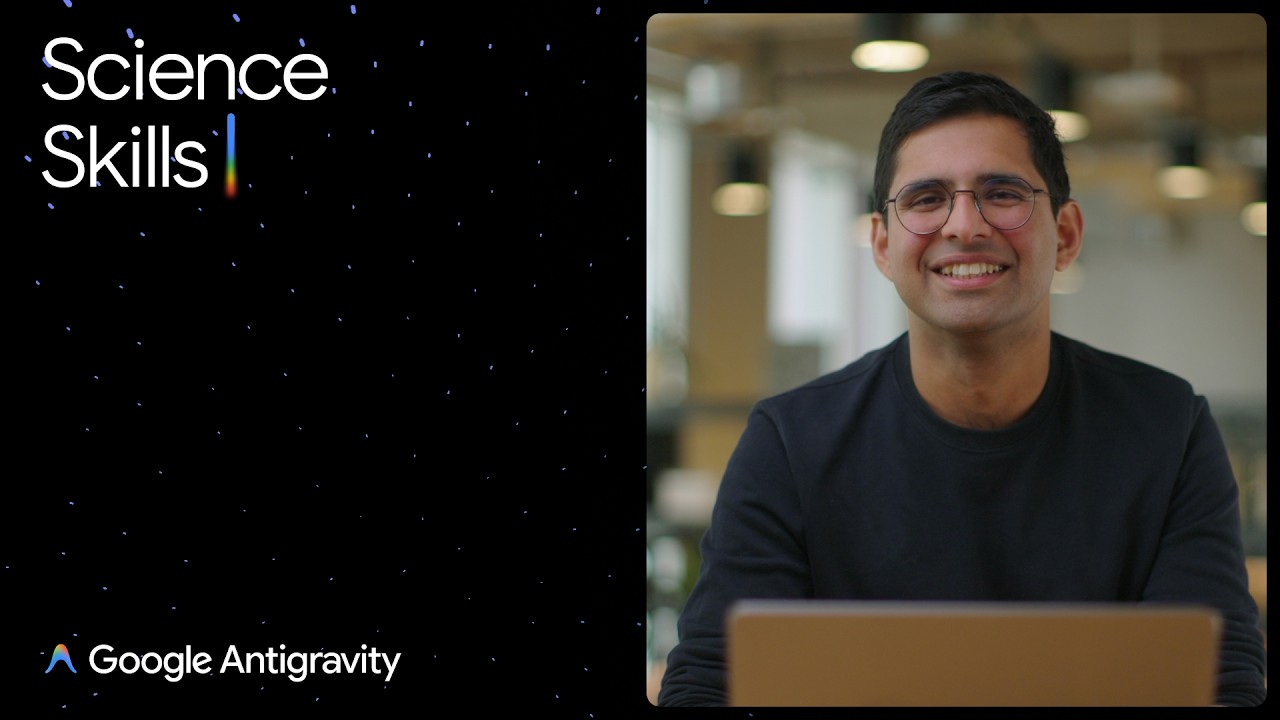
Google is moving Gemini deeper into scientific work with Gemini for Science, a collection of experimental tools meant to help researchers handle core steps of discovery. The announcement matters because it is not just another chatbot wrapper. Google is positioning Gemini as part of a research workbench that can help form hypotheses, run computational exploration, and structure literature review.
The clearest signal is the way Google describes the system. In its announcement, the company says Gemini for Science includes three Google Labs prototypes: Hypothesis Generation, built with Co-Scientist; Computational Discovery, built with AlphaEvolve and ERA; and Literature Insights, built with NotebookLM. Access is not broadly open on day one. Google says it will gradually open access through labs.google/science.
What Gemini for Science actually does
Hypothesis Generation is the most important prototype for readers tracking AI agents. Google says it lets researchers define a research challenge, then uses a multi-agent “idea tournament” to generate, debate, evaluate, and cite hypotheses. That puts the product closer to a structured research partner than a simple answer engine.
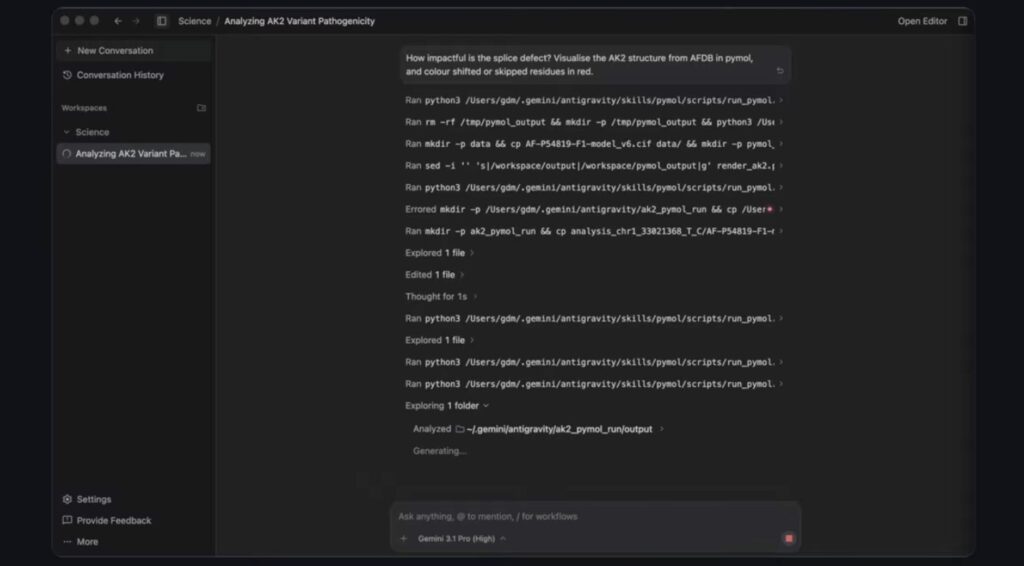
Computational Discovery is aimed at the testing side of science. Google describes it as an agentic research engine that generates and scores thousands of code variations in parallel, with examples such as solar forecasting and epidemiology. That links the new science suite to Google’s broader AlphaEvolve work, a topic Neuronad readers may recognize from our earlier coverage of Google DeepMind AlphaEvolve.
Literature Insights addresses a more familiar bottleneck: reading and comparing papers. Google says the NotebookLM-based prototype searches scientific literature, structures results into tables, supports chat over a curated corpus, and can produce artifacts such as reports, slide decks, infographics, and audio or video overviews.
Why the Nature paper matters
The announcement would be easier to dismiss as product marketing if it stood alone. The stronger support comes from Nature’s Co-Scientist paper, Accelerating scientific discovery with Co-Scientist, published May 19, 2026. The paper describes Co-Scientist as a multi-agent AI system built on Gemini for structured scientific thinking and hypothesis generation.
Nature’s abstract says Co-Scientist formulates research hypotheses conditioned on research objectives and prior evidence. It also describes agents that generate, critique, and refine hypotheses, plus a tournament-style process for improving ideas over time. That makes the paper useful evidence for the article’s central claim: Gemini for Science is about agentic research workflows, not just conversational search.
The validation claims should still be handled carefully. Nature says the team focused validation on three biomedical applications, including drug repurposing, novel target discovery, and mechanisms of antimicrobial resistance. It specifically reports new drug repurposing candidates and synergistic combination therapies for acute myeloid leukemia that were validated through in vitro experiments. That is meaningful lab evidence, but it is not a clinical-readiness claim.

The caveat: collaboration, not replacement
The most important editorial line is restraint. Google’s framing is about tools that help researchers scale parts of the scientific method. Nature’s framing is about augmenting scientists as they generate hypotheses that still require rigorous experimental verification. Neither source supports saying AI replaces scientists, and neither supports saying these systems are clinically ready.
The Nature page also includes an explicit warning: it is providing an unedited manuscript for early access, and the manuscript will undergo further editing before final publication. That caveat belongs in any draft because it limits how far readers should take the findings today.
For Neuronad readers, the practical takeaway is that research agents are becoming more concrete. The same broader shift from chatbots to agents has appeared in recent AI product coverage, including Gemini 3.5 Flash and AI agents. Gemini for Science adds a more specialized version of that trend: AI systems that do not just respond to prompts, but participate in bounded research loops where citations, tests, and human review still matter.
If Google can turn these prototypes into dependable tools, the near-term opportunity is not automated science. It is faster research coordination: better hypothesis triage, faster literature synthesis, and more scalable computational exploration. The hard part remains the same as it has always been in science: proving that an idea survives contact with the real world.