

Frontier-level intelligence, dynamic multi-agent collaboration, and zero single-vendor dependency—all accessible through a single API.
- A Unified Multi-Agent Engine: Sakana Fugu seamlessly coordinates diverse expert models into a single, cohesive system, delivering the power of collective intelligence through one OpenAI-compatible API.
- Uncompromised Frontier Performance: Matching industry titans like Fable 5 and Mythos Preview, Fugu Ultra delivers top-tier scientific, engineering, and reasoning capabilities while circumventing export control restrictions.
- Research-Backed Autonomous Workflows: Built on cutting-edge ICLR 2026 research, Fugu learns the optimal collaboration patterns for complex tasks, excelling in everything from autonomous code reviews and cybersecurity to deep patent analysis.
The artificial intelligence landscape is rapidly shifting. For years, the industry has chased the dream of a single, monolithic super-model capable of mastering every conceivable domain. However, a new paradigm is emerging: collective intelligence. Enter Sakana Fugu, a groundbreaking full multi-agent orchestration system that delivers the vast capabilities of a diverse model ecosystem disguised as a single model API.
By acting as “one model to command them all,” Sakana Fugu shatters the limitations of single-vendor dependency. It dynamically orchestrates the world’s best models to tackle complex, multi-step tasks, allowing organizations to plug a highly efficient digital workforce directly into their existing workflows.
The Science of Dynamic Coordination
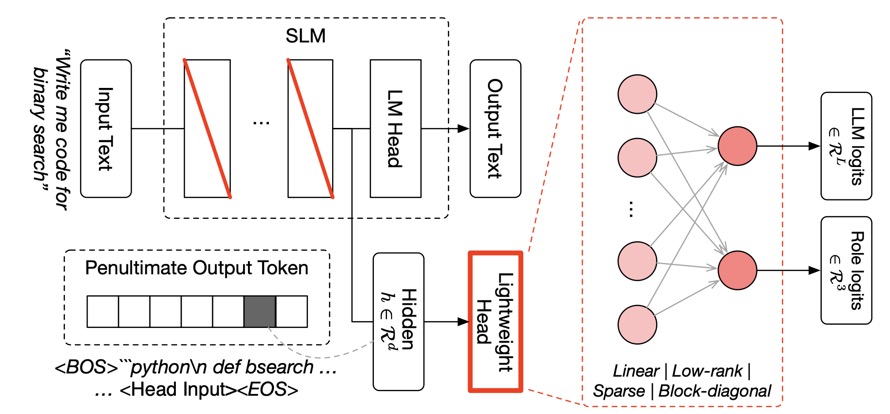
What sets Sakana Fugu apart is not just the models it uses, but how it organizes them. Traditional multi-agent systems often require extensive human oversight, using rigid domain knowledge to prescribe team organization, specific roles, or hand-designed workflows. Sakana Fugu flips this script. It achieves superior performance by dynamically coordinating a diverse pool of powerful agents.
This innovative approach is deeply rooted in academic rigor, grounded in two ICLR 2026 papers on learned model orchestration: TRINITY and the Conductor. Together, these methodologies enable the system to autonomously learn how to assemble, route, and coordinate expert agents for each specific task. The result is a fluid assembly of non-obvious but highly efficient collaboration patterns that adapt instantly to the problem at hand.
Two Models, One Unified API
To accommodate a wide spectrum of workloads, the system is offered in two distinct tiers—Fugu and Fugu Ultra—both accessible via a single, OpenAI-compatible API endpoint. This allows developers to seamlessly switch between models without rewriting their integrations.
Fugu serves as the ideal default for everyday operations. It masterfully balances strong performance with low latency. It is perfect for dropping into tools like Codex for real-time coding and code review, or for powering responsive, highly capable chatbot services. Crucially, it offers granular control: users can opt specific agents out of the active pool to strictly adhere to enterprise data, privacy, and compliance constraints.
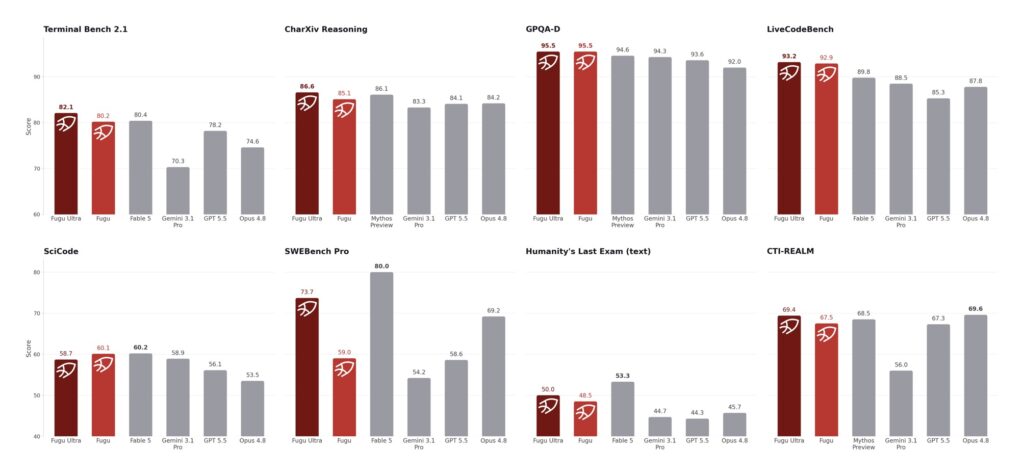
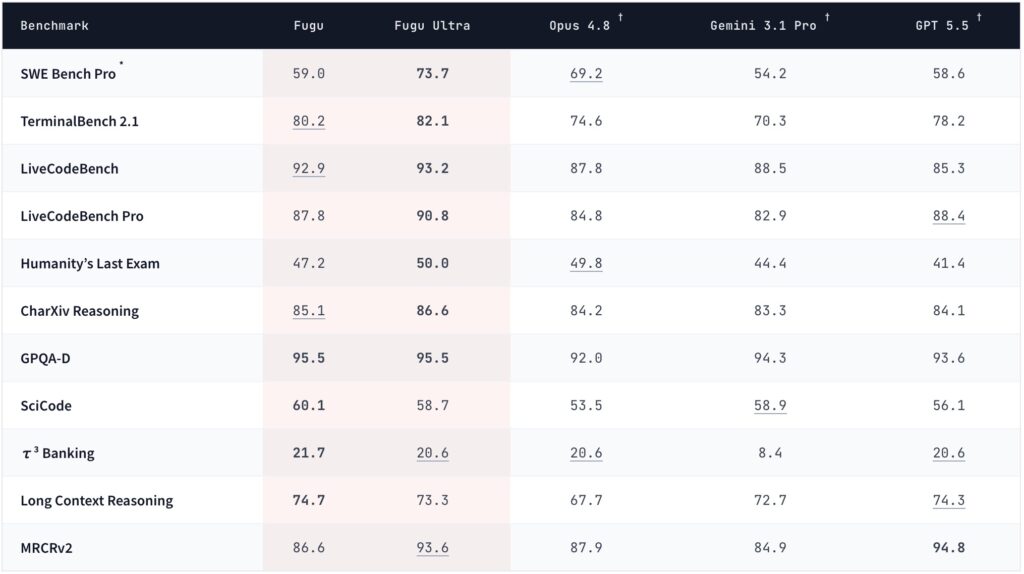
Fugu Ultra, on the other hand, is the heavy-lifter. It coordinates a much deeper, highly specialized pool of expert agents to maximize answer quality on complex, high-stakes problems. When benchmarked rigorously against the industry’s best, Fugu Ultra stands shoulder-to-shoulder with leading models like Fable 5 and Mythos Preview across engineering, scientific, and reasoning domains. Best of all, it delivers this frontier capability without the risk of export controls.
Real-World Impact Across Industries
The true measure of any frontier AI is how it performs in the hands of professionals. Early adopters of Sakana Fugu are already reporting transformative results across highly technical fields:
- Software Engineering & Code Review: In direct comparisons, Fugu Ultra is proving significantly more thorough than GPT-5.5. One software engineer noted that while traditional tools flag around three standard issues, Sakana Fugu surfaced over twenty subtle bugs, providing comprehensive answers and becoming the default engine for all code reviews.
- Academic & Industrial Research: The system shines in research autonomy. An industry researcher reported that mapping a complex patent landscape across 20 papers and multiple patents—a task that normally takes three to four days—was completed by Fugu in a matter of hours. The system even uncovered hidden connections between papers that a human researcher would likely have missed. In another instance, Fugu worked autonomously for four hours on a single prompt to read, implement, train, evaluate, and analyze a complex academic paper reproduction.
- Cybersecurity & Assessment: Security engineers are utilizing Fugu for end-to-end vulnerability assessments. Given a single scoped instruction, the system successfully drove a full security check—handling reconnaissance, XSS/SQLi testing, and authentication reviews. It produced a clean report with actionable evidence and retest steps, all while strictly respecting the engagement scope and avoiding destructive actions.
- Enterprise Platform Orchestration: Raw benchmark scores only tell part of the story. For enterprise executives building agent-based products, Fugu’s “persona stability” is a game-changer. Across long, complex sessions where other frontier models tend to drift or lose context, Fugu holds its identity and maintains its objective flawlessly.
Sakana Fugu is more than just a new AI model; it is an intelligent conductor leading an orchestra of expert systems. By automating the complex orchestration of multiple agents, it democratizes access to frontier-level intelligence, proving that the future of AI is collaborative, dynamic, and surprisingly easy to integrate.