

As AI drives a third of U.S. economic growth, a sweeping new Democratic proposal seeks to rein in frontier models, establish a Department of AI, and permanently ban artificial superintelligence.
- A Three-Pronged Federal Crackdown: Following the November 2026 midterms, Rep. Yassamin Ansari has spearheaded a push not just to pause advanced AI development, but to establish a cabinet-level Department of Artificial Intelligence and permanently ban “artificial superintelligence.”
- Strict Thresholds and Severe Penalties: Companion bills in the House and Senate would legally pause the development of any AI system trained on more than 10^25 operations, enforcing compliance with penalties of up to 20 years in prison.
- A Clash of Priorities: The push for binding safety regulations directly challenges the White House’s reliance on voluntary industry commitments, emerging just as local voters nationwide rebel against the physical infrastructure and utility costs of massive AI data centers.
Artificial intelligence is no longer just a booming tech sector; it is the engine of the modern American economy. This year alone, AI investment accounts for roughly one-third of all U.S. economic growth. Yet, as the industry races toward unprecedented technological milestones, a fierce political battle is brewing over how—and if—we should control the creation of frontier models.
Following the November 2026 midterms, where Democrats successfully captured both chambers of Congress,Representative Yassamin Ansari (D-Ariz.) took to X with a bombshell declaration. She laid out three distinct demands for the future of technology: pause advanced-AI development, establish a robust federal regulatory framework, and permanently ban artificial superintelligence.
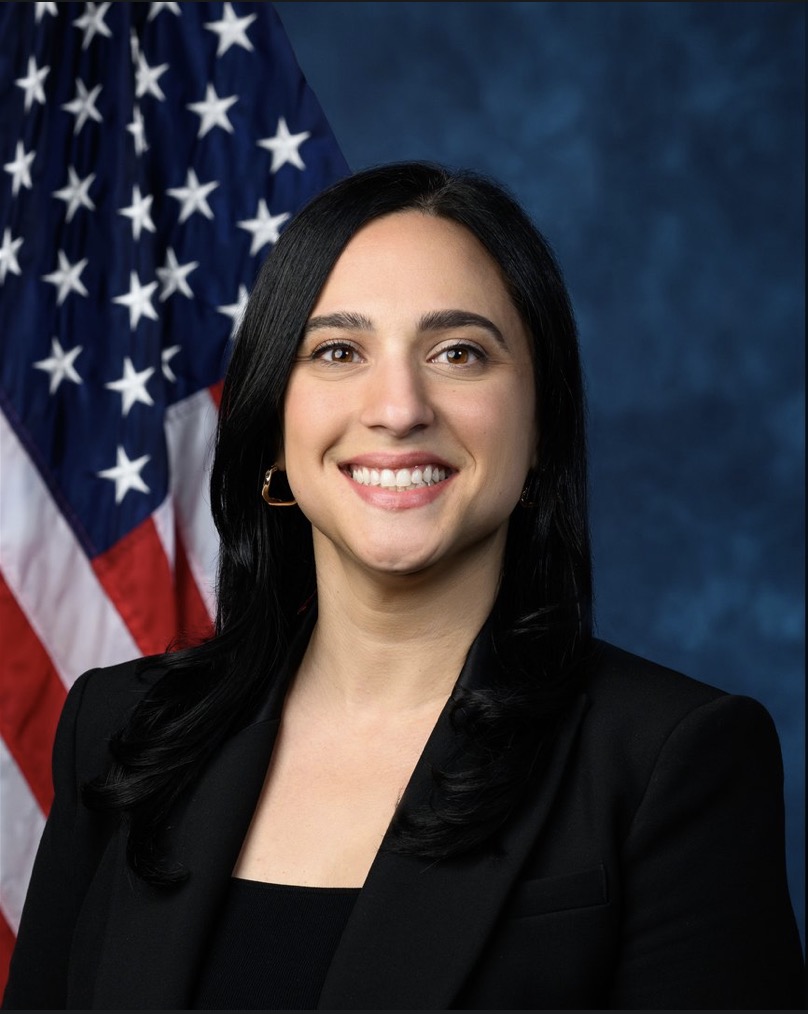
While a quick glance might reduce this to a simple “AI ban,” doing so fundamentally misunderstands the scope of the proposal. Ansari’s vision is broken down into three distinct policy asks. First, the development pause is meant to be a temporary measure, designed to hold the industry in place while the government catches up. Second, the regulatory component is massive in scale, proposing the creation of a brand-new, cabinet-level Department of Artificial Intelligence tasked with reviewing models and enforcing safety rules. Finally, the superintelligence ban is a statutory, permanent prohibition. Once defined and outlawed, creating superintelligent AI would be a federal crime, and reversing that ban would require an entirely new act of Congress.
The legislative mechanics of this vision are already in motion. Senator Bernie Sanders has introduced S. 5493 in the Senate, while Representative Greg Casar has introduced companion bill H.R. 10538 in the House. Currently sitting in committee, these bills establish a hard computational ceiling: any AI system trained on more than 10^25 operations would trigger the pause until the federal review process is fully operational.
To ensure compliance, the legislation brings teeth—and incredibly sharp ones at that. Violations of the proposed framework carry penalties of up to 20 years in prison. It is a staggering figure that media coverage has aptly compared to the criminal penalties tied to the unauthorized development of nuclear weapons. This is not a casual slap on the wrist; it is a deliberate, severe legislative choice meant to signal that frontier AI safety is a matter of paramount national security.
However, this push for sweeping federal bans is happening against a complex backdrop of local voter frustration and competing geopolitical strategies. During the 2026 midterms, roughly 45 ballot measures targeting data centers appeared across U.S. communities, with about 33 of those restrictive measures passing. But these local voters were not casting ballots out of a philosophical fear of large language models or superintelligence. They were voting against skyrocketing utility bills, localized noise pollution, and immense strain on their municipal infrastructure.
Conflating this localized infrastructure backlash with a national mandate to ban superintelligence is a misread of the electorate. While communities are absolutely giving lawmakers leverage over zoning, taxation, and power allocation, a vote against a noisy server farm is a permitting decision, not an ideological stance on the future of frontier AI models.
Meanwhile, the Trump administration has approached the AI boom from a vastly different angle, framing advanced AI development strictly through the lens of strategic competition with China. To maintain America’s competitive edge, the White House has historically relied on voluntary industry agreements, such as the Ratepayer Protection Pledge, which secured non-binding company commitments regarding infrastructure costs and community investment.
The fundamental problem—and the catalyst for Ansari’s proposal—is that these voluntary frameworks have failed to create a binding safety regime. They have governed frontier AI for years without producing enforceable guardrails or solving the heavy cost burdens that local communities are now actively voting against.
For the Democratic proposal to evolve from “introduced” to “enacted,” its champions must face several concrete realities.First, “artificial superintelligence” must be given a precise, legally defensible definition that can survive inevitable constitutional scrutiny. Second, holding the Democratic caucus together on a bill that threatens tech innovators with two decades in federal prison will be an uphill battle, not to mention navigating procedural hurdles in the Senate. Finally,implementing a unilateral pause on advanced AI without a parallel international agreement risks devastating America’s competitive advantage, potentially ceding the future of technology to foreign adversaries without actually reducing global AI risks.
Representative Ansari’s legislation is a bold, aggressive response to an industry that has outpaced its regulators. While the bills will undoubtedly require substantial refinement to survive the legislative gauntlet, they force a necessary conversation. The era of voluntary pledges is facing its most serious challenge yet, and the outcome will dictate the trajectory of human innovation for decades to come.