

By separating game logic from AI visual generation, a revolutionary framework is overcoming the limits of traditional video models to deliver persistent, high-speed gaming experiences.
- A New Architecture for AI Gaming: Matrix-Game 4.0 tackles the critical limitations of current interactive world models—such as accumulating errors and memory bloat—by physically separating game execution from AI visual generation.
- The “Executable Game Harness”: A lightweight engine maintains persistent world states and rules, while a multimodal coding agent and autoregressive video model transform low-poly proxies into high-fidelity environments in real time.
- Groundbreaking Hardware Performance: Achieving up to 83 FPS on an RTX 5090 with just 112 ms of interaction latency, the open-source system paves the way for dynamically created, natural-language-driven games.

The transition from passive video generation to genuinely playable, interactive AI worlds is one of the most exciting frontiers in technology. Interactive world models, such as the Genie series, have already demonstrated that generative AI can produce on-the-fly environments for active interaction. However, as developers attempt to shift from brief, experimental exploration to long-running games with rich mechanics and controllable rules, a significant roadblock has emerged: systems that rely entirely on video generation to maintain a world’s state are fundamentally flawed.
The Limits of Pure Video Generation
When world states are implicitly held within generated pixels and model context, the system faces four insurmountable challenges. First, there is no continuous external correction. Model rollouts proceed in isolation, meaning the world outside the player’s immediate field of view isn’t actively maintained. Second, this lack of correction leads to accumulating errors. As autoregressive generation progresses, small visual or physical errors compound, eventually causing total scene collapse—even when aided by external 3D tools.

Third, traditional models rely on uncompressed frame-based memory. As historical frames pile up without their spatial information being consolidated, memory costs skyrocket, severely limiting the length of gameplay. Finally, these models offer limited gameplay mechanics. Player interaction is often restricted to basic navigation rather than executing complex rules, facing persistent consequences, or pursuing explicit objectives.
At a deeper theoretical level, diffusion models are primarily engines of statistical correlation. They do not possess an inherent understanding of physical or causal reality. Drawing on Roman Jakobson’s concept of intersemiotic translation, we can view the AI’s mapping of text to video as just that—a translation. Current video generators act more like renderers, deriving their semantic intelligence from upstream multimodal language models (MLLMs). To build a truly playable world, visual realism must be paired with low latency, meaningful mechanics, and a shared, persistent state.
The Matrix-Game 4.0 Solution
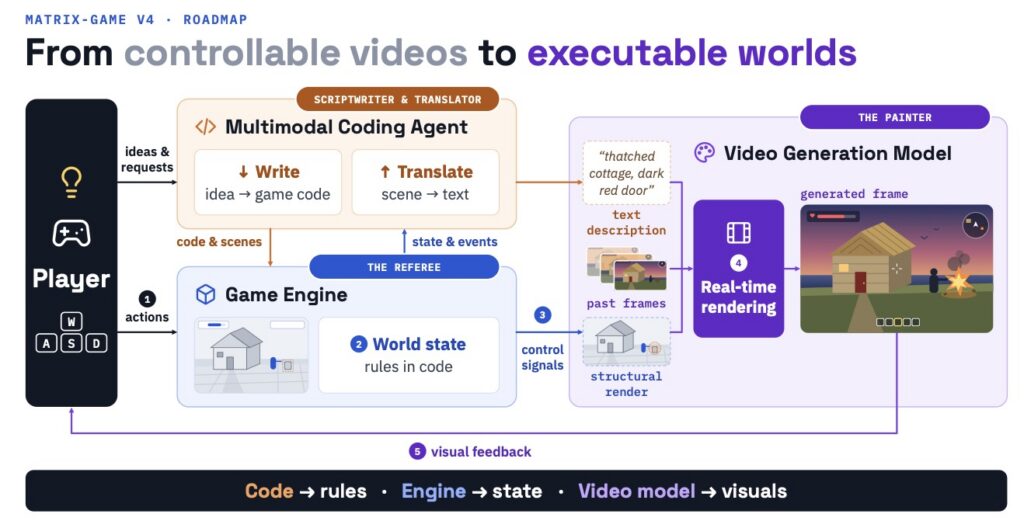
To solve this, Matrix-Game 4.0 introduces a paradigm shift: the executable game harness. Instead of forcing the AI model to do everything, the system strictly separates game execution from visual generation.
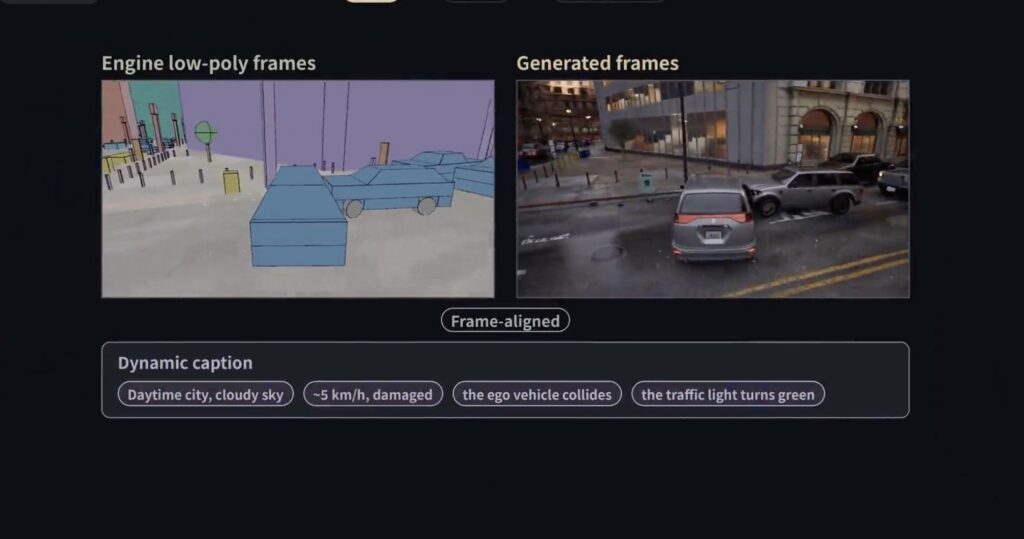
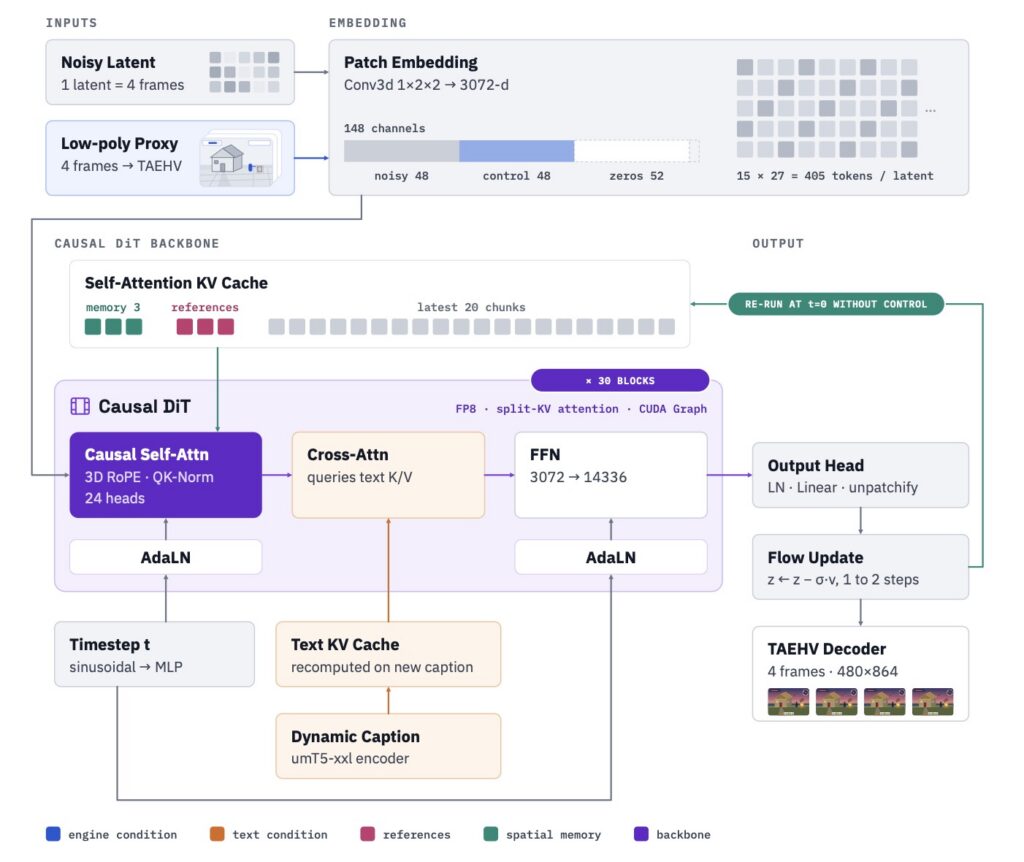
Under this new framework, game code defines the rules, and a lightweight game engine maintains a persistent, invisible world state. When a player has an idea, a multimodal coding agent acts as the bridge, translating natural-language instructions into executable game code and dynamic scene captions. The engine then renders a “low-poly proxy”—a basic, geometric version of the world. Finally, a highly advanced autoregressive video model steps in as the renderer, transforming these low-poly proxies into detailed, high-fidelity visuals based on dynamic captions and memory references.
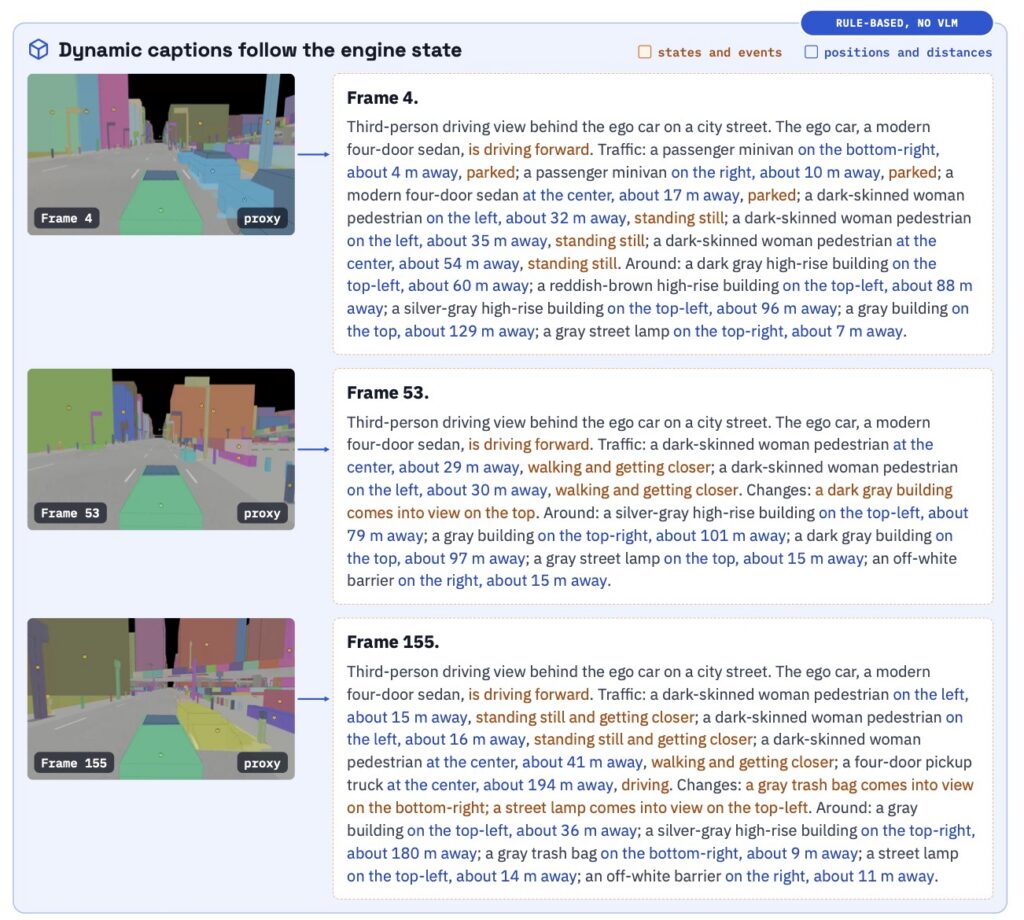
This hybrid approach provides continuous external guidance for the AI’s visual generation, ensuring the world remains stable and consistent while allowing players to dynamically modify scenes and gameplay using nothing but natural language.
Performance and the Road Ahead
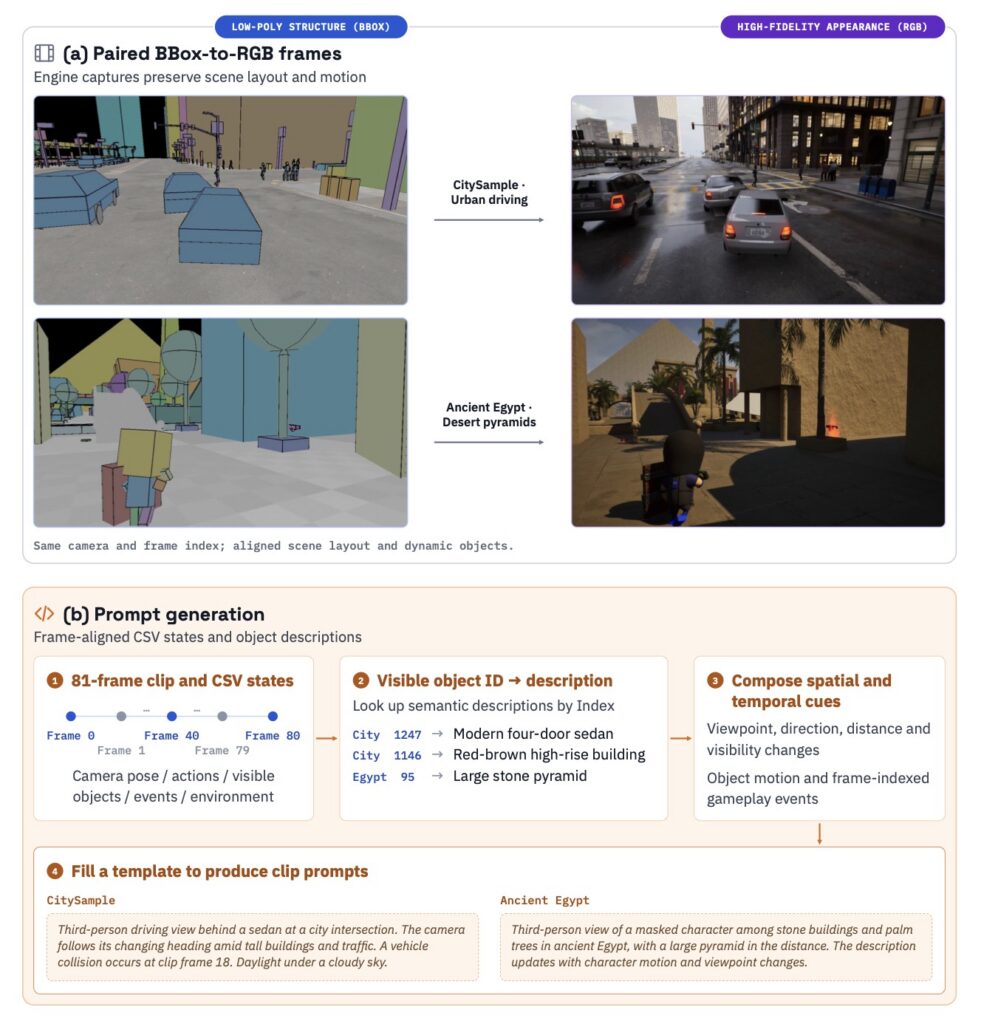
The technical achievements powering Matrix-Game 4.0 are staggering. The renderer is trained on aligned pairs of low-poly and high-fidelity videos and distilled into a causal generator that creates visuals in four-frame chunks using only one or two denoising steps.
When paired with targeted inference optimizations, Matrix-Game 4.0 delivers 480p, 60 FPS gameplay on a single NVIDIA RTX 5090. The crucial key-press-to-display latency is measured at a highly responsive 112 ms. For pure generation, a single step achieves an 83 FPS steady-state throughput, peaking at 18.2 GiB of GPU memory. The technology scales gracefully across hardware, maintaining 67 FPS on an RTX 5080 and 58 FPS on an RTX 5070 Ti with fixed prompts.
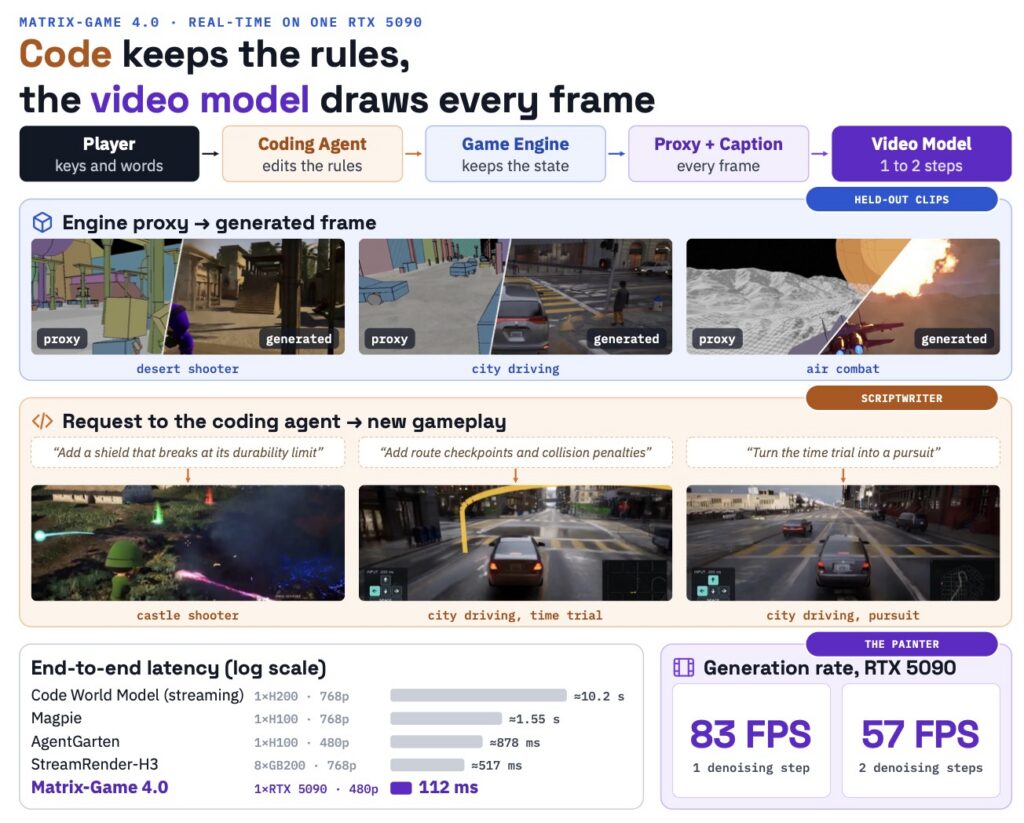
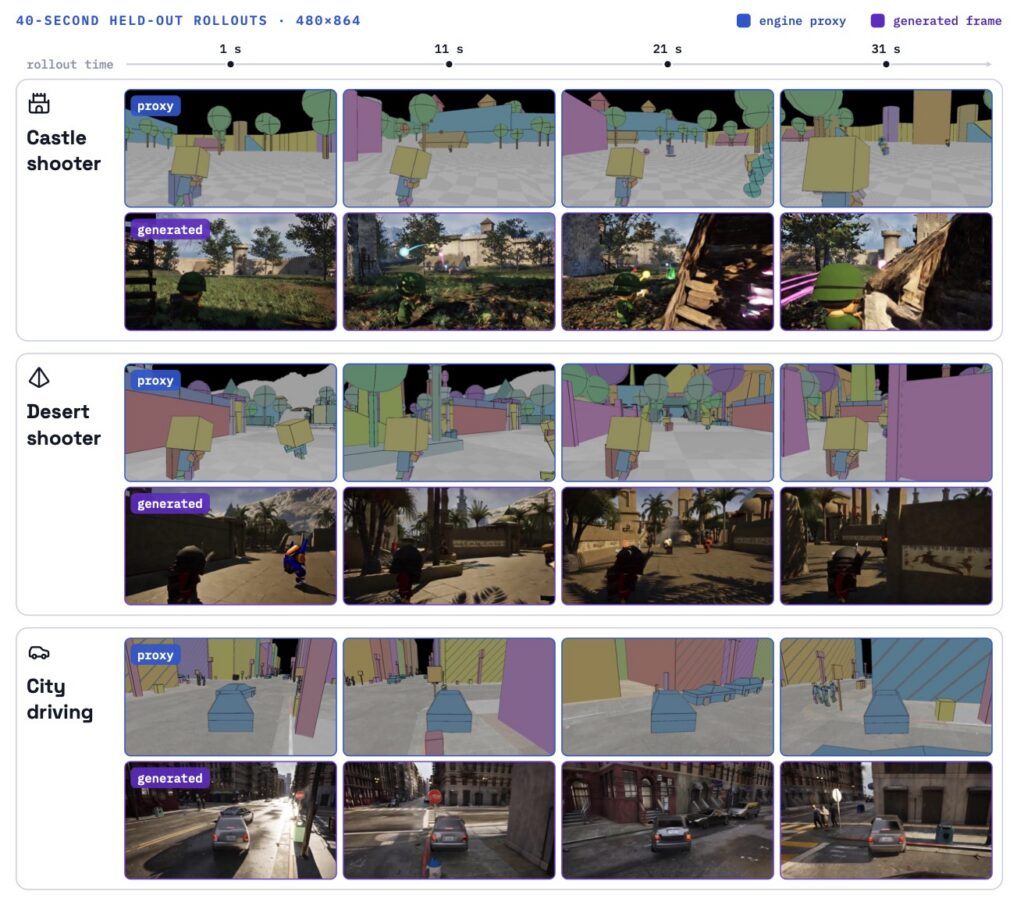
To prove the system’s viability, developers have already demonstrated customizable shooter and driving games governed by engine-enforced mechanics. Crucially, the code, model weights, and low-poly game assets have been released to the public, empowering researchers and developers to build upon this foundation.
Looking to the future, the immediate focus for Matrix-Game 4.0 is reducing inference costs and hardware requirements, with an eye toward launching a technical preview on Steam. Beyond that, the roadmap is incredibly ambitious: refining visuals for higher-resolution output, pioneering multiplayer rendering with consistent views across different players, enabling pinpoint control over generated visuals, and expanding the engine to support a vast new array of game genres. Matrix-Game 4.0 isn’t just an upgrade to AI video; it is the foundational architecture for the next era of game development.