

From rigorous software engineering to high-resolution vision, the latest evolution of the Opus family redefines what users can expect from autonomous AI collaboration.
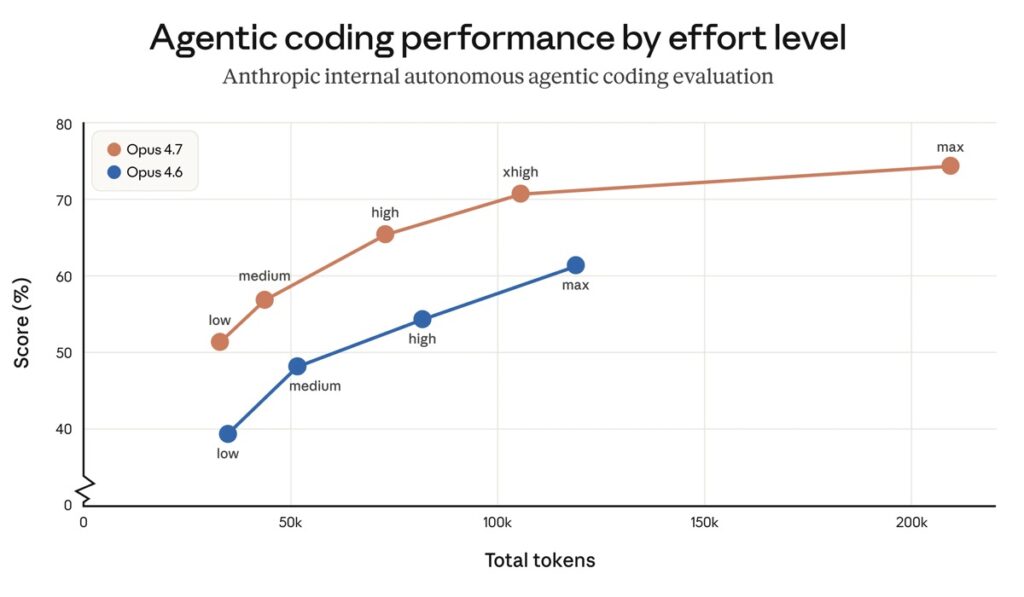
Engineering Excellence: Claude Opus 4.7 marks a significant leap over its predecessor, specifically optimized for complex software engineering and high-stakes autonomous tasks that previously required human oversight.
Multimodal Mastery: With a threefold increase in visual resolution and a more “tasteful” creative profile, the model delivers pixel-perfect document extraction and professional-grade presentations.
A Secure Gateway to the Future: Acting as a safe precursor to the “Mythos-class” models, Opus 4.7 introduces robust cybersecurity safeguards and a dedicated verification program for security professionals.
The landscape of artificial intelligence is shifting from simple assistance to true agency, and the general availability of Claude Opus 4.7 stands as a testament to this transition. While the tech world has been buzzing about the power of the Claude Mythos Preview, Opus 4.7 arrives as a specialized, highly refined tool designed for the “doers”—the engineers, analysts, and creators who need a model that doesn’t just talk, but executes with precision.
The New Standard for Software and Finance
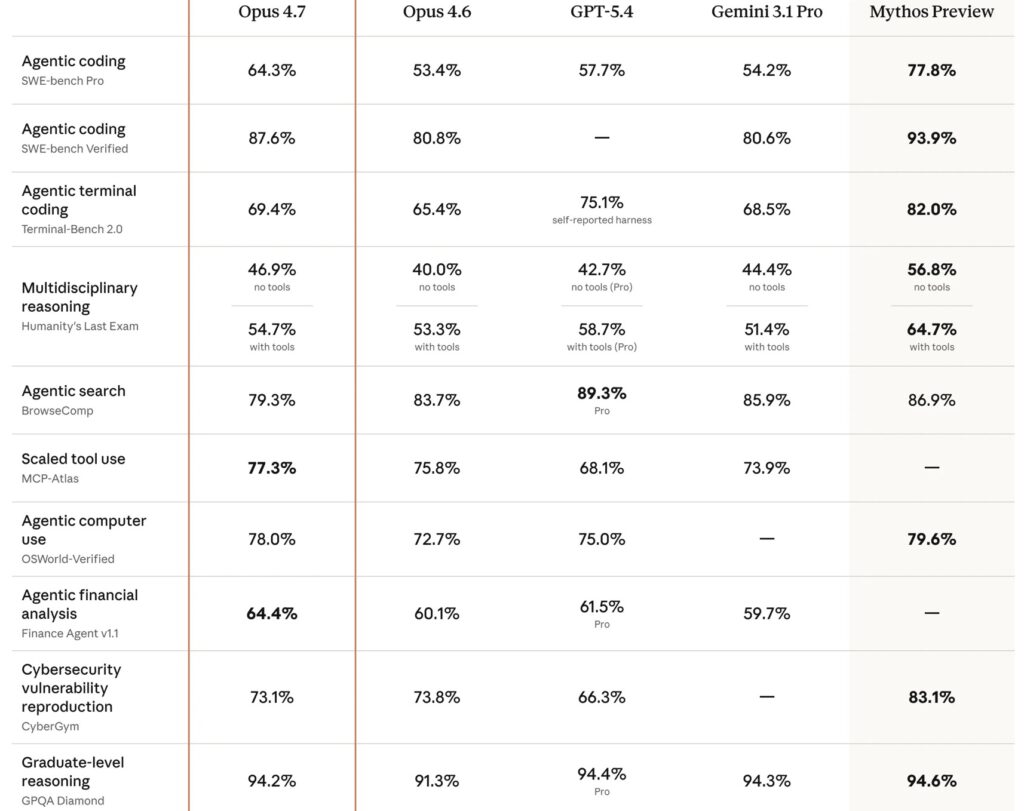
One of the most striking improvements in Opus 4.7 is its performance in advanced software engineering. Users are finding they can finally hand off their most grueling coding challenges—the kind that used to require a watchful human eye—and trust the model to follow through. This isn’t just about writing snippets; it’s about rigor. Opus 4.7 is designed to devise its own verification methods, checking its work before it ever reports back to the user.
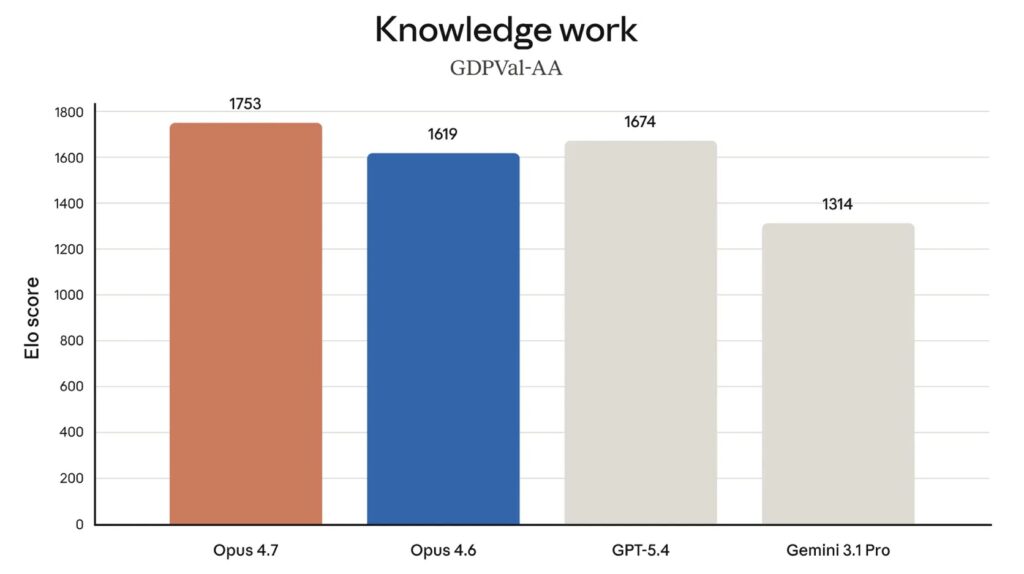
This same “agentic” spirit extends into the financial sector. Internal testing shows Opus 4.7 outperforming the 4.6 model as a financial analyst, producing more professional presentations and tighter integration across complex models. It currently holds a state-of-the-art score on the GDPval-AA benchmark, proving its worth in economically valuable knowledge work across legal and financial domains.
Vision and Creativity Reimagined
Visual processing has received a massive upgrade. Opus 4.7 can now process images up to 2,576 pixels on the long edge—over three times the resolution of prior models. This capability is a game-changer for “computer-use” agents that need to read dense screenshots or extract data from intricate diagrams. Beyond mere data, the model has become more “tasteful.” Whether it is designing a user interface or drafting a corporate slide deck, Opus 4.7 displays a more nuanced, creative touch that aligns with professional standards.
Safety, Security, and the “Mythos” Path
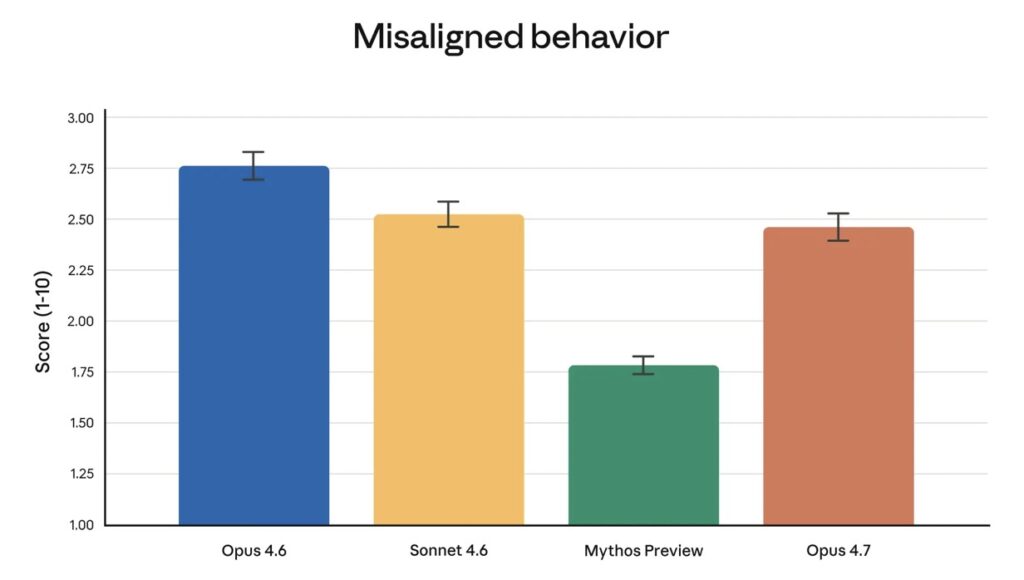
In line with the recently announced Project Glasswing, this release serves a dual purpose: providing a powerful tool while testing the safeguards necessary for the next generation of AI. Opus 4.7 is purposefully less capable in cyber-offense than the Mythos model, featuring automated blocks for high-risk requests. However, it isn’t closed off to the security community. Through the new Cyber Verification Program, legitimate researchers and red-teamers can leverage the model’s power for vulnerability research in a controlled, ethical environment.
Fine-Tuning the User Experience
Developers will notice a shift in how the model listens. Opus 4.7 is a literalist; it follows instructions so precisely that prompts written for older, “looser” models might need a quick tune-up. To help manage this power, a new “xhigh” (extra high) effort level has been introduced, allowing users to strike the perfect balance between deep reasoning and latency.
While the pricing remains stable at $5 per million input tokens and $25 per million output tokens, users should be aware of a new tokenizer. This update makes text processing more efficient, though it can result in a 1.0–1.35× increase in token count depending on the task. To mitigate this, the Claude Platform has launched task budgets in public beta, giving developers granular control over their spend.
Claude Opus 4.7 is available today across the Claude API, Amazon Bedrock, Google Cloud’s Vertex AI, and Microsoft Foundry. It represents a bridge to the future—a model that is smarter, more visual, and more reliable, while remaining firmly anchored in a commitment to safety and alignment.