

How billions of player-captured smartphone scans fueled a geospatial AI revolution—and sparked a modern ethical dilemma over military tech.
- A Treasure Trove of Data: Niantic Spatial utilized 30 billion crowdsourced images, captured by millions of Pokémon Goplayers, to build a highly accurate 3D model of the physical world.
- From AR to the Battlefield: This massive dataset trained a visual positioning system (VPS) that is now being adapted to help delivery robots and military drones navigate environments where GPS signals are jammed or unavailable.
- An Ethical Quagmire: The leap from an innocent augmented reality game to defense contracting has raised serious questions about informed user consent, data privacy, and the modern military-industrial complex.
A decade after the global craze for Pokémon Go sent millions of people wandering through their neighborhoods with smartphones in hand, the game has left behind an intriguing and deeply controversial legacy. What began as an innocent quest to capture virtual monsters has inadvertently laid the groundwork for advanced navigation technologies currently being adopted by delivery robots and, more contentiously, military drones. This transformation from augmented reality entertainment to defense-grade spatial intelligence highlights a profound shift in how consumer data is harvested, repurposed, and deployed on the global stage.
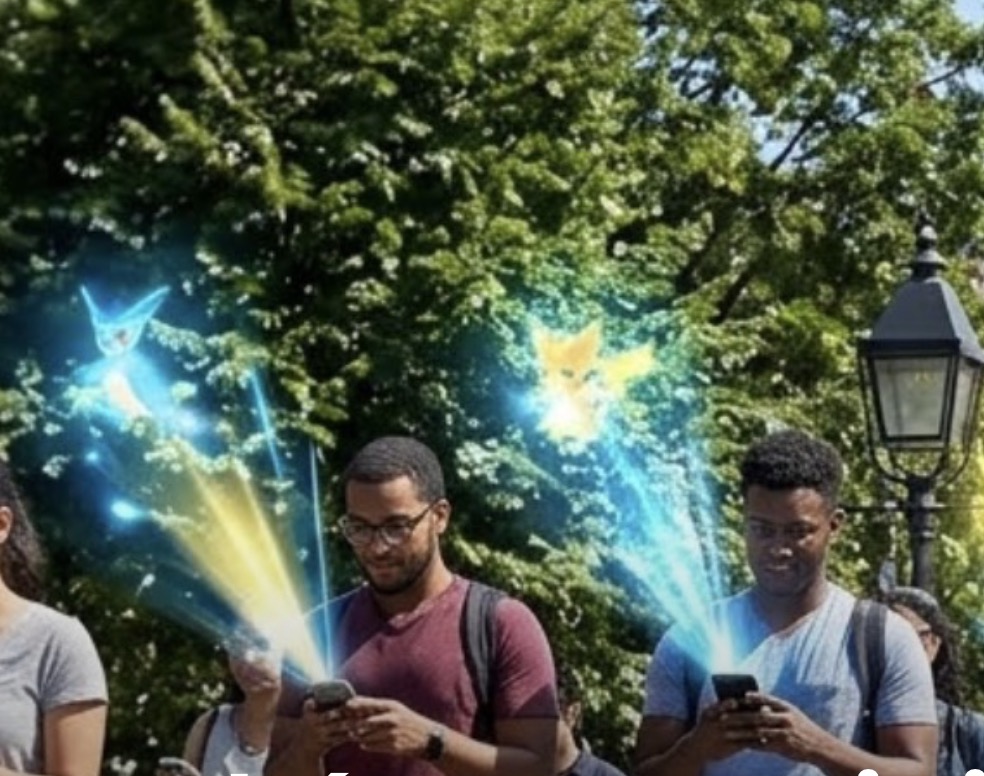
The architectural foundation of this technological leap was laid by Niantic Spatial, an AI company spun out of original Pokémon Go developer Niantic in May 2025. This corporate restructuring occurred concurrently with Niantic’s sale of licensed games, including Pokémon Go, to the Saudi-backed video game publisher Scopely. Prior to this separation, Niantic had been incredibly transparent about its ambitions: it incentivized gamers to capture short video scans of public points of interest—such as statues, fountains, and urban landmarks. Combined with data from the Scaniverse app, these 30 billion crowdsourced images were fed into AI systems to develop a “large geospatial model,” essentially a hyper-detailed, 3D replica of the physical world.
What makes this dataset so extraordinarily valuable is the rich metadata attached to each image. Because players photographed the same locations from countless angles, under varying lighting and weather conditions, Niantic Spatial was able to develop a proprietary visual positioning system (VPS). Unlike traditional global navigation satellite systems, a VPS determines a device’s exact position and orientation by comparing live camera feeds against detailed 3D reference maps. This technology is a game-changer for navigating indoor spaces, dense urban canyons, or active combat zones where GPS is actively jammed or entirely denied.
The commercial applications of this technology were immediately apparent. In March 2026, MIT Technology Review highlighted a partnership between Niantic Spatial and Coco Robotics, aiming to use this exact AI model to guide fleets of four-wheeled delivery robots through complex city streets. However, the broader implications of the technology emerged months prior. In December 2025, Niantic Spatial announced a major partnership with spatial intelligence firm Vantor—formerly known as Maxar Intelligence. Vantor boasts a deep portfolio of US government contracts, servicing the National Geospatial-Intelligence Agency, the Department of Homeland Security, and various branches of the US military. Together, they aim to develop a comprehensive positioning system capable of navigating both ground vehicles and flying drones through GPS-denied environments.

The results of this military-industrial collaboration are already turning heads. During the Defence Geospatial Intelligence (DGI) conference in London in February 2026, Niantic Spatial’s director of product management, Tory Smith, revealed that early testing of the integrated system yielded a staggering 70 percent reduction in positioning error, achieving accuracy within 1.5 meters in many scenarios. By fusing Niantic Spatial’s visual systems with Vantor’s Raptor software and 3D terrain data, the partnership has created a robust navigational tool with undeniable tactical value. Visual positioning systems are currently proving essential on modern battlefields; for instance, the Ukrainian military relies heavily on similar localized AI navigation to combat Russian GPS jamming.
Despite the tactical benefits, the repurposing of gaming data has sparked severe ethical backlash. Jeroen van den Hoven, a professor of ethics and technology at Delft University of Technology, noted that without the massive influx of gamer scans, the rapid development of this military-grade system would have been impossible. While Van den Hoven acknowledges the potential for these systems to aid in defensive conflicts, he points out that players have effectively, if indirectly, contributed to military applications. This sentiment is fiercely echoed by the gaming community. Floris De Hingh, a longtime Pokémon Go player, publicly expressed outrage that his gameplay data could support US military systems, specifically citing his opposition to the war the Trump administration is currently waging against Iran.
The controversy ultimately boils down to the limits of user consent. As Haye Kesteloo, founder of DroneXL, starkly framed the issue: consent obtained to catch Pikachu under a largely unread terms of service agreement is not the same as consent for a weapons program. Both Vantor and Niantic Spatial have defended their practices, emphasizing that raw game data and personal player information are not being shared; rather, it is the underlying AI model—the product of the training—that is being utilized. Niantic Spatial also stresses that ground scanning was always an optional feature, governed by a privacy policy that has been public since 2019.
Niantic Spatial no longer has access to live data from Pokémon Go players, as the game’s license now firmly belongs to Scopely. Nevertheless, the reality remains that millions of unwitting citizens served as the free labor force that mapped the world for the defense industry. As the lines between consumer technology, artificial intelligence, and global warfare continue to blur, the saga of Pokémon Go serves as a vital cautionary tale. It is a stark reminder to consumers worldwide that understanding the fine print of a privacy policy is no longer just a matter of digital hygiene—it is a matter of knowing exactly what kind of future you are helping to build.