
From tri-folding phones to roaming solar bots, here is everything you need to know from Day 1 in Las Vegas.
- AI Moves from Hype to Utility: Artificial intelligence is no longer just a buzzword; it is now the infrastructure powering Samsung’s smart home ecosystems, Google TV’s creative tools, and Nvidia’s future roadmap.
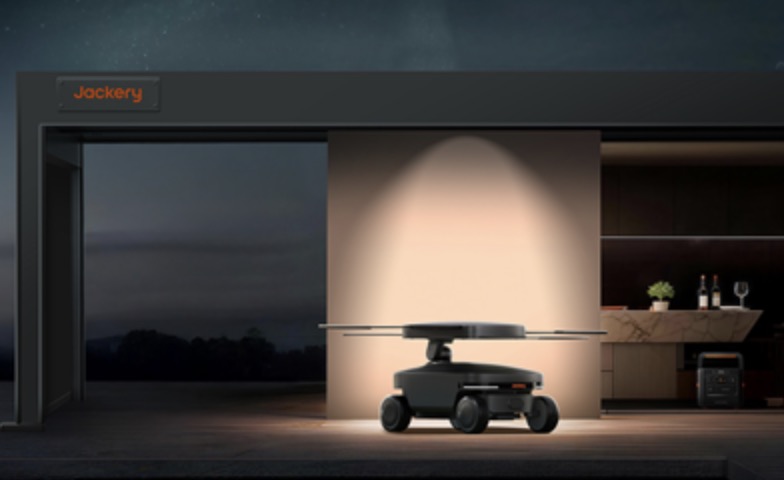
- Hardware Evolution: Innovations like Samsung’s Galaxy Z TriFold and Jackery’s autonomous Solar Mars Bot prove that physical hardware design is evolving just as fast as software.
- The Weird and Wonderful: CES remains the home of the unique, featuring $8,500 mech-suit massage chairs, emotive robotic dogs, and “Smart Play” bricks from Lego.
The annual tech showcase kicks off with a focus on executable tech, moving beyond “what if” to “what works.”
The annual CES tech event has kicked off in Las Vegas this week, and the tone has shifted. CES 2026 is opening at a time when the tech industry has stopped talking about what might be possible and started focusing on what actually works. Artificial intelligence is no longer a side act or a speculative bet; it is the theme of this year’s show, baked into devices, platforms, and workflows to deliver measurable value. As companies take the stage, the focus is shifting from concept demos to deployable products—from hype to execution.
Samsung Redefines the Screen and Home Unsurprisingly, Samsung is leading the charge with significant AI upgrades across its ecosystem. The standout mobile device is the new Galaxy Z TriFold. Instead of the traditional book-style fold, this device features three folds, transforming from a pocketable 6.5-inch phone into a sprawling 10-inch tablet. This extra screen real estate is designed for heavy multitasking and gaming, bridging the gap between phone and tablet more effectively than ever before.

Samsung’s vision extends to the living room with the Vision AI Companion. Most of their new TVs are getting this update, which allows the AI to answer questions about on-screen content, suggest recipes based on food shown in a movie, and intuitively tweak picture and sound settings. Hardware-wise, Samsung debuted a massive 130-inch microRGB TV, updated OLED Frame TVs with realistic art textures, and Movingstyle displays that detach from their base to travel around the home.
Perhaps most impressive is the smart home integration. Samsung’s new AI update allows home appliances to react to biometric data from the Galaxy Watch. If the watch detects the user is overheating while sleeping, it can trigger the AC; if the room is too dry, it activates a connected humidifier.
Google and Nvidia: The AI Infrastructure Google is expanding its presence in the living room by bringing a major Gemini AI upgrade to Google TV. New tools like “Nano Banana” and “Veo” allow users to generate original visuals or reimagine personal photos directly on the big screen. The integration deepens with Google Photos and natural language controls, suggesting a future where TVs are interactive creative spaces rather than passive monitors.

Meanwhile, Nvidia CEO Jensen Huang used his keynote to outline the ambitions of the $5 trillion company. Unsurprisingly, the focus remains squarely on AI, with the company signaling that its technology is the backbone of the modern tech landscape.
Laptops and Power: Dell and Jackery In the computing world, Dell has revived and redesigned the beloved XPS brand just one year after retiring it. The new XPS 14 features a slimmer profile, the return of physical function keys (replacing the divisive touch bar), and Intel’s newly launched Core Ultra Series 3 processors.
On the power front, Jackery is celebrating its 10-year anniversary with three new products launching in 2026. The most innovative is the Solar Mars Bot, an autonomous roving power station with retractable 300W solar panels that literally seeks out sunlight to recharge itself. For more stationary needs, they introduced the Solar Gazebo (generating up to 10kWh per day) and the rugged Explorer 1500 Ultra, which is capable of withstanding magnitude-9 earthquake forces.
Gadgets, Health, and the “Weird Tech” of CES Unveiled CES wouldn’t be complete without unusual gadgets. CES Unveiled showcased the Bodyfriend 4D Falcon Massage Chair, an $8,500 device that looks like a mech suit hybrid. It features “Iron Man” red and gold styling, 36 airbags, and a zero-gravity recline.
Other notable gadgets include:
- The HoverAir Drone ($500): A compact drone with covered rotors safe for indoor use, acting as a personal film crew.
- The Olight Ostation ($120): A massive charger capable of recharging and testing 32 AA batteries at once.
- Belkin Qi2.2 Charging: New 25W charging docks and power banks that rival MagSafe speeds.
- Withings Body Scan Scale ($600): A next-gen scale with a retractable handle that measures over 60 biomarkers, including heart pumping efficiency and cellular health.
- LiberNovo Omni Chair ($930): An ergonomic chair that senses back curvature and automatically adjusts armrests and neck support.
Robots and Play Finally, interactivity is evolving for both kids and adults. Lego introduced its Smart Play system, centered on a “Smart Brick” with computing power and sensors that allow builds to respond to touch and movement. On the emotive side, the Tombot made an appearance—a lifelike robotic dog with realistic puppy sounds designed to provide emotional support without the responsibilities of pet care.
