
From isolated experiments to enterprise-wide execution, a new era of AI-driven productivity has arrived.
- The Execution Revolution: AI is no longer just a topic of conversation; 75% of enterprise workers report that AI allows them to complete tasks that were previously impossible, driving massive ROI across industries like manufacturing and finance.
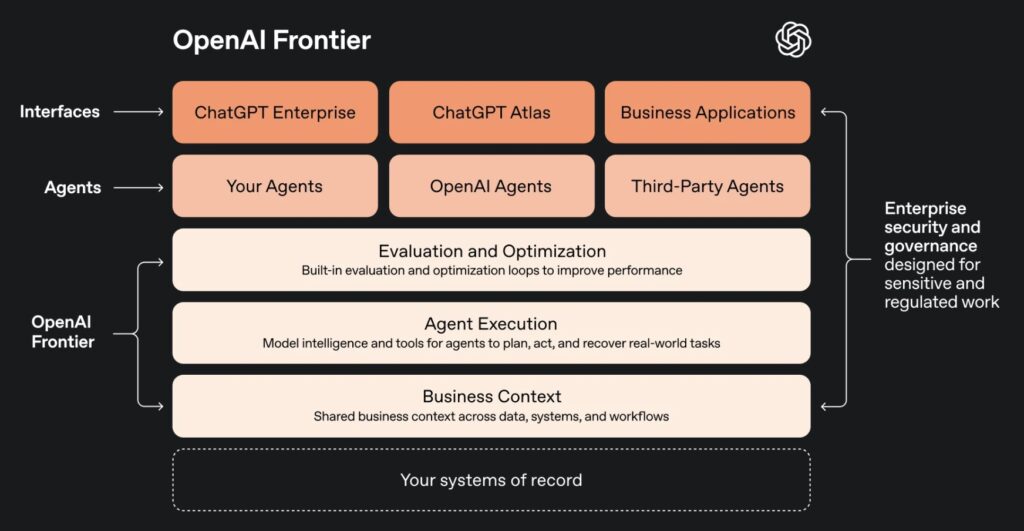
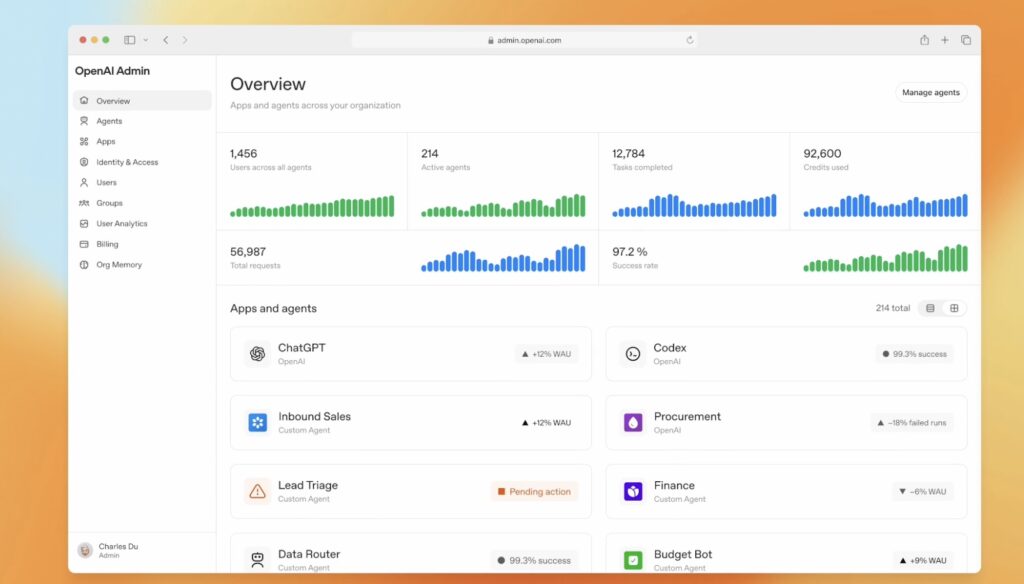
- Introducing OpenAI Frontier: To bridge the “opportunity gap,” OpenAI has launched Frontier, an end-to-end platform designed to build, deploy, and manage AI agents that operate with the same context, permissions, and feedback loops as human employees.
- Integration without Friction: Built on open standards, Frontier allows businesses to unify siloed data and applications across multiple clouds, enabling AI coworkers to solve real-world problems within existing workflows.
The landscape of modern work is undergoing a fundamental shift. For years, enterprises have discussed the potential of artificial intelligence, but the transition from “talking” to “executing” has often been stalled by technical complexity. That era of hesitation is ending. Today, 75% of enterprise workers credit AI with helping them accomplish tasks they simply couldn’t do before. This isn’t just a win for IT departments; it is a cross-departmental surge that is redefining how business value is created.

We have already seen this transformation in action. At a major manufacturer, AI agents compressed six weeks of production optimization into a single day. In the world of finance, a global investment company used agents to handle the administrative heavy lifting of the sales process, freeing up 90% more time for salespeople to focus on clients. Even in the energy sector, AI-driven output increases of 5% have translated into over a billion dollars in additional revenue. The results are real, but as early leaders pull ahead, the pressure on the rest of the market to bridge the “AI opportunity gap” is intensifying.
Solving the Integration Crisis
The primary barrier to AI adoption isn’t a lack of model intelligence—it’s the friction of deployment. Most companies are currently drowning in fragmented systems, where data is scattered across disconnected clouds and applications. When agents are deployed in isolation, they lack the necessary context to be effective, often adding more complexity than they solve. Furthermore, with OpenAI shipping new updates roughly every three days, the pace of innovation is frequently outstripping an organization’s ability to keep up.
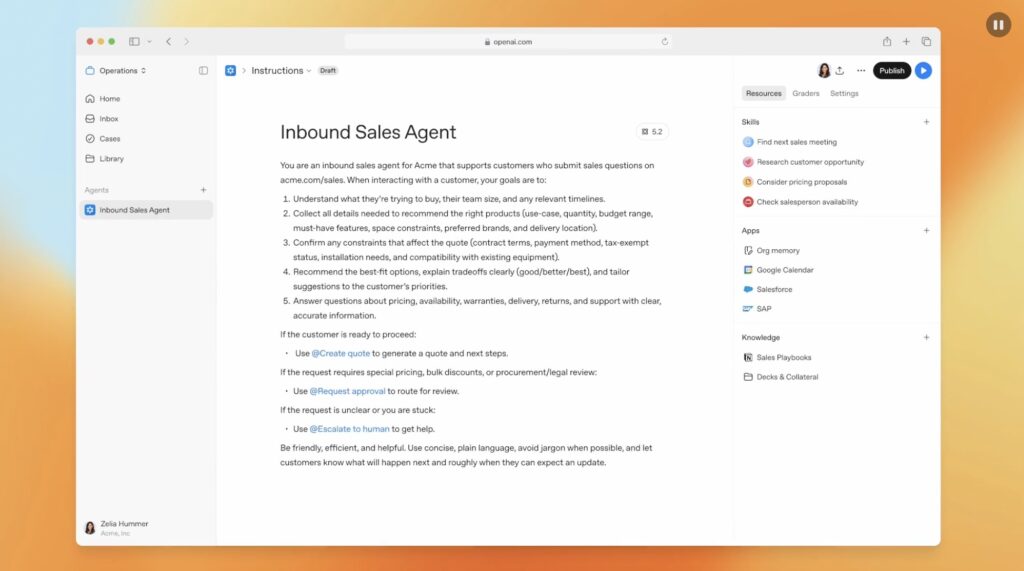
To solve this, OpenAI is introducing Frontier, a comprehensive platform that moves beyond simple tools to provide an end-to-end environment for AI coworkers. Frontier is built on the philosophy that AI agents should be onboarded just like human employees. They need institutional knowledge, clear boundaries, and the ability to learn from feedback. By creating a “semantic layer” for the enterprise, Frontier connects siloed data—from CRM systems to internal ticketing tools—ensuring that every AI agent understands the business context and the desired outcomes of their tasks.
Empowering the AI Coworker
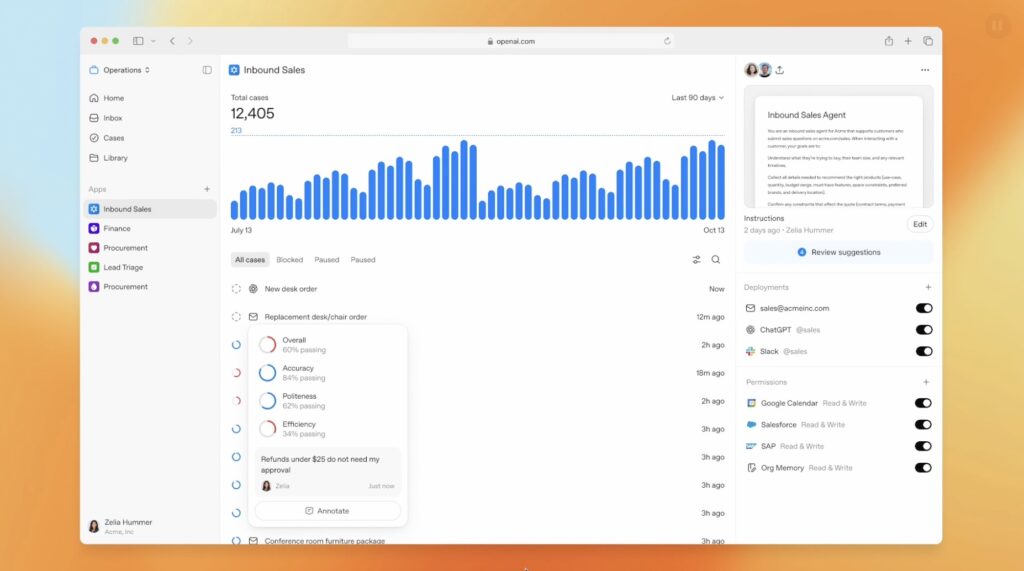
What sets Frontier apart is its focus on action and accountability. These are not just chatbots; they are AI coworkers equipped with the ability to reason over data, run code, and use professional tools in a dependable execution environment. These agents build memories over time, turning past interactions into future expertise. Whether they are working within ChatGPT, through workflows in Atlas, or embedded directly into existing business applications, these agents are designed to partner with people wherever work actually happens.
Security and governance remain at the heart of this expansion. In sensitive or regulated environments, trust is non-negotiable. Frontier assigns each AI coworker a unique identity with explicit permissions and guardrails. This ensures that as companies scale their AI workforce, they maintain total control over their data and operations. This balance of autonomy and oversight is what allows industry giants like HP, Oracle, Uber, and T-Mobile to pilot Frontier for their most complex and valuable work.
A Collaborative Future
Closing the gap between potential and production requires more than just software; it requires “know-how.” To support this, OpenAI is pairing Forward Deployed Engineers (FDEs) with enterprise teams to share best practices and create a direct feedback loop with OpenAI Research. This ensures that as businesses deploy agents, the models themselves evolve to meet the specific needs of the modern workforce.
The AI ecosystem is also opening up through partnerships with AI-native builders like Harvey, Sierra, and Abridge. By sticking to open standards, Frontier ensures that companies don’t have to “replatform” or abandon their existing investments. Instead, they can bring their data and agents together in a unified environment. The question for organizations today is no longer if they should adopt AI, but how quickly they can turn these sophisticated agents into a sustained competitive advantage.