
Boston Dynamics pushes its legendary research platform to the physical limit, blending high-speed gymnastics with the future of industrial AI.
- A Final Farewell: Boston Dynamics is retiring the hydraulic Research Atlas with a high-stakes performance, shifting focus toward a new, fully electric production model.
- The AI Edge: Through a partnership with the Robotics & AI Institute (RAI), Atlas utilized “whole-body learning” to master everything from simple walking to complex backflips using a single, unified control method.
- Resilience in Action: The latest tests highlight the robot’s “human-like” ability to recover from stumbles and absorb impacts, proving that precision software is just as important as hardware.

For years, the hydraulic Atlas robot has been the face of cutting-edge robotics—a bipedal marvel that could dance, parkour, and occasionally fail in spectacular fashion. Now, Boston Dynamics is closing the book on this storied research chapter. Before the veteran machine makes way for its sleek, electric successor destined for the factory floor, the company teamed up with the Robotics & AI Institute (RAI) to give Atlas one last, breathtaking “Airborne Sprint.”
The demonstration begins deceptively simple: Atlas strolls through an open area with a gait so human-like it’s easy to forget you’re watching a machine. However, the stakes escalate quickly. The robot soon launches into a sideways cartwheel, its limbs working in perfect harmony to maintain momentum. Without skipping a beat, the cartwheel transitions into a backflip. While mid-air, Atlas remains tight and controlled, tucking its body to maximize spin before landing with a calculated impact absorption that prevents it from collapsing—a testament to the sophisticated hydraulics and structural design.
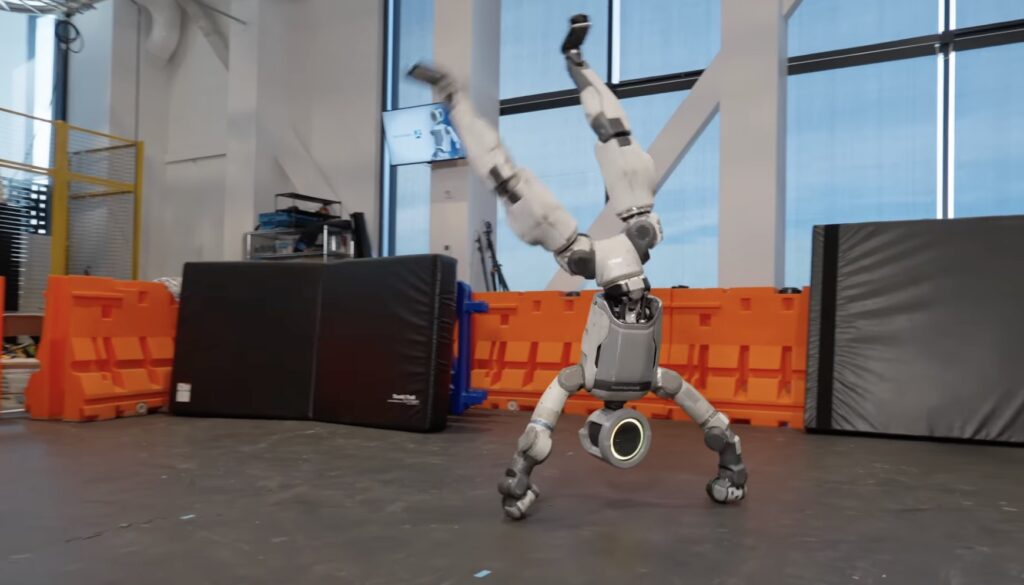
What makes this final run truly groundbreaking isn’t just the flashy gymnastics, but the whole-body learning method developed with the RAI. Traditionally, robots required specific, separate programming for different tasks. In this collaboration, scientists taught behaviors in a simulated environment first. This allowed Atlas to apply the same fundamental control approaches to both mundane walking and high-speed acrobatics. This suggests a future where a single “brain” can handle a massive variety of tasks on a factory floor without needing to be reprogrammed for every new movement.
The “real-world” nature of the test was on full display, showcasing both the robot’s perfection and its grit. In some runs, Atlas moved flawlessly; in others, the intensity of the landing was so great it actually lost a foot cover. Yet, the most impressive moments were the recoveries. When leaping across gaps or jumping onto platforms, Atlas’s software allowed it to instinctively adjust its foot position upon landing to maintain equilibrium. Whether it was a slight stumble or an unexpected shift in balance, the robot’s ability to “think” on its feet proved that it is more than just a pre-programmed stuntman.
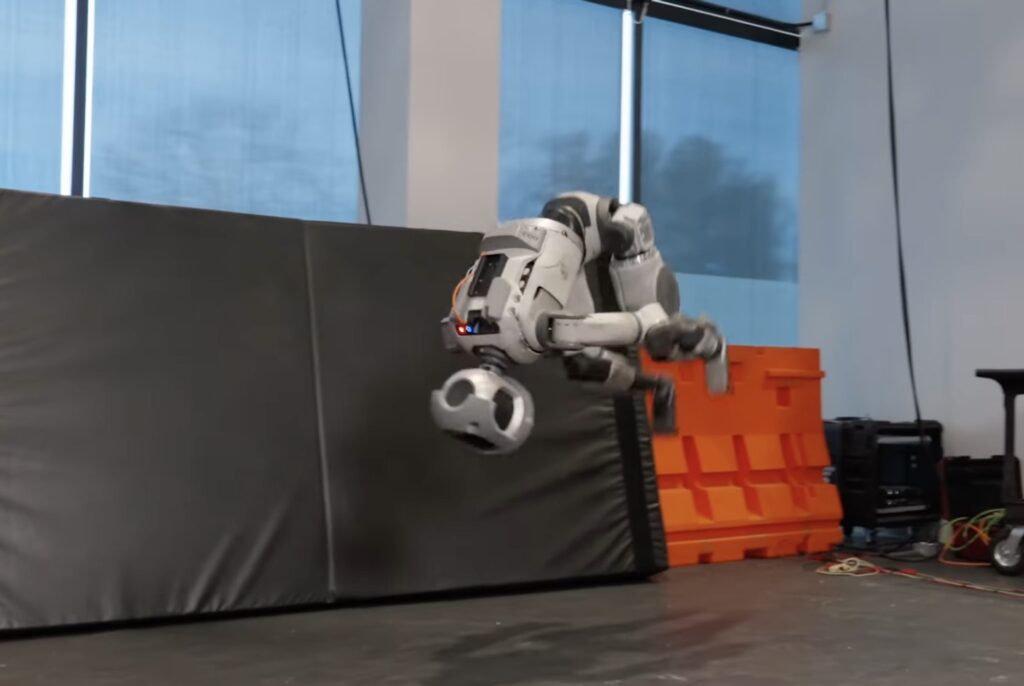
As Boston Dynamics shifts its focus toward a production-ready electric model, this final sprint serves as a proof of concept for the next generation of labor. The agility, precision, and resilience seen in these final hydraulic leaps are the DNA of the machines that will soon be working alongside humans. Atlas may be heading into the history books, but the intelligence it gained during this final airborne journey is just beginning to take flight.