
From viral dance videos to the factory floor, the world’s most dynamic humanoid robot enters mass production with a new brain, a new body, and a new job.
- Immediate Industry Impact: Boston Dynamics has officially launched the product version of the electric Atlas, with manufacturing starting immediately and all 2026 units already committed to industry giants like Hyundai and Google DeepMind.
- Next-Gen Engineering: The new Atlas ditches hydraulics for a fully electric system, featuring swappable batteries for continuous operation, Nvidia-powered computing, and a rugged design capable of lifting heavy loads in extreme temperatures.
- Cognitive Evolution: Through a strategic partnership with Google DeepMind, Atlas will utilize advanced AI foundation models to learn tasks quickly and share that knowledge instantly across entire fleets via the Orbit™ software ecosystem.
The era of the humanoid industrial worker has officially arrived. At the Consumer Electronics Show (CES) in Las Vegas on January 5, 2026, Boston Dynamics—long known for its viral videos of backflipping prototypes—unveiled the commercially ready, fully electric version of its Atlas® robot.

Revealed during Hyundai’s global media presentation, the launch marked a pivotal shift for the robotics industry. While the audience was treated to a showcase of the prototype’s agility and a signature dance performance by the Spot® robot dogs, the real headline was strictly business: Boston Dynamics is no longer just experimenting; they are manufacturing.
A Powerhouse Built for Production
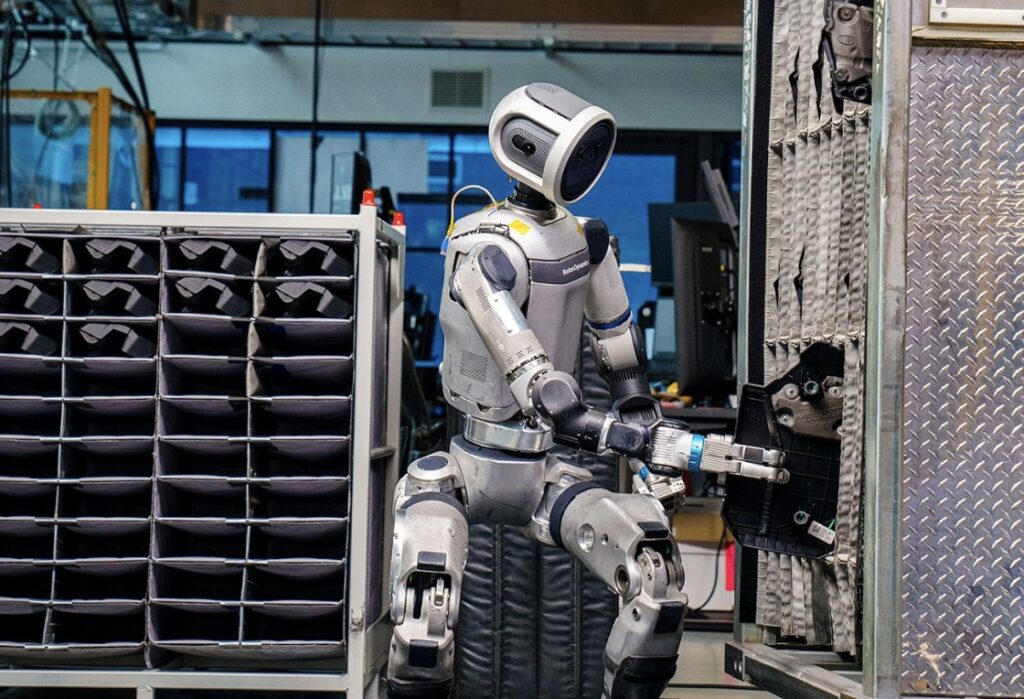
Gone are the bulky hydraulic hoses of the past. The new Atlas is a sleek, fully electric machine designed specifically for the rigors of the factory floor. Standing 6 feet 2 inches tall and weighing 198 pounds, this robot is built with a lightweight mix of aluminum and titanium components that allow it to move with uncanny human-like agility.
What sets this machine apart is its focus on continuous workflow. Atlas is powered by a 4-hour battery that is self-swappable. When energy runs low, the robot autonomously navigates to a charging station, swaps its own battery, and returns to work without human intervention.
“This is the best robot we have ever built,” said Robert Playter, CEO of Boston Dynamics. “Atlas is going to revolutionize the way industry works, and it marks the first step toward a long-term goal we have dreamed about since we were children—useful robots that can walk into our homes and help make our lives safer, more productive, and more fulfilling.”
The Specs: Strength Meets Intelligence
The new Atlas is not just mobile; it is incredibly capable. With 56 degrees of freedom and fully rotational joints, it possesses a range of motion that exceeds human capability. It can reach up to 7.5 feet (2.3 meters) and handle significant weight, lifting up to 110 lbs (50 kg) max or sustaining 66 lbs (30 kg) for repetitive tasks.
Crucially, the robot is designed to operate in the real world, not just a lab. It is water-resistant and functions in temperatures ranging from -20° to 40° C. Its hands are engineering marvels in themselves, capable of reconfiguring for different tasks while tactile sensors feed data back into the system to ensure the perfect amount of force is applied.
The Brain: AI and Fleet Learning
The hardware is impressive, but the software is revolutionary. Boston Dynamics announced a major partnership with Google DeepMind to integrate cutting-edge AI foundation models into the robot. Powered by Nvidia chips, Atlas constantly evaluates its surroundings, adjusting posture and grip in real-time.
Perhaps most transformative is the “fleet learning” capability enabled by Boston Dynamics’ Orbit™ software. Once a single Atlas robot learns a new task—whether it is material handling or complex order fulfillment—that skill can be immediately replicated across the entire fleet. The robots connect seamlessly to industrial systems (MES and WMS), working autonomously with minimal supervision.
Strategic Rollout and Manufacturing
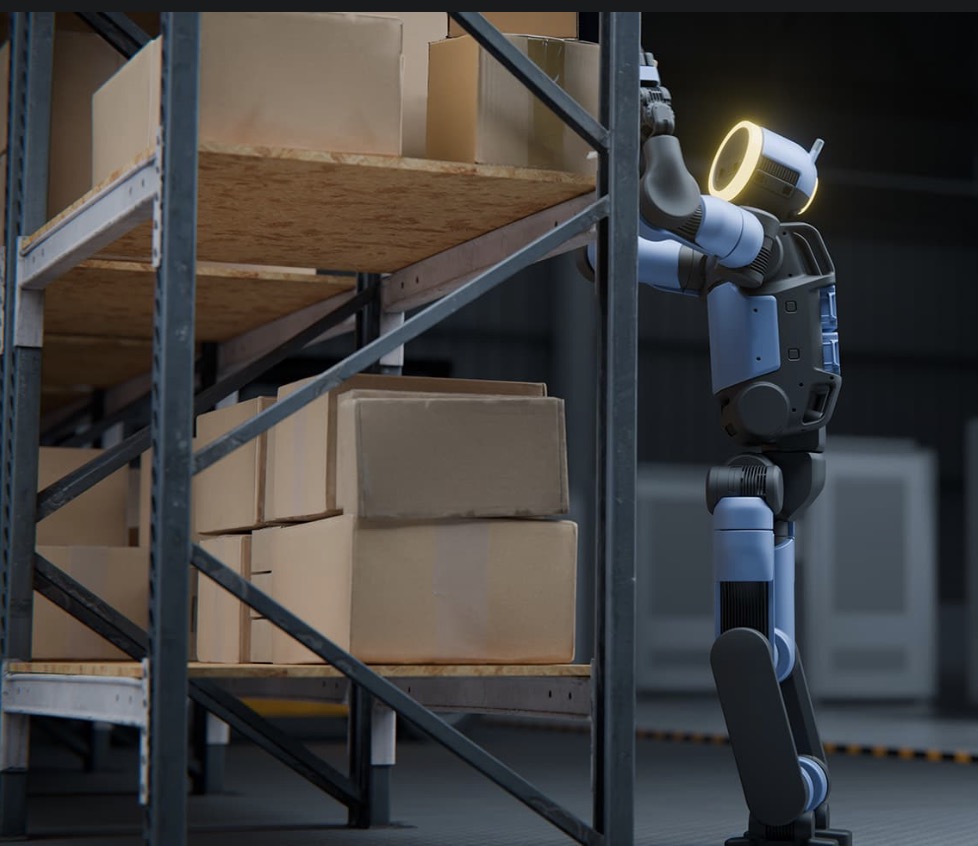
Production has already commenced at the company’s Boston headquarters. The demand is evidently high: every Atlas robot scheduled for production in 2026 is already spoken for. The initial fleets will be deployed to Hyundai’s Robotics Metaplant Application Center (RMAC) and Google DeepMind, with broader customer availability opening in early 2027.
To support this scale, Hyundai Motor Group is investing heavily. The company recently announced a $26 billion investment in its U.S. operations, which includes a new robotics factory capable of churning out 30,000 robots per year. Furthermore, Hyundai Mobis will supply the actuators, ensuring a reliable automotive-grade supply chain that drives down costs and increases reliability.
“Our new Atlas is the most production-friendly robot we’ve ever designed,” noted Zack Jackowski, GM of Atlas. By significantly reducing the number of unique parts and aligning components with automotive supply chains, Boston Dynamics is positioning Atlas to achieve economies of scale previously unseen in humanoid robotics.
The Future of Work
As Atlas prepares to enter automotive plants and logistics centers, the implications are vast. With safety features like human detection and fenceless guarding, it is designed to work alongside humans, taking over the dull, dirty, and dangerous jobs.
The unveiling at CES 2026 is more than a product launch; it is a signal that the infrastructure for a robotic workforce is being laid today.