
Beyond the Lab: Why the World is Watching China’s Martial Arts Automatons
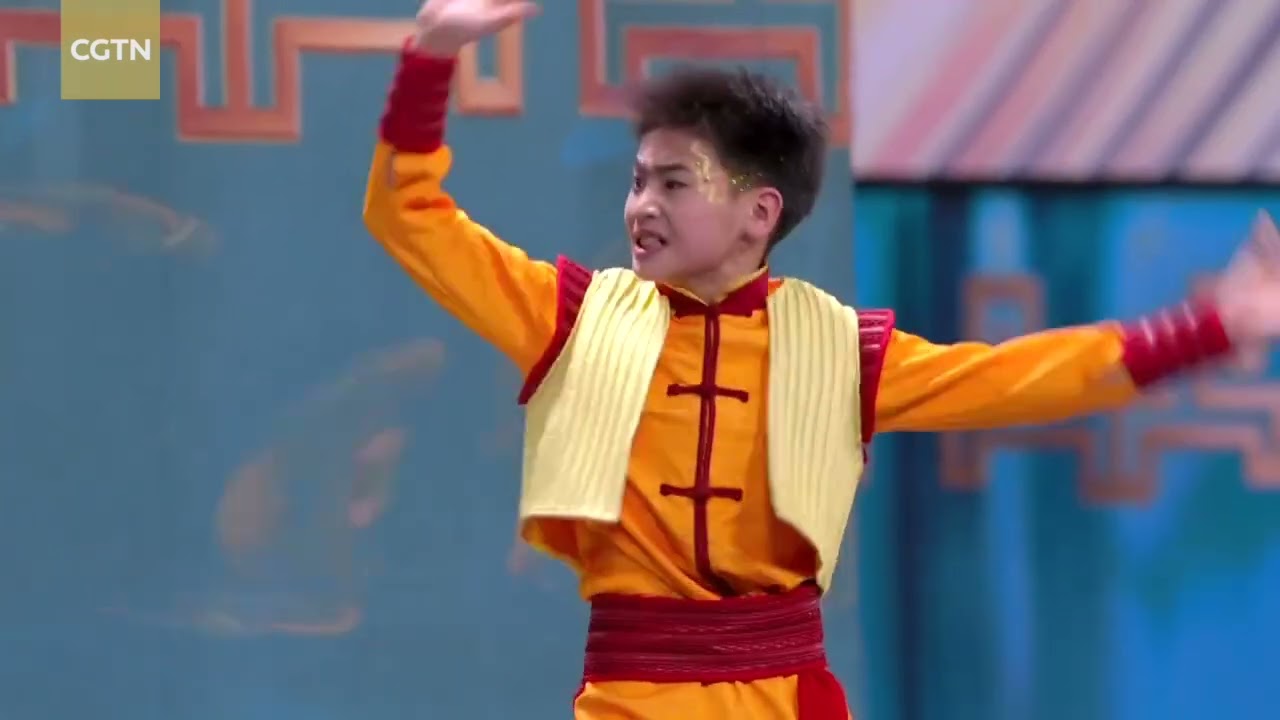
- A National Spectacle: During the annual Spring Festival Gala, AI-powered humanoid robots performed complex martial arts and choreographed dances in perfect unison with humans, signaling a massive leap in coordination and stability.
- Production Over Prototypes: While the US and China remain neck-and-neck in AI software, experts suggest China is pulling ahead in the physical scaling and manufacturing of humanoid hardware.
- Strategic Supremacy: Backed by massive state funding and over 450,000 registered robotics firms, China is transitioning from low-cost assembly to high-end, smart manufacturing where robotics serves as the central linchpin.
2026
For decades, robots were the silent workhorses of the modern world, relegated to the sterile cages of factory floors or the cluttered corners of research labs. They were masters of repetition but lacked the grace of life. However, the dawn of the AI era has fundamentally rewritten the robotic DNA. Today, machines are no longer just repeating tasks; they are learning, adapting, and, in the case of China’s latest technological fleet, performing intricate kung fu routines on national television.
The recent China Media Group Spring Festival Gala—the country’s most-watched annual broadcast—served as a high-octane debut for this new generation of humanoids. In a display that shocked domestic and international audiences alike, these robots didn’t just shuffle across the stage; they lunged, spun, and executed backflips, landing on their knees with flawless precision. Unlike previous years, which featured robots with limited twisting and kicking motions, this “flashy AI-powered affair” showcased a synchronized army of near-identical units moving in perfect harmony with human performers.
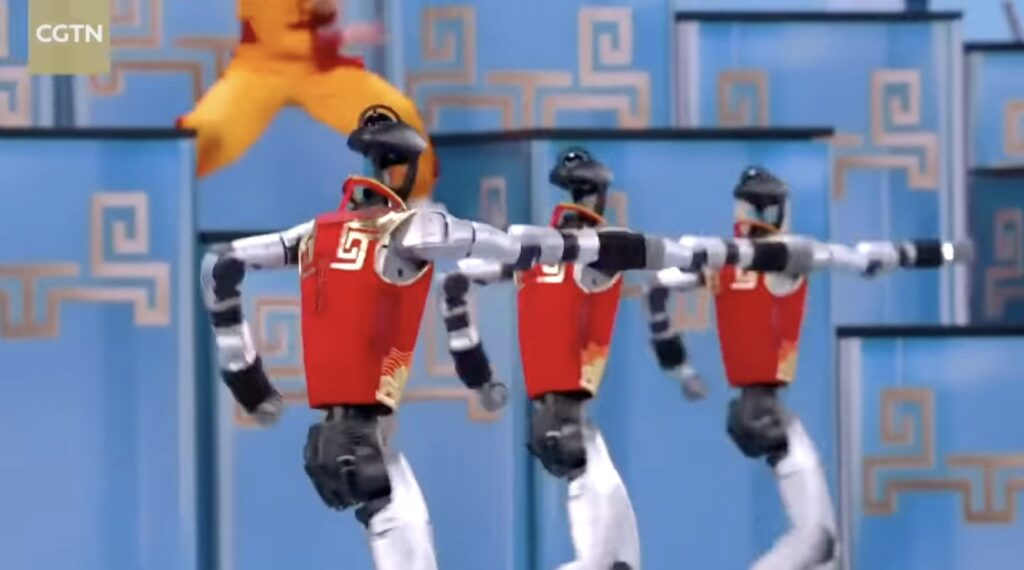
This spectacle was more than mere entertainment; it was a calculated demonstration of geopolitical strength. According to Kyle Chan of the Brookings Institution, these public performances allow Beijing to “dazzle” the world with highly visible proof of progress. While AI algorithms and industrial software remain abstract to the general public, a robot that can perform martial arts on a smartphone screen provides an undeniable, visceral image of technological leadership.
The competitive landscape between the world’s two superpowers is shifting. While the US leads in many software domains, Mark Haefele, Chief Investment Officer at UBS Global Wealth Management, recently poked fun at the American tech sector’s focus on “AI girlfriends” compared to China’s pursuit of embodied AI. Chan echoes this sentiment, noting that while the two nations are neck-and-neck in general AI, China holds a distinct advantage in scaling up production. The numbers tell a staggering story: by the end of 2024, China had registered 451,700 smart robotics companies with a total capital reaching 6.44tn yuan (approximately $932.16bn).

2025
Experts like Georg Stieler of Stieler Technology and Marketing urge a balanced perspective. While the gala demonstrated incredible progress in “stable gaits” and “consistent joint behavior,” Stieler warns that a stage performance does not yet equate to industrial robustness. These robots were trained through “imitation learning” for specific routines—meaning they cannot yet handle the unpredictable environments of a factory floor as easily as they handle a choreographed dance.
Despite these hurdles, the momentum is undeniable. With government-backed initiatives like Made in China 2025 and the 14th Five-Year Plan, robotics has been moved to the very center of China’s national strategy. Even Elon Musk has acknowledged the threat, naming Chinese firms as his primary competitors for Tesla’s Optimus project. As Marina Zhang of the University of Technology Sydney suggests, we are witnessing a pivot point where China moves from being the world’s assembly line to becoming the global hub for smart, high-end manufacturing.