
LimX Dynamics introduces a modular powerhouse capable of transforming between bipedal and wheeled configurations to revolutionize research and industrial robotics.
- Modular Versatility: The TRON 2 features a unique 3-in-1 architecture allowing it to transition between dual-arm, wheeled-leg, and sole-feet configurations for diverse terrain and tasks.
- Advanced AI Ecosystem: Positioned as an integrated Vision-Language-Action (VLA) platform, it offers a comprehensive software stack with Sim2Real support, ROS compatibility, and pre-loaded learning models.
- High-Performance Specifications: With significant upgrades in battery life and payload capacity, plus a competitive starting price of $20,000, TRON 2 is engineered to be an accessible yet robust test bed for laboratories.

In the rapidly evolving world of robotics, the ability to adapt is just as critical as raw computing power. LimX Dynamics, a Shenzhen, China-based innovator, has addressed this need head-on with the unveiling of the TRON 2. Standing approximately 157 cm tall, the TRON 2 is not merely a humanoid robot; it is a modular embodied AI platform designed to serve as a versatile test bed for research laboratories and industrial application development. By prioritizing modularity, LimX Dynamics has created a system that refuses to be limited by a single form factor, bridging the gap between agile locomotion and heavy-duty manipulation.
A Master of Transformation
The defining characteristic of the TRON 2 is its modular hardware architecture, which allows for multiple configurations depending on the specific requirements of a task. This “shape-shifting” capability enables the robot to support three primary modes, effectively offering three distinct robots in one package.
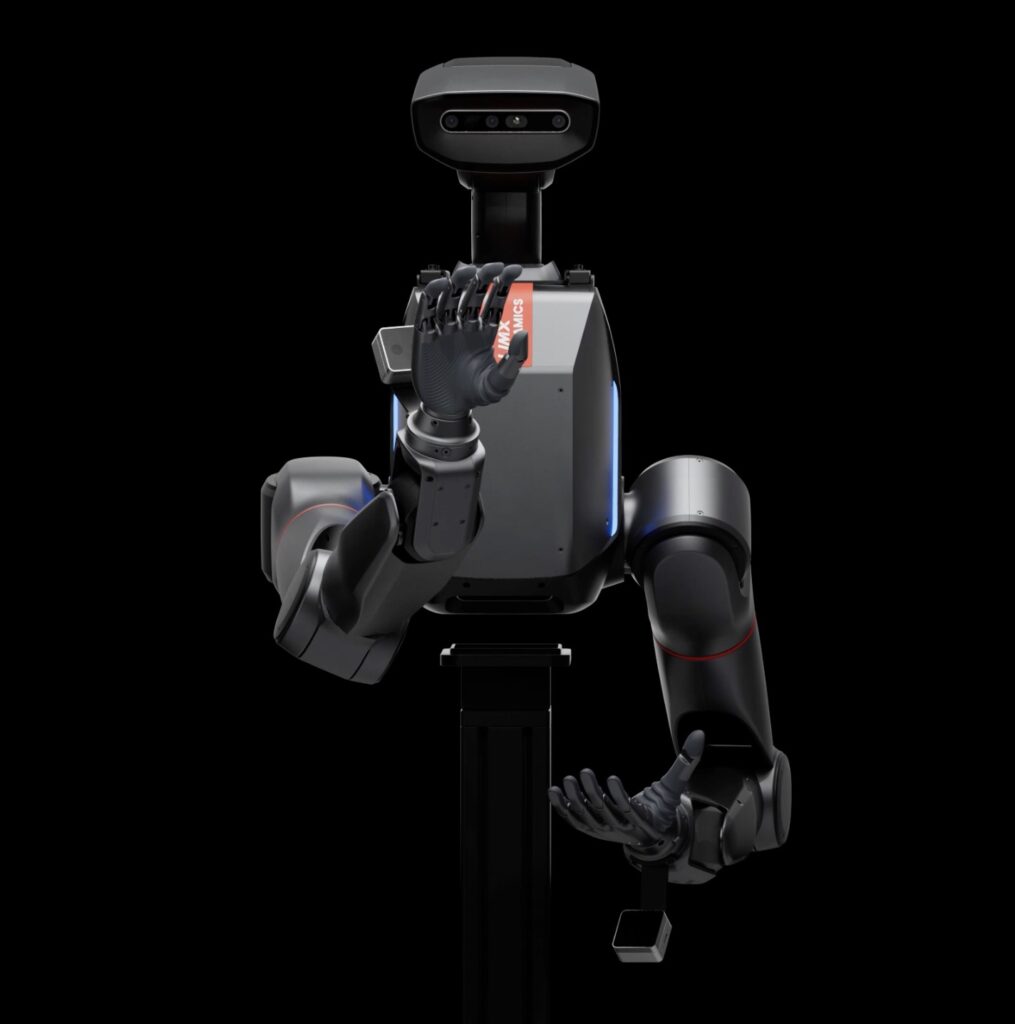
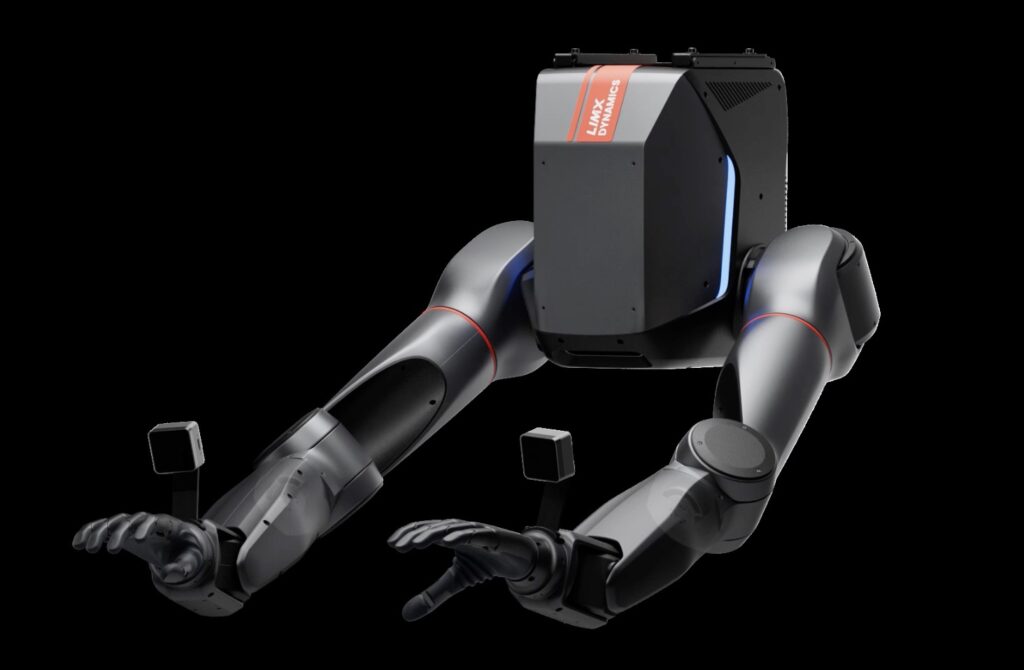
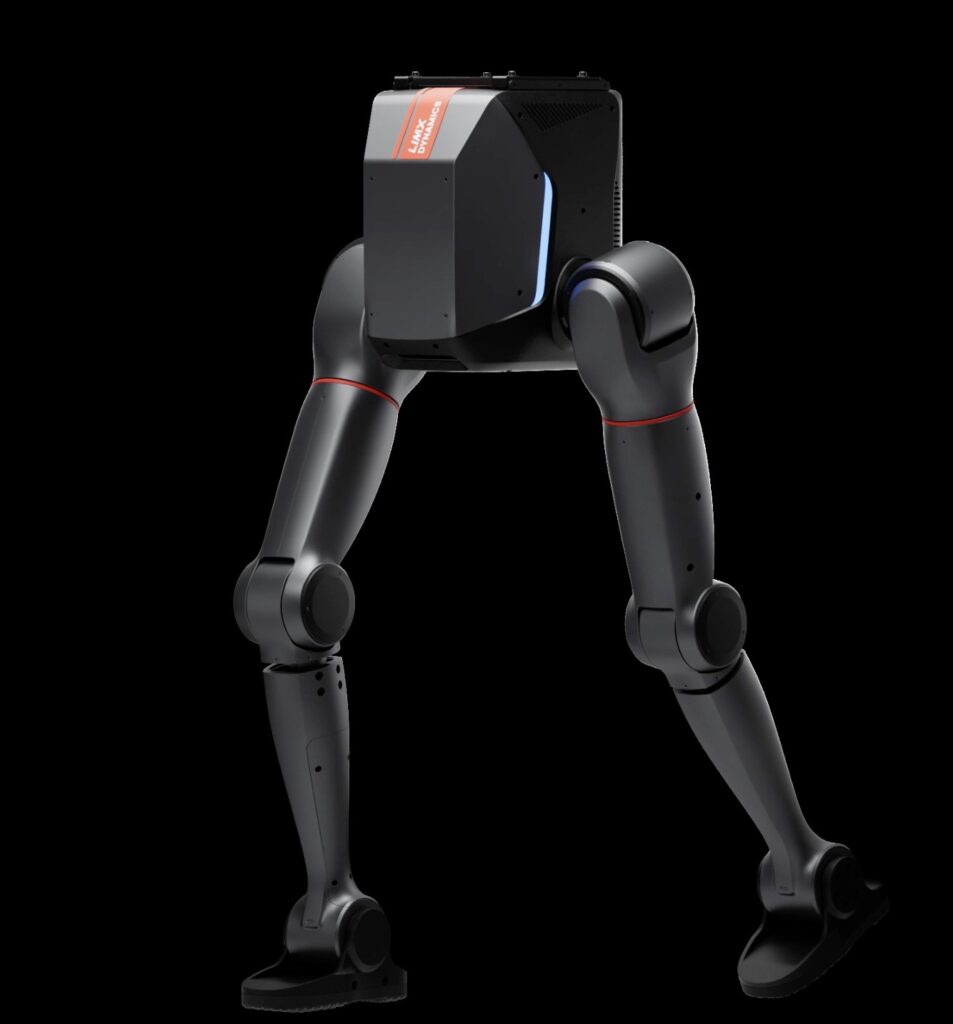
First, the Dual-arm configuration focuses on manipulation tasks, utilizing the robot’s upper body prowess. Second, the Wheeled-leg configuration transforms the robot into an all-terrain mobile unit, optimized for speed and increased payload transport. Finally, the Bipedal (sole feet) configuration is designed for complex terrain-specific locomotion, such as climbing stairs. This flexibility allows research labs to easily modify the hardware to support various modalities and projects without needing to purchase separate machines for locomotion and manipulation studies.
Engineering Precision and Manipulation
At the core of the TRON 2’s utility is its sophisticated manipulation capabilities. Each robotic arm in the system features seven degrees of freedom (DoF) and a spherical wrist design, allowing for fluid, human-like movement. With a workspace reach of 70 cm (27.6 in.), the dual-arm setup boasts a capacity of 10 kg (22 lb.).
To ensure precision, the robot utilizes a front-facing camera that provides comprehensive visual coverage of the arm’s workspace. This facilitates high-level manipulation, control, and data collection. Furthermore, the system is highly responsive, featuring a teleoperation latency of just 50 ms, making it ideal for real-time remote operation and complex object handling.
Mobility and Power Management
The TRON 2 represents a significant leap forward in power and capacity compared to previous iterations. LimX reports a 100% increase in maximum payload and an 80% increase in battery capacity. However, the mobility specifications vary impressively by configuration. In its Wheeled-leg mode, the robot supports a robust 30 kg (66.1 lb.) payload and includes an auto-recharging function. It employs adaptive control to traverse non-uniform terrain smoothly. Conversely, in Bipedal mode, the robot relies on visual-based motion planning to navigate obstacles like stairs, maintaining real-time balance through high-torque actuators and data-driven learning.
The Software Brain: A VLA Platform
Hardware is only half the equation. The TRON 2 is positioned as an integrated vision-language-action (VLA) platform. Its software environment is designed to handle the full data pipeline, offering tools for collection, cleaning, annotation, training, and inference.
LimX has ensured the platform is developer-friendly by providing a fully open SDK with high- and low-level interfaces. It supports full Python development workflows and is compatible with both ROS1 and ROS2. For researchers focusing on simulation before deployment, the system offers robust Sim2Real support. Provided URDF files facilitate development in major simulators, including NVIDIA Isaac Sim, MuJoCo, and Gazebo. Furthermore, the system comes pre-loaded with tutorials for algorithms such as ACT and Pi0.5, supported by over 1,000 real-world datasets, allowing teams to hit the ground running.
Safety and Accessibility
Recognizing the risks involved with dynamic robotics, LimX has integrated substantial safety and redundancy systems. The TRON 2 features active safety boundaries where algorithmic constraints prevent self-collision and equipment damage. Additionally, it features dual redundant power; in the event of power loss, the system is designed to fold the arms into a secure position to prevent damage to the manipulators or the surrounding environment.
LimX Dynamics has also structured the pricing to be competitive within the academic and research sectors. The Dual-arm (EDU Edition) is priced at $20,000, while the fully versatile 3-in-1 (EDU Edition) is available for $25,000. By combining modular versatility, a robust software stack, and safety-first engineering, the TRON 2 is poised to become a standard platform for the next generation of embodied AI research.