
Inside BoxMind, the advanced analytics system that helped secure a historic medal haul at the 2024 Paris Games.
- From Video to Victory: BoxMind transforms raw fight footage into 18 specific tactical indicators, turning chaotic combat into structured data to predict match outcomes with high accuracy.
- Historic Results: Deploying this system for the 2024 Paris Olympics, the Chinese National Team achieved a historic record of three gold and two silver medals, with the AI predicting Olympic match outcomes with 87.5% accuracy.
- Beyond the Ring: While currently specialized for boxing, this “gradient optimization” technology creates a replicable paradigm that can be adapted for team sports, e-sports, and other adversarial domains.
Competitive sports have long relied on data analytics, but combat disciplines like boxing have notoriously resisted the AI revolution. The action is too fast, the dynamics too complex, and the “art” of fighting too subjective for traditional computers to parse. However, at the 2024 Paris Olympics, that resistance crumbled.
The Chinese National Boxing Team arrived with a secret weapon that wasn’t wearing gloves: BoxMind. This closed-loop AI expert system was designed to automate the transition from visual perception to strategic reasoning. The result was a historic performance for China, securing three gold and two silver medals. While the athletes delivered the blows, BoxMind provided the blueprint, proving that in modern sports, the smartest corner often wins.
Decoding the Chaos of Combat
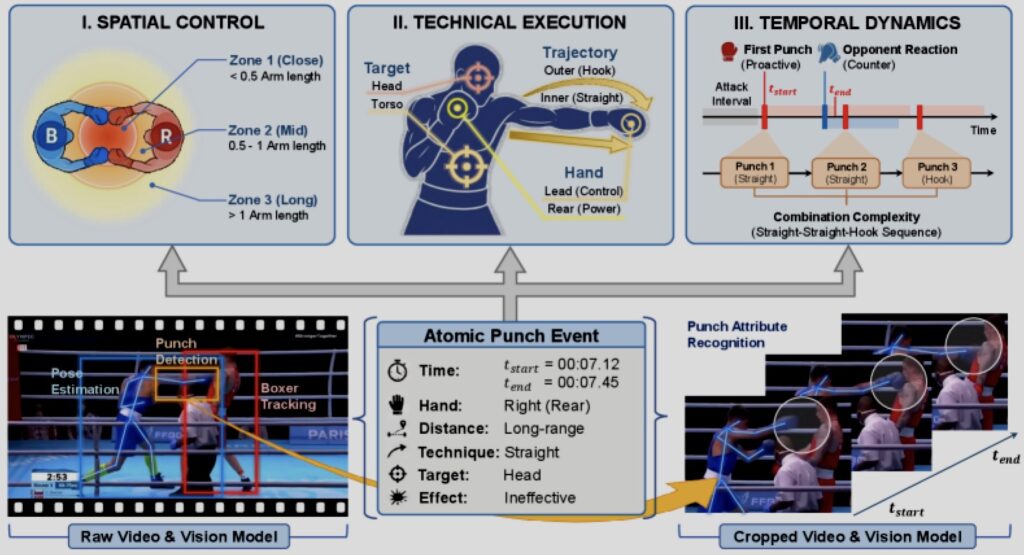
The primary challenge in boxing analytics is the lack of structured data. Unlike baseball or cricket, where plays have clear start and stop points, a boxing match is a fluid, chaotic stream of aggression. BoxMind solves this by defining “atomic punch events.”
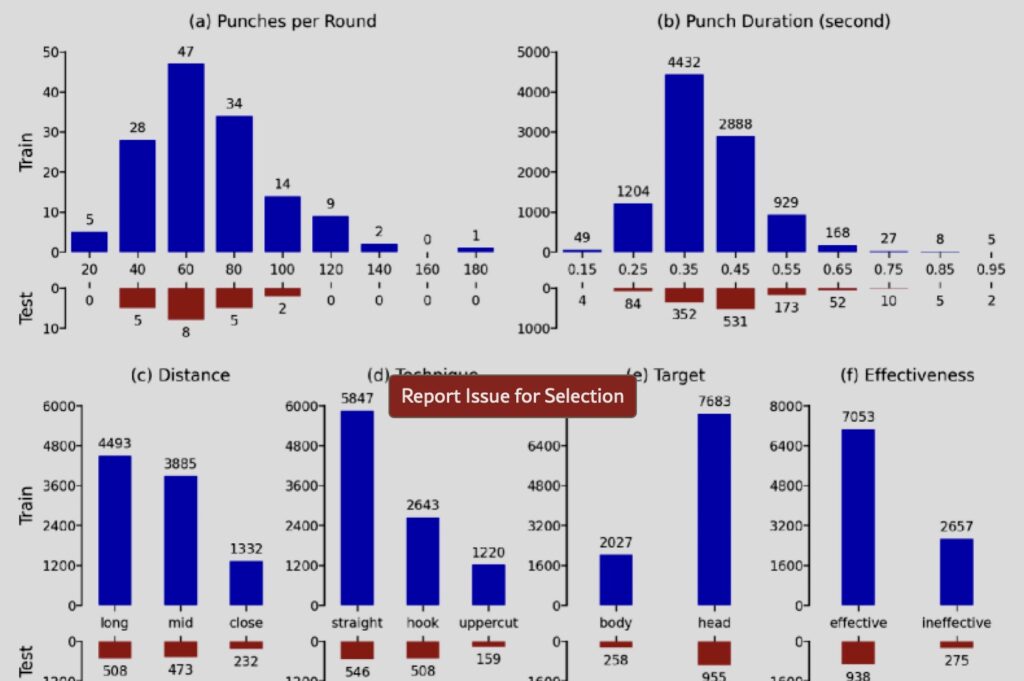
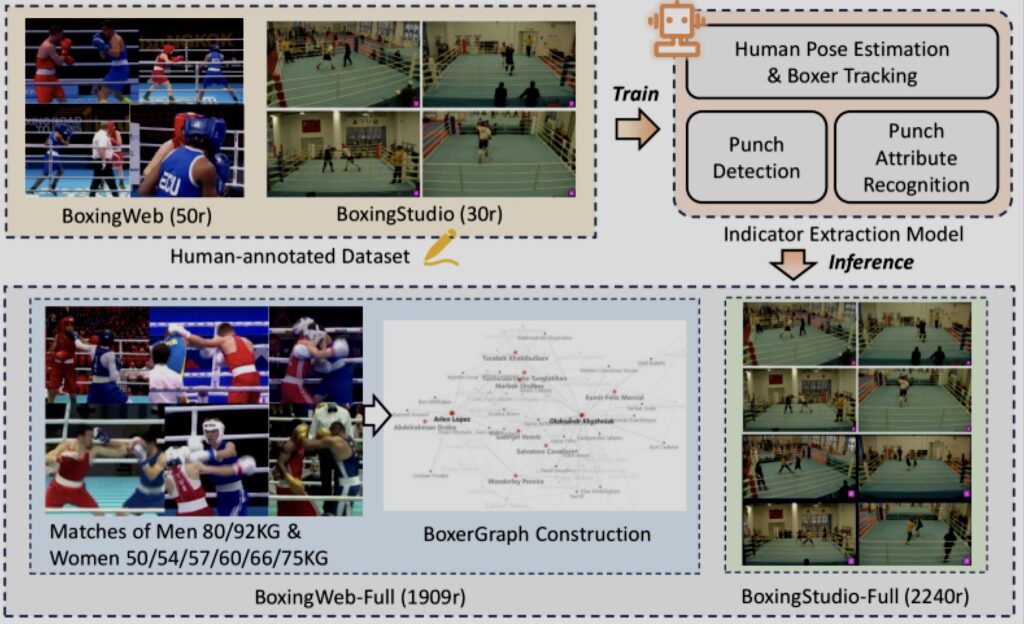
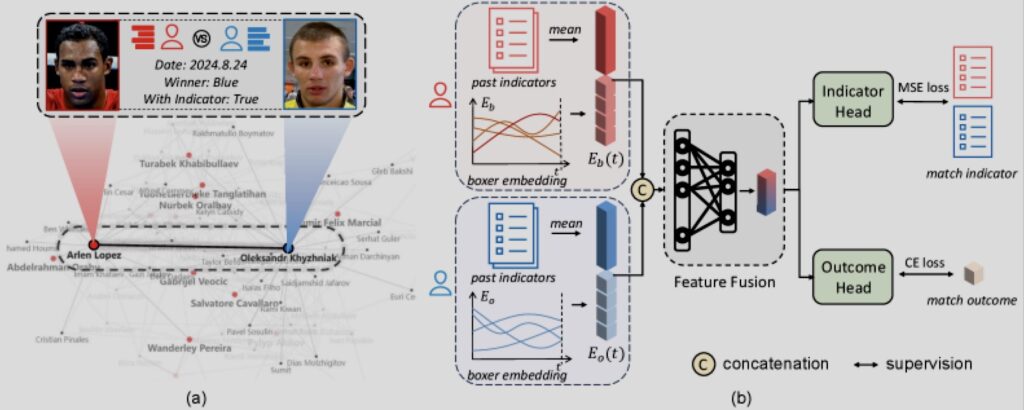
By analyzing match footage, the system breaks down the chaos into precise temporal boundaries with spatial and technical attributes. It parses the fight into 18 hierarchical technical-tactical indicators. Rather than offering vague advice like “be more aggressive,” the system quantifies the exact mechanics of the fight. It feeds these indicators into a graph-based predictive model (BoxerGraph), fusing explicit technical profiles with learnable, time-variant latent embeddings. In simple terms, it captures the unique, shifting rhythm of specific boxer matchups.
The Algorithm of Winning
What makes BoxMind truly revolutionary is not just that it watches the fight, but that it understands how to win it. The system models the match outcome as a “differentiable function.”
This allows for gradient optimization. Imagine the probability of winning is a hill the boxer needs to climb. The system analyzes the data to determine which specific tactical adjustments will push the boxer up that hill. It turns mathematical gradients into executable advice, telling coaches exactly what needs to change—whether it’s footwork frequency or punch selection—to statistically maximize the chance of victory.
The system’s prowess was validated under the brightest lights. While it achieved a respectable 69.8% accuracy on the BoxerGraph test set, its performance spiked to an impressive 87.5% accuracy on actual Olympic matches.
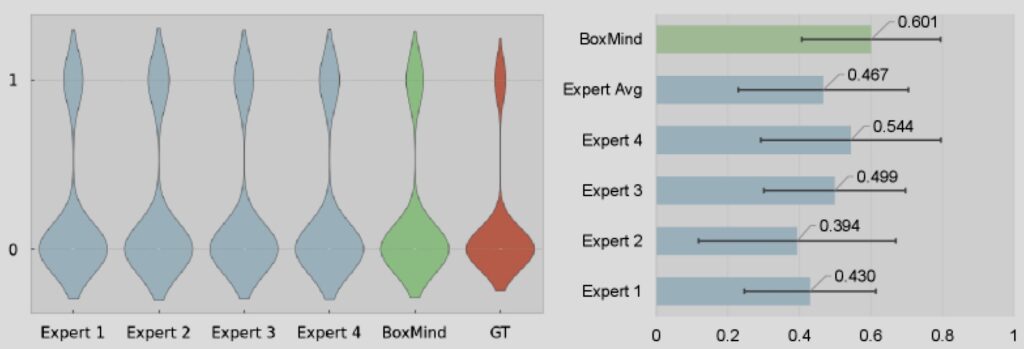
The Human Element and Future Frontiers
Despite the success, questions regarding causation remain. Did the AI win the medals, or did China simply have a generation of superior boxers? The paper acknowledges that the AI “contributed” to the success, acting as a support tool rather than a replacement for human skill. However, the correlation between the system’s deployment and the historic medal count is undeniable. BoxMind provided consistent, quantifiable, and opponent-specific guidance that surpassed the limitations of subjective human analysis.
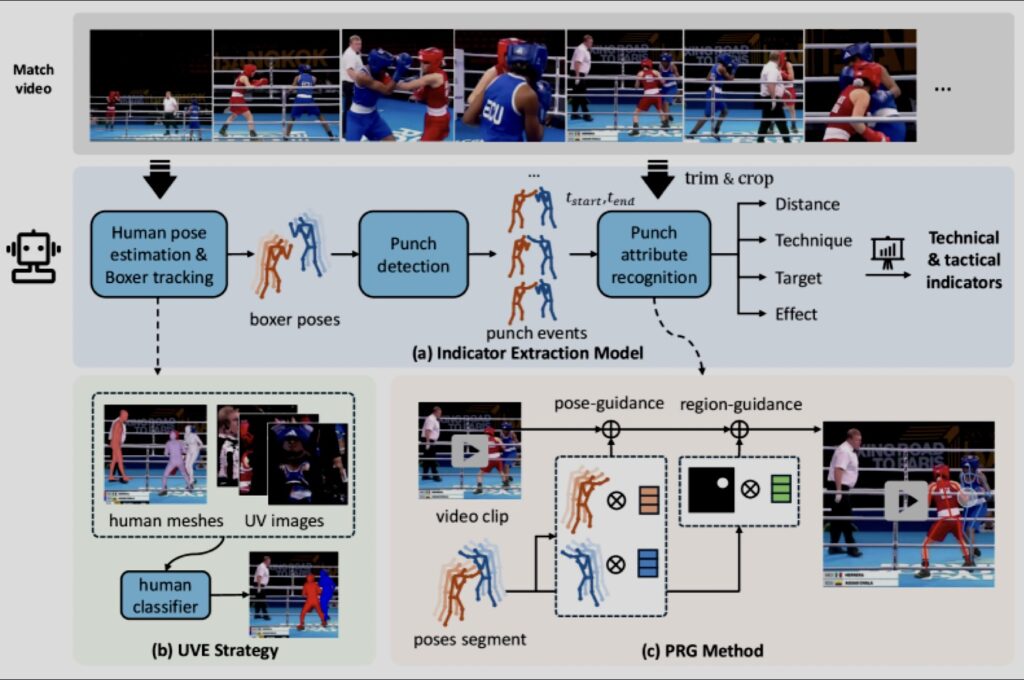
Looking forward, the researchers aim to close the gap between strategic planning and immediate execution. Currently, BoxMind functions primarily as a powerful pre-match planning or post-match analysis tool. The next frontier is developing a lightweight inference engine capable of running on edge devices. This would enable true real-time application, offering tactical adjustments in the seconds available between rounds.
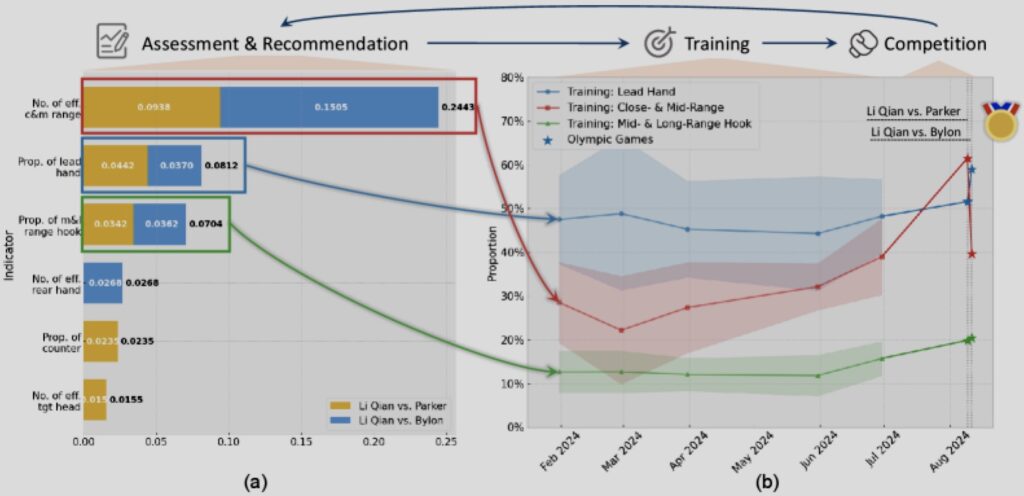
A New Paradigm for Sports Strategy
The implications of BoxMind extend far beyond the boxing ring. The framework developed here—moving from Atomic Event to Semantic Indicator, then to Matchup Modeling and finally Gradient Optimization—is inherently extensible.
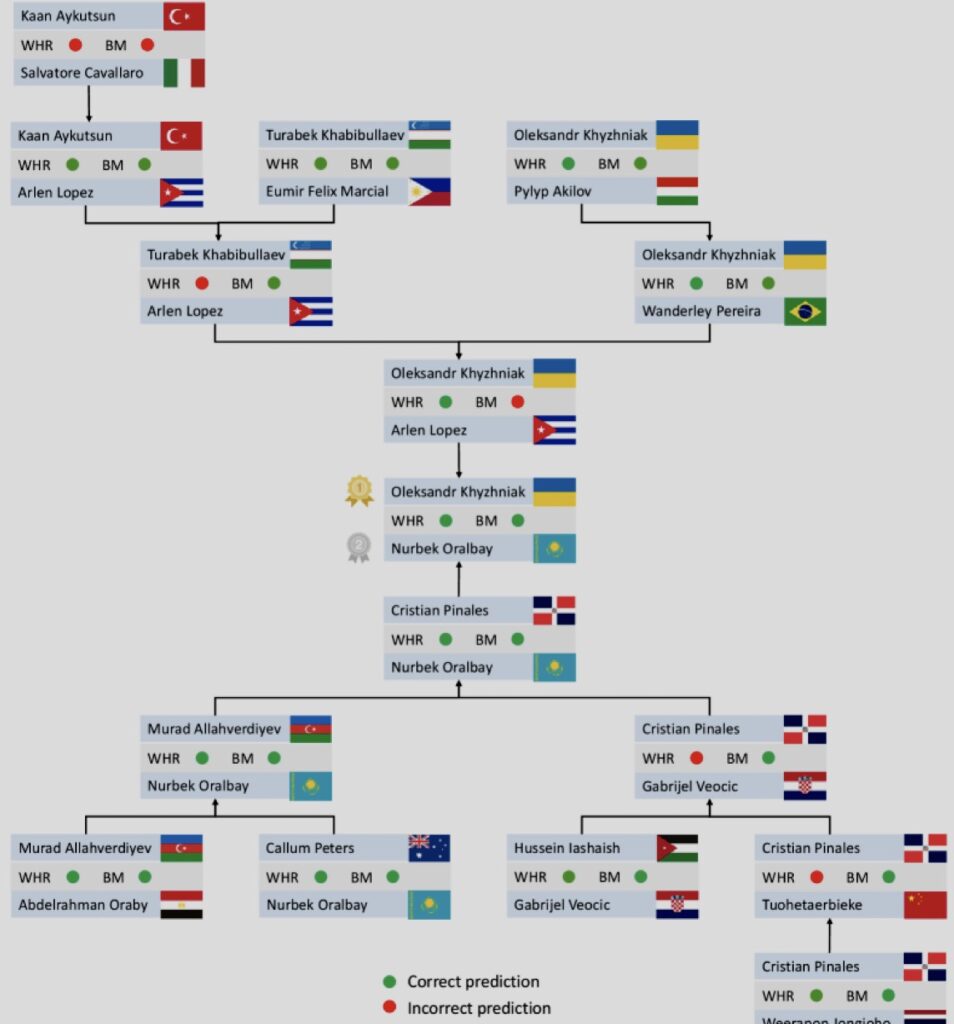
The core logic relies on defining meaningful actions and optimizing outcomes based on those actions. This methodology could easily be adapted to analyze unit interactions in team sports or the high-granularity action of e-sports. By simply replacing the boxing-specific definitions, the underlying strategy optimization engine remains universally applicable. BoxMind has bridged the gap between computer vision and decision support, proving that AI is ready to step out of the lab and into the arena as an active agent in high-performance competition.