The End of Manual Diagramming: AI Agents Now Transform Methodology Raw Text into Publication-Ready Illustrations
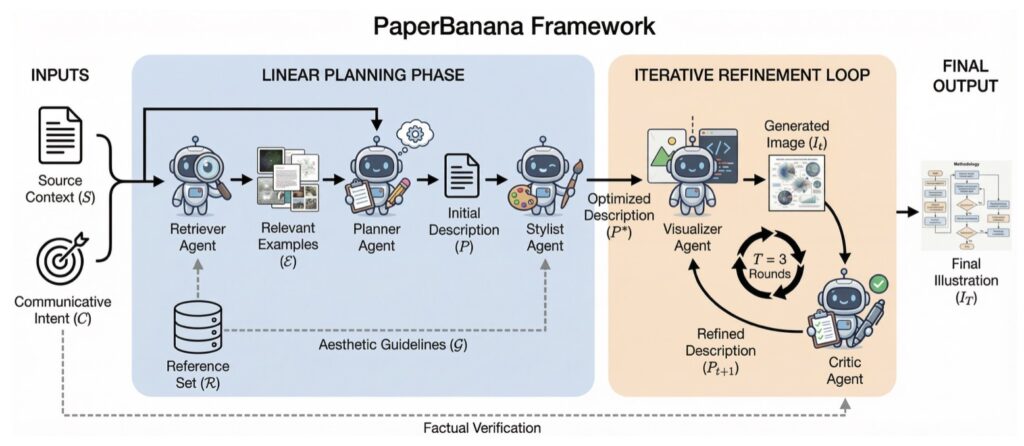
- Autonomous Visual Logic: PaperBanana utilizes a specialized “agentic framework” where five distinct AI agents—Retriever, Planner, Stylist, Visualizer, and Critic—collaborate to turn complex research methodologies into professional diagrams.
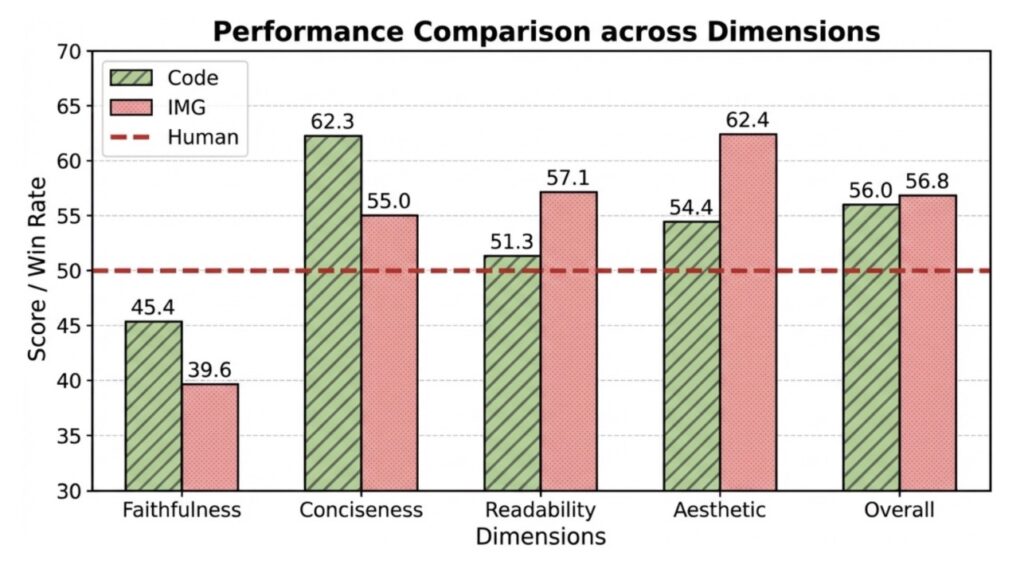
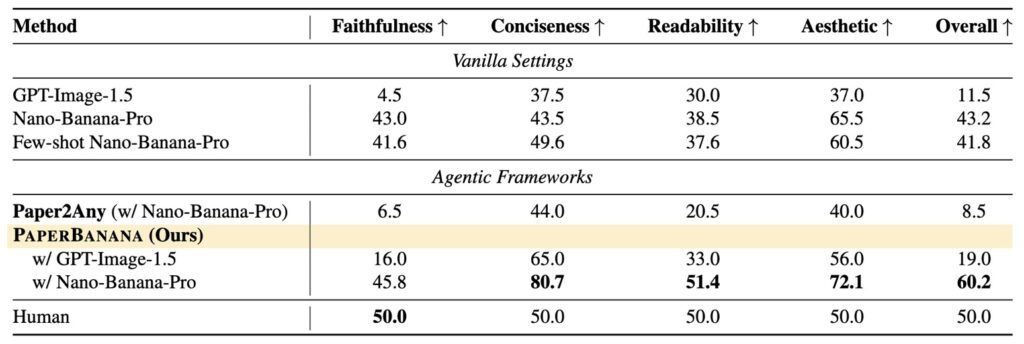
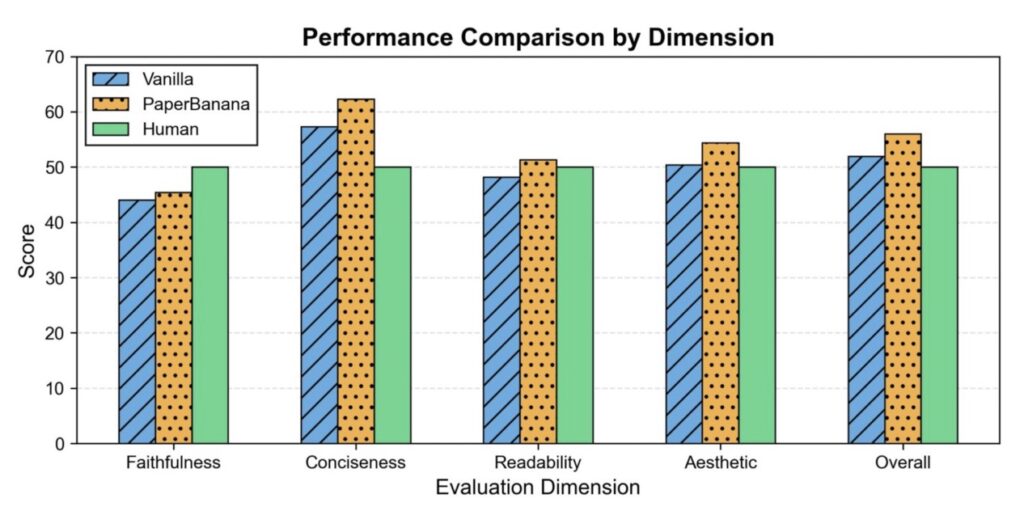
- Superior Human Preference: In rigorous blind evaluations, humans preferred PaperBanana’s automated outputs 75% of the time over existing methods, citing better conciseness, readability, and aesthetic appeal.
- The PaperBananaBench Standard: To prove its efficacy, the system was tested against a new benchmark of 292 methodology diagrams curated from NeurIPS 2025, consistently outperforming leading baselines in faithfulness and style.
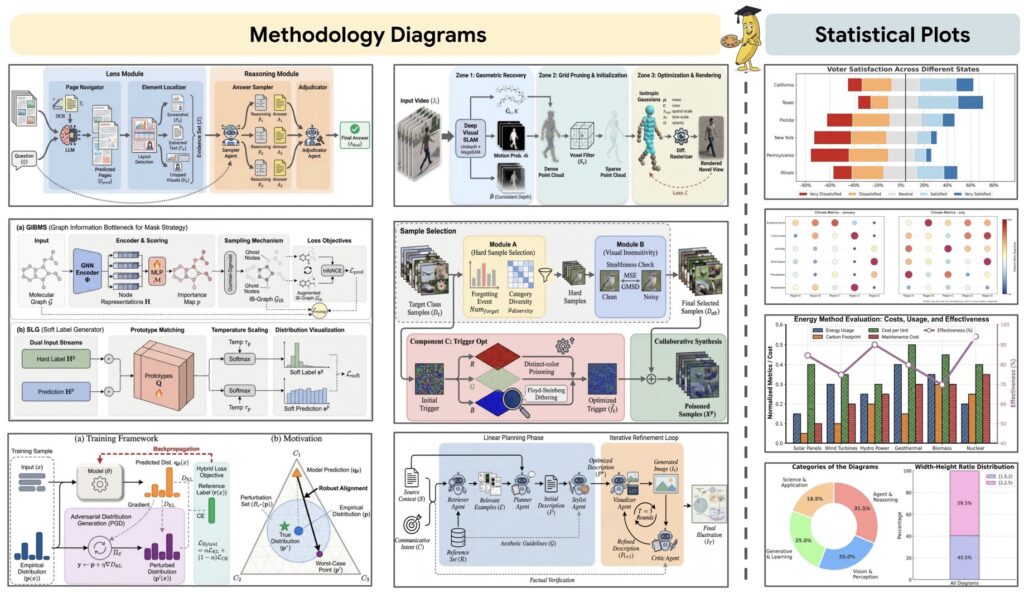
In the fast-paced world of AI research, the gap between a breakthrough idea and a published paper is often filled with hours of tedious manual labor. While Large Language Models (LLMs) can now draft abstracts and suggest experiments, creating the “perfect” methodology diagram—the kind that makes a reviewer nod in immediate understanding—has remained a stubborn bottleneck. Researchers have long been tethered to tools like Figma or TikZ, requiring a rare blend of design skill and technical precision.
Google’s latest breakthrough, PaperBanana, officially breaks this cycle. It is an agentic framework designed to automate the generation of publication-ready academic illustrations directly from methodology text. By removing the need for manual design, PaperBanana allows “AI Scientists” to fully document their work visually, marking a significant step toward end-to-end autonomous research.
The Secret Sauce: A Five-Agent Synergy
PaperBanana doesn’t just “guess” what a diagram should look like. It employs a sophisticated pipeline of five specialized agents that mimic the workflow of a human designer:
- The Retriever: Scours databases for relevant reference examples. Interestingly, the model thrives on “good design” rather than “topical perfection”—even a random reference works well if it demonstrates high-quality visual logic.
- The Planner: The cognitive heart of the operation, translating raw methodology into a structured textual blueprint.
- The Stylist: Synthesizes aesthetic guidelines from references to ensure the final product meets modern academic standards.
- The Visualizer: The artist of the group, transforming descriptions into either a rendered image or executable code.
- The Critic: Acts as the final editor, inspecting the output against the source text to provide iterative feedback for refinement.
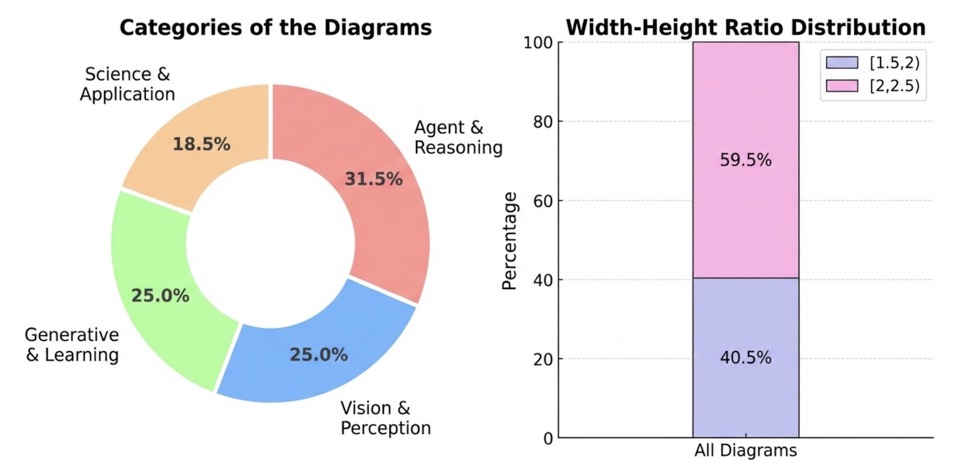
Validating Excellence with PaperBananaBench
To ensure these diagrams aren’t just “pretty” but actually scientifically accurate, the team introduced PaperBananaBench. This benchmark comprises 584 valid samples (including 292 test cases) derived from the prestigious NeurIPS 2025 conference.
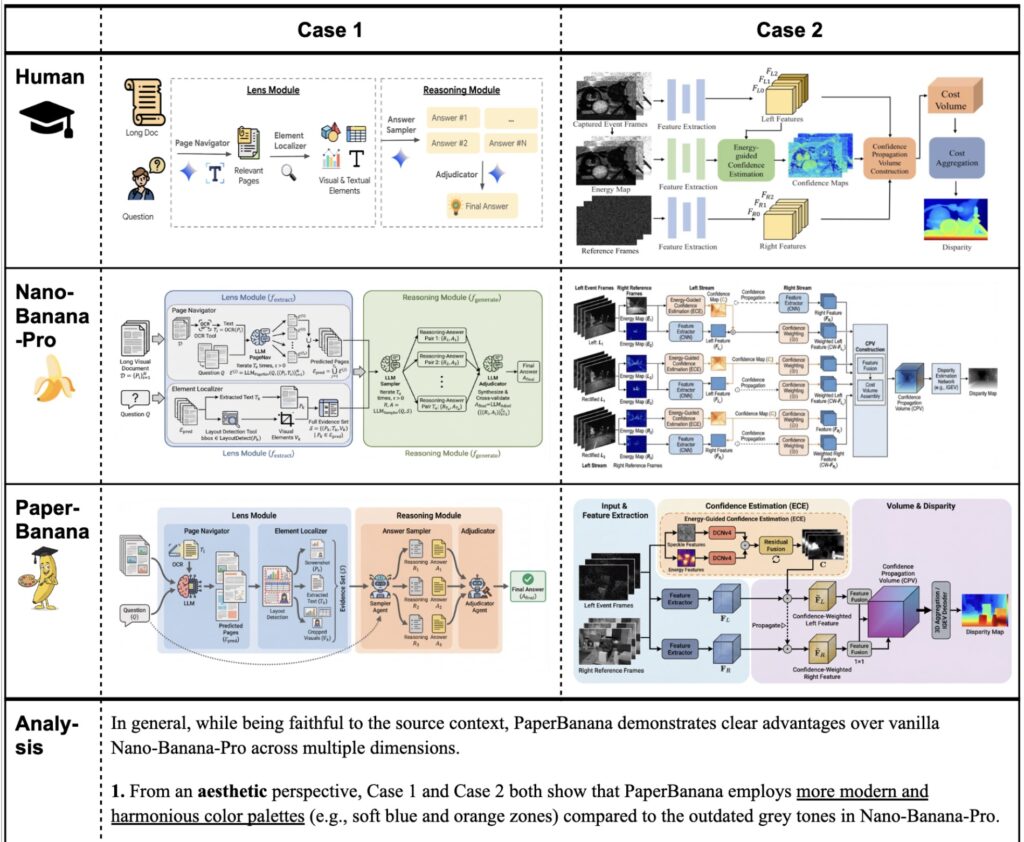
The results were definitive. PaperBanana consistently outperformed leading baselines across four critical dimensions: faithfulness, conciseness, readability, and aesthetics. Whether it’s a complex neural network architecture or a flow diagram for a reinforcement learning loop, the system produces results that are often indistinguishable from—or superior to—human-made versions.
Beyond Diagrams: Statistical Plots and Aesthetic Refinement
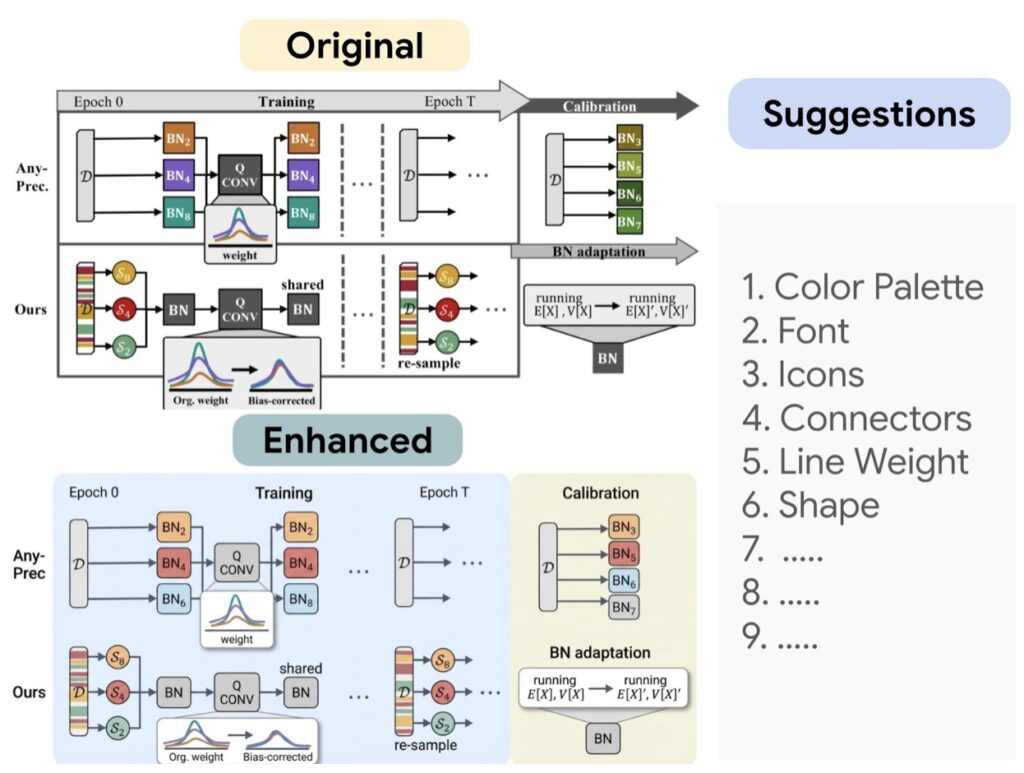
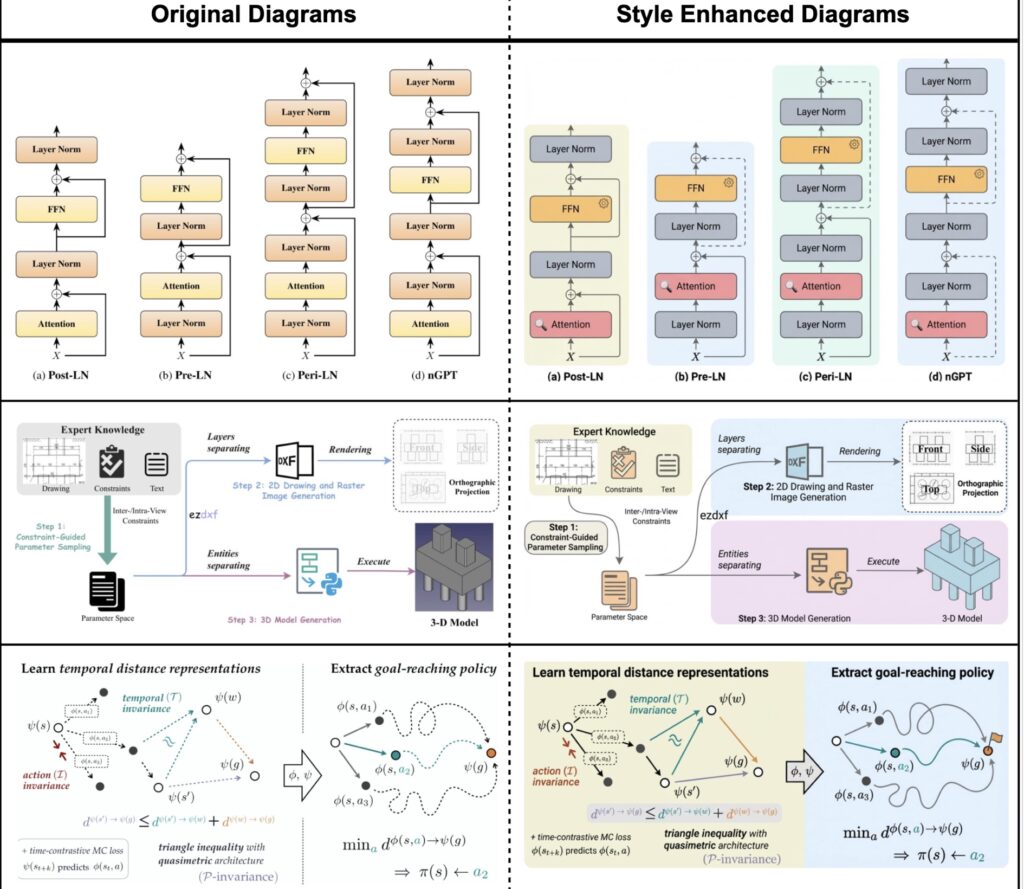
The versatility of PaperBanana extends into two fascinating “advanced applications.” First, it can be used to elevate existing human-drawn diagrams. By applying its auto-summarized style guidelines, the AI can take a clunky, outdated chart and polish its typography, color scheme, and graphical elements into something modern and sleek.
Second, the framework explores the frontier of statistical plots. While PaperBanana can generate plots via both code and direct image generation, the study found a compelling trade-off: image generation produces more visually stunning “presentation-style” plots, whereas code-based generation remains superior for maintaining 100% numerical fidelity.
The Path Forward
While PaperBanana represents a giant leap, the team is candid about the “failure modes” that still exist. The most common issue involves “connection errors”—redundant lines or mismatched nodes—which highlight the current perceptual limitations of foundation models.
Nevertheless, PaperBanana paves the way for a future where the visual communication of science is as fluid as the thinking behind it. The waitlist is now open, signaling a new era where the “hit” isn’t just the research itself, but how beautifully it is presented to the world.