
As American investors pour billions into closed systems, startups are finding speed, savings, and surprising power in free models from across the Pacific.
- Closing the Gap: Open-source Chinese AI models like DeepSeek and Qwen are rapidly catching up to top-tier US proprietary systems, offering comparable performance for a fraction of the cost.
- The Efficiency Shift: High-value US startups are increasingly swapping out expensive APIs from OpenAI and Google for customizable Chinese models to improve speed and reduce operational overhead.
- Strategic Dilemma: The trend challenges the dominance of “closed” American AI giants, raising questions about whether the future of artificial intelligence belongs to proprietary gatekeepers or open global innovation.
Earlier this year, Misha Laskin looked out at the American artificial intelligence landscape and saw a trend that worried him. A theoretical physicist and machine learning engineer who helped architect some of Google’s most powerful systems, Laskin noticed that Silicon Valley’s embrace of “open” AI models was accelerating. The problem? Most of these foundational tools were being made in China.
“These models were not that far behind the frontier,” Laskin observed. “In fact, they were surprisingly close to the frontier. The ones that are coming now… well they’re palpably close.”
This realization drove Laskin to found Reflection AI, a startup recently valued at $8 billion, with the specific goal of providing an open-source American alternative to the Chinese systems gaining traction in the US. His concern highlights a significant, underreported shift in the tech industry: while investors are staking tens of billions on the belief that closed American giants like OpenAI and Anthropic will dominate the global market, the startups actually building the future are increasingly turning to free, customizable Chinese technology.
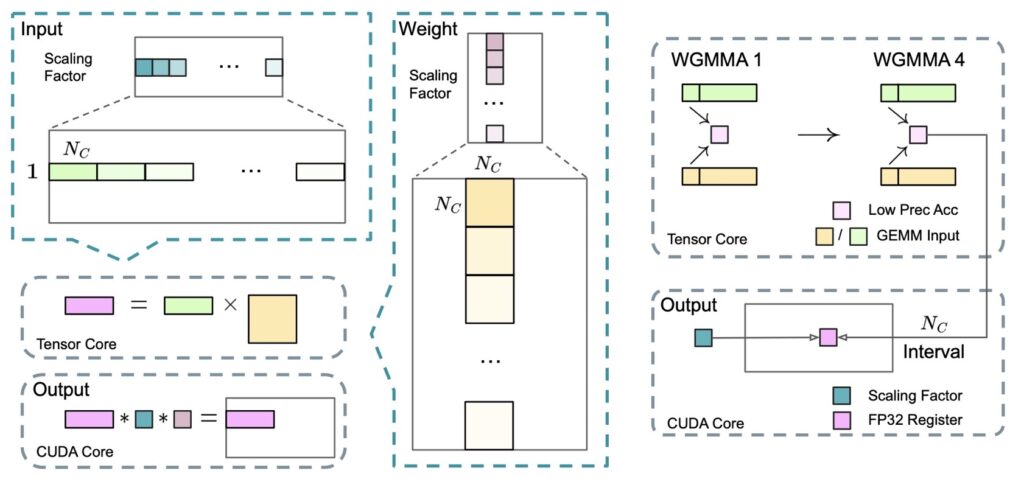
Unleashing the Power of DeepSeek-V3: The Future of Language Models
The Allure of “Good Enough” and Free
For years, the narrative was simple: American closed-source models were the gold standard, vastly outperforming open alternatives. Attempts to build internal tools using open-source data—such as Bloomberg’s “BloombergGPT”—often failed to match the raw capability of OpenAI’s proprietary systems. However, the past year has upended that dynamic.
According to over 15 AI startup founders, engineers, and investors, Chinese companies like DeepSeek and Alibaba have made massive technological strides. Their open-source models (such as DeepSeek’s R1 and Alibaba’s Qwen) are “open-weight,” meaning anyone can download, copy, modify, and operate them on their own hardware. This stands in stark contrast to the “closed” models of GPT-5 or Claude, which are accessed through data centers controlled by big tech giants.
For startups, the calculation is often pragmatic rather than political. Michael Fine, head of machine learning at Exa—an AI search company valued at $700 million—explains that while they might prototype a feature using a closed US model, scaling it is a different story.
“What often happens is we’ll get a feature working with a closed model and realize it’s too expensive or too slow,” Fine said. “That usually means replacing the closed model with the equivalent open model and then running it on our own infrastructure.”
Running these Chinese models on proprietary hardware has proven significantly faster and cheaper for companies like Exa, which is backed by heavyweights like Nvidia and Lightspeed Venture Partners.
A Shrinking Frontier
The rapid improvement of Chinese open-source AI poses a complex challenge for the US tech ecosystem. Metrics tracked by Artificial Analysis, an independent benchmarking firm, confirm that Chinese open-source products now closely approach, and in some specific domains match, the performance of leading closed American models.
“The gap is really shrinking,” noted Lin Qiao, CEO of Fireworks AI and co-creator of PyTorch, the dominant framework for training AI models.
This convergence suggests that the “moat” protecting American AI dominance may be shallower than investors believe. If a startup can achieve 95% of the performance of a top-tier US model using a free Chinese alternative—while retaining full control over their data and customization—the value proposition of expensive, closed APIs begins to erode.
The Strategic Crossroads
Laskin’s observation that we are “starting to see glimpses of open-model companies actually driving the frontier of intelligence in China” serves as a wake-up call. The industry is at a crossroads. On one side are the closed, capital-intensive American giants betting on supremacy through scale and secrecy. On the other is a global, open-source ecosystem—currently led by Chinese innovation—that offers flexibility and accessibility.
As Silicon Valley startups continue to see record valuations, the irony is palpable: much of this new American wealth is being built on a foundation of free-to-download Chinese engineering. Whether this reliance is a temporary stopgap or a permanent structural shift remains to be seen, but it fundamentally questions whether America’s pursuit of closed models is the right path for the future of AI.