
High-Velocity Performance Meets Niche Precision in OpenRouter’s Newest Foundation Model
- Unmatched Velocity: Pony Alpha ranks in the “Infinityth” percentile for speed, delivering near-instantaneous responses across multiple benchmarks.
- Specialized Utility: While it struggles with general knowledge, it excels in specific tasks like email classification, coding, and roleplay-driven agentic workflows.
- The “Stealth” Trade-off: The model is currently free to use on OpenRouter, but users must balance this cost-efficiency with a logging policy designed for model improvement.
The landscape of AI foundation models is shifting from “one-size-fits-all” giants toward specialized “stealth” models designed for high-performance niches. Enter Pony Alpha, the latest cutting-edge foundation model launched on OpenRouter. Built to handle the rigors of hands-on coding, complex roleplay, and agentic workflows, Pony Alpha positions itself as a tool for users who value rapid execution and functional versatility in real-world applications.
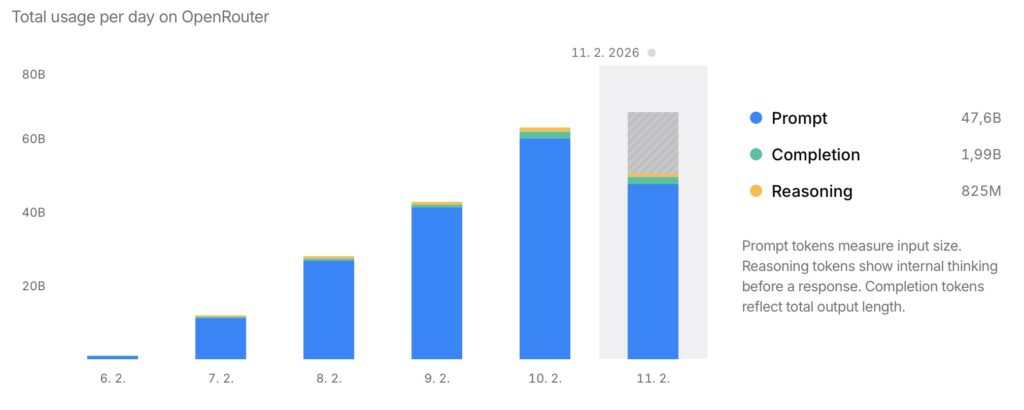
A Master of Speed and Specificity
If there is one metric where Pony Alpha leaves the competition in the dust, it is latency. The model consistently ranks among the fastest ever tested, achieving an Infinityth percentile ranking for speed across six different benchmarks. This rapid-fire processing is evident even when the model is tackling complex tasks; duration metrics remain remarkably low, suggesting that Pony Alpha is built for environments where time-to-token is the primary priority.
Beyond raw speed, the model shows a specialized aptitude for structured data tasks. In Email Classification, it boasts a solid 92.0% accuracy. Furthermore, its performance in Hallucination benchmarks—scoring 85.7%—indicates a fair ability to distinguish between fact and fiction, or at least a healthy skepticism toward fictional concepts. These traits make it a compelling candidate for “agentic” workflows, where the model must act as a controller, calling tools and routing information with high accuracy.

Navigating the Performance Paradox
However, Pony Alpha is a study in contrasts. While it excels in the “doing”—coding, roleplay, and instruction-heavy tasks—it appears to bypass the “knowing.” Benchmark data reveals a significant weakness in broader cognitive areas, with 0.0% accuracy scores in General Knowledge, Ethics, and complex Reasoning. Its Instruction Following also sits at a moderate 50.0%, placing it in the 45th percentile.
This “mixed profile” suggests that Pony Alpha is not intended to be a replacement for a general-purpose assistant like GPT-4. Instead, it functions more like a specialized engine. It is highly optimized for Roleplay and Coding, where the focus is on syntax, tone, and logic flow rather than the recall of historical facts or ethical philosophizing.
The Cost of Innovation
For developers and hobbyists, the barrier to entry for Pony Alpha is nonexistent: it is currently free. While official price data is absent, its status as a stealth model on OpenRouter typically indicates a free tier aimed at gathering usage data.
There is, however, a caveat for the privacy-conscious. Like many experimental foundation models, all prompts and completions are logged by the provider. This data is used to iteratively improve the model, meaning users are essentially participating in a live laboratory. For those working on non-sensitive coding projects or creative roleplay, this is a small price to pay for access to one of the fastest models on the market.