
The controversial AI assistant jumps from Windows to your living room, and there is no uninstall button.
- Mandatory Integration: A recent webOS firmware update installs Microsoft Copilot as a permanent system-level application on supported LG TVs, with no option for users to uninstall it.
- Privacy Implications: The move has reignited concerns over data tracking, particularly regarding LG’s “Live Plus” feature, which monitors onscreen content to serve personalized ads.
- A Shift in Ownership: This update highlights a growing trend where smart device functionality changes significantly post-purchase, often reducing user control over their own hardware.
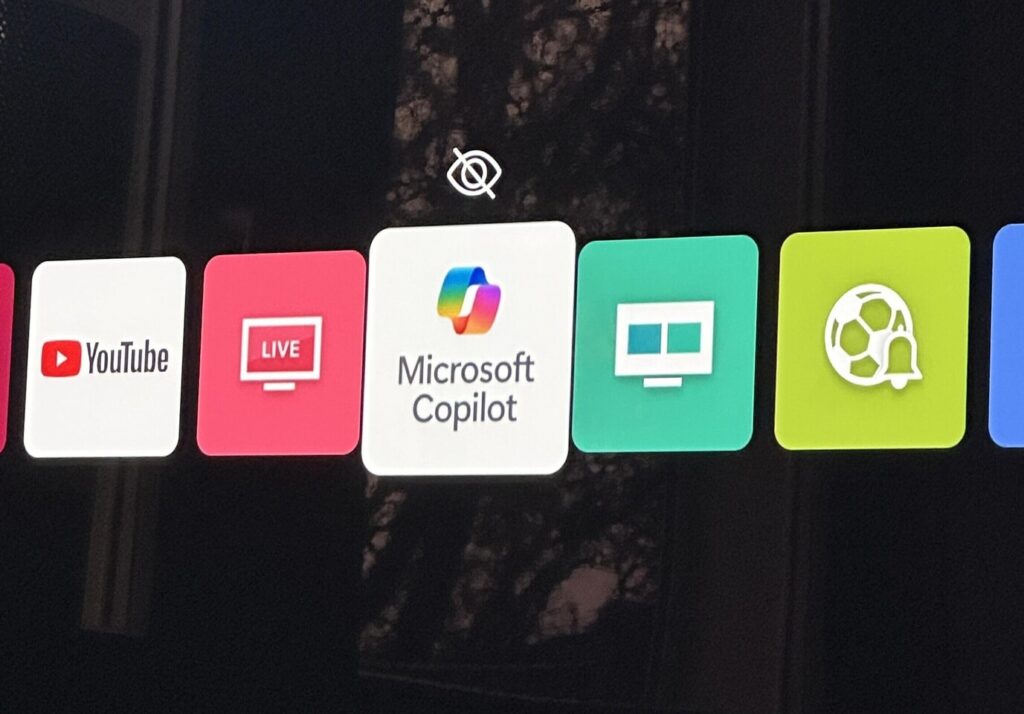
Microsoft’s Copilot AI chatbot has already earned a reputation as one of the most controversial additions to the Windows 11 operating system. Now, that controversy is migrating from the home office to the living room. In a move that has sparked immediate backlash from privacy-conscious users, Microsoft is aggressively expanding its AI footprint by pushing Copilot directly onto smart TVs.
From Desktop to Big Screen
According to reports from user and subsequent community confirmations, a recent firmware update for LG’s webOS operating system automatically installs the Microsoft Copilot AI app. Unlike standard streaming apps like Netflix or YouTube, which users can add or remove at will, Copilot arrives as an unwanted guest that refuses to leave.
The application is classified as “system-level” software. This technical distinction is crucial: it means that once the update is applied, the AI assistant becomes an intrinsic part of the TV’s environment. Users cannot uninstall it. Even factory resets or standard storage cleanup tools are ineffective. While users can choose to hide the icon from their home screen to reduce visual clutter, the underlying software remains active and resident on the device.
What Does Copilot Do on a TV?
Functionally, the version of Copilot appearing on TVs (both LG and Samsung are reportedly integrating it) appears to be a web app wrapper that links to Microsoft’s cloud-based assistant. LG and Microsoft have pitched this collaboration as a way to enhance content discovery and streamline recommendations via voice or text input.
However, the practical utility remains vague. As the source material notes, “What exactly can a Copilot AI app do in your TV? We don’t know either.” It seems designed to capture a larger slice of the AI market share, potentially using the Linux-based webOS environment as a testing ground for a broader rollout to Linux PC users.
The Privacy Problem: “Live Plus”
The forced integration of AI has drawn fresh attention to how smart TVs handle user data. Beyond Copilot, users are flagging a specific LG setting known as “Live Plus.”
When enabled, Live Plus utilizes Automatic Content Recognition (ACR) to analyze exactly what is being displayed on your screen—whether it’s a cable show, a video game, or a movie. LG describes this as an “enhanced viewing experience,” but in practice, it is often used to feed data into algorithms for personalized recommendations and targeted advertising.
How to Disable Live Plus: If you are concerned about your TV “watching” what you view, you can disable this feature. Navigate to: Settings > All Settings > General > Additional Settings > Live Plus (Note: Wording may vary slightly depending on your specific model).
The Erosion of User Control
The reaction from the community has been swift and largely negative. This situation exemplifies the modern tension between hardware ownership and software licensing. Consumers buy a TV expecting a static display device, but over time, manufacturers treat these devices as evolving platforms for service delivery.
For those who wish to avoid AI processing entirely, the options are bleak. Since the update is automatic, the only guaranteed workaround is to never connect the TV to the internet—effectively stripping a “Smart TV” of the features that likely prompted its purchase in the first place. As companies like Microsoft, LG, and Samsung race to dominate the AI landscape, the user’s ability to say “no” is becoming the first casualty.