While Nintendo waits, a creator used AI to build a gritty Legend of Zelda masterpiece in just five days.
- Blockbuster Quality on a Micro-Budget: Discover how a solo creator utilized modern AI tools to produce a cinema-quality trailer in less than a week for only $300.
- A Darker Vision of Hyrule: Moving away from the bright, cartoonish aesthetic of the games, this project reimagines Zelda’s world through a lens of gritty realism and emotional depth.
- The AI Workflow Revealed: From specific 2×2 grid generation techniques in Freepik to “handheld” camera animation, learn the exact steps used to achieve consistent, high-fidelity results.
For four decades, fans of The Legend of Zelda have waited for Nintendo to translate the magic of Hyrule onto the silver screen. While the gaming giant meticulously plans its next move, the democratization of creative technology has allowed fans to take matters into their own hands. In a stunning display of what modern AI tools can achieve, creator PJ Ace (@PJaccetturo) recently unveiled a concept trailer that looks like a $300 million Hollywood blockbuster. The reality? It was made in just five days with a budget of $300.
This isn’t just a testament to speed; it is a masterclass in workflow. By utilizing specific tools within Freepik, Ace demonstrated that the barrier to entry for epic storytelling has crumbled. Here is the broader perspective on how he brought a grounded, cinematic Hyrule to life.
Rewriting the Narrative: A Gritty Reality
The success of this project began before a single pixel was generated. Ace made a deliberate creative choice to ditch the bright, saturated “Nintendo look” often associated with the franchise. Instead, he opted for a gritty, grounded reality—a “Snyder Cut” version of the fantasy epic.
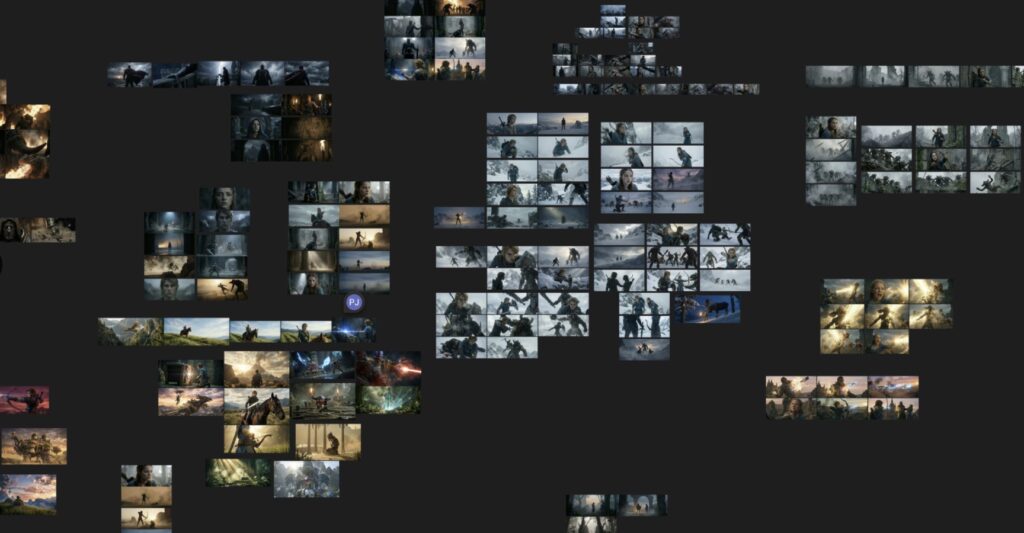
The narrative arc was mapped out not just by location, but by emotional beat: Fear → Ruin → Rage → Capture →Confrontation. In this version, Princess Zelda is not a passive figure waiting in a castle. She is a witness to the destruction of her home, forced to act. To achieve this, Ace scouted iconic Hyrule locations but reimagined them as chaotic and cinematic. By generating a “mood board” first, he ensured that every subsequent scene adhered to this darker, visceral aesthetic.
The Secret Weapon: Consistency Through Structure
The most common criticism of AI video generation is a lack of consistency. Ace solved this using the “Nano Banana Pro” model inside Freepik with a rigid prompt structure. Rather than generating single images or large batches, he utilized a 2×2 grid generation method.
This technique was crucial for two reasons. First, generating a 2×2 grid provided consistent lighting and multiple angles of the same scene instantly, whereas 3×3 grids often resulted in a loss of detail. Second, Ace utilized Freepik’s advanced reference capabilities. By feeding the AI a character reference (Zelda), a style reference (a cinematic grid of shots), and even object references (such as specific wooden dolls), he forced the AI to adhere to a cohesive visual language. To seal the cinematic deal, the aspect ratio was strictly set to 21:9.

Curation and Upscaling
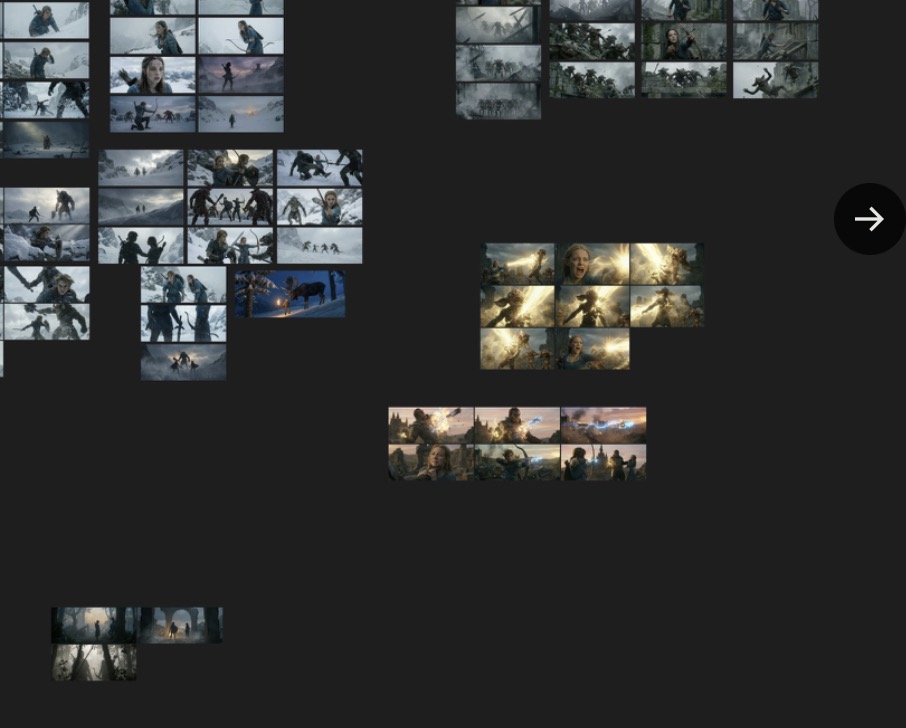
The difference between a generic AI video and a professional trailer lies in curation. Ace’s workflow involved generating 10 to 20 grids per scene—far more than necessary—to find the perfect “selects.”
Once the best shots were cropped from the grids, they were arranged to ensure visual flow. However, the raw generations weren’t enough for the big screen. The selected images were fed back into Freepik to be upscaled using Nano Banana Pro. This step added the necessary fidelity and sharpness, transforming a digital sketch into a high-resolution frame ready for animation.
Breathing Life into Static Images
To transform these high-fidelity images into moving video, Ace turned to Kling AI 2.6 (integrated within Freepik). The prompt strategy here was distinct from image generation. Instead of describing the scene, the focus shifted to describing physical action, such as “looking back in fear.”
The key tip for selling realism, however, was the camera movement. Ace advises creators to “SPAM camera shake” in their prompts. A perfectly smooth camera often looks artificial, but a handheld, shaking camera implies a cameraperson reacting to the chaos, grounding the fantasy elements in a documentary-style reality.
The Auditory Glue
Finally, a trailer is only as effective as its soundscape. To elevate the visuals from “good” to “great,” the project utilized an epic orchestral version of the Zelda theme by Epic Trailer Music UK. When paired with custom sound effects by sound designer Matheus, the audio bridged the final gap, selling the illusion of a massive studio production.
PJ Ace’s project proves that we are entering a new era of filmmaking. With a clear vision, the right workflow, and $300, the only limit to seeing our favorite stories come to life is no longer Hollywood green-lighting—it’s our own imagination.