

Delivering state-of-the-art coding, scientific research, and problem-solving capabilities at a fraction of the cost.
- Unprecedented Value: Opus 5 delivers intelligence that rivals the frontier model Claude Fable 5, but at half the price, all while maintaining the exact same cost structure as its predecessor, Opus 4.8.
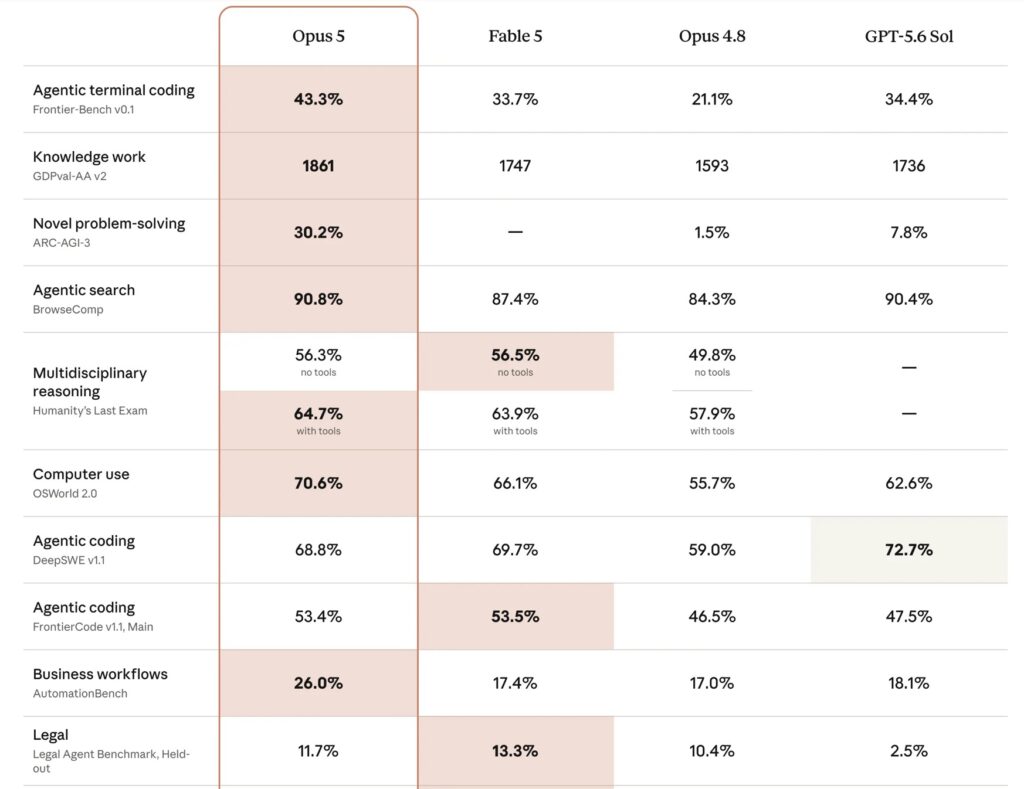
- State-of-the-Art Problem Solving: From setting new benchmarks in software engineering and knowledge work to tripling competitor scores in complex reasoning tasks, Opus 5 is built for high-level, everyday execution.
- Unmatched Agency and Safety: It is the most aligned and thorough model to date, capable of proactively writing its own tools to solve roadblocks while operating under rigorous, carefully calibrated safeguards.
The landscape of artificial intelligence is rapidly evolving. The industry is moving beyond a paradigm where the most capable models are reserved only for the most resource-intensive tasks, toward a future where frontier-level intelligence is accessible, efficient, and integrated into everyday workflows. A significant leap forward in that journey was announced today with the release of Claude Opus 5.
Available immediately across all platforms, Opus 5 is presented as a thoughtful, proactive model designed to be the daily driver for professionals, developers, and researchers. As the new default model on Claude Max and the strongest available offering on Claude Pro, it aims to bridge the gap between raw power and practical utility.
A New Standard for Performance and Economics
The defining characteristic of Claude Opus 5 is its remarkable cost-effectiveness. The developers claim it provides massively upgraded performance over Opus 4.8 without increasing the price. At $5 per million input tokens and $25 per million output tokens, it brings near-flagship capabilities to everyday tasks. For users who need results even quicker, a Fast mode is available at twice the base price, running at roughly 2.5 times the default speed.
Furthermore, Opus 5 introduces adjustable effort settings, empowering users to dictate whether the model should optimize for maximum intelligence or conserve tokens for faster, cheaper outputs.
When pushed to its limits, the reported benchmark results are staggering. On coding and knowledge work evaluations like Frontier-Bench and GDPval-AA, Opus 5 establishes a new state-of-the-art. In software engineering, it reportedly surpasses all competing models on Frontier-Bench v0.1 while costing less per task than its predecessor. On CursorBench 3.2 at maximum effort, it operates within a mere 0.5% of Fable 5’s peak score—at exactly half the cost.
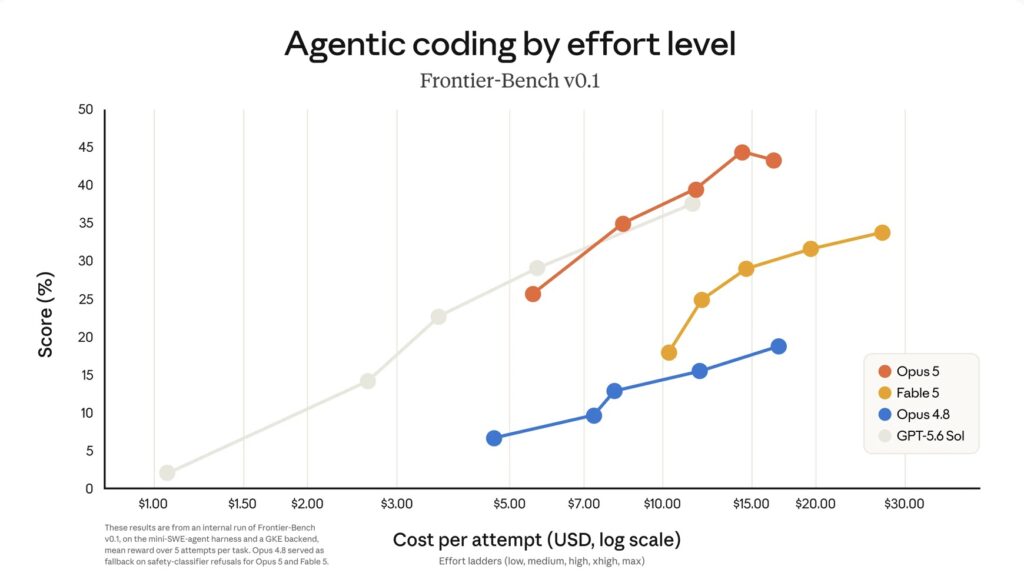
This dominance extends to general problem-solving and computer use:
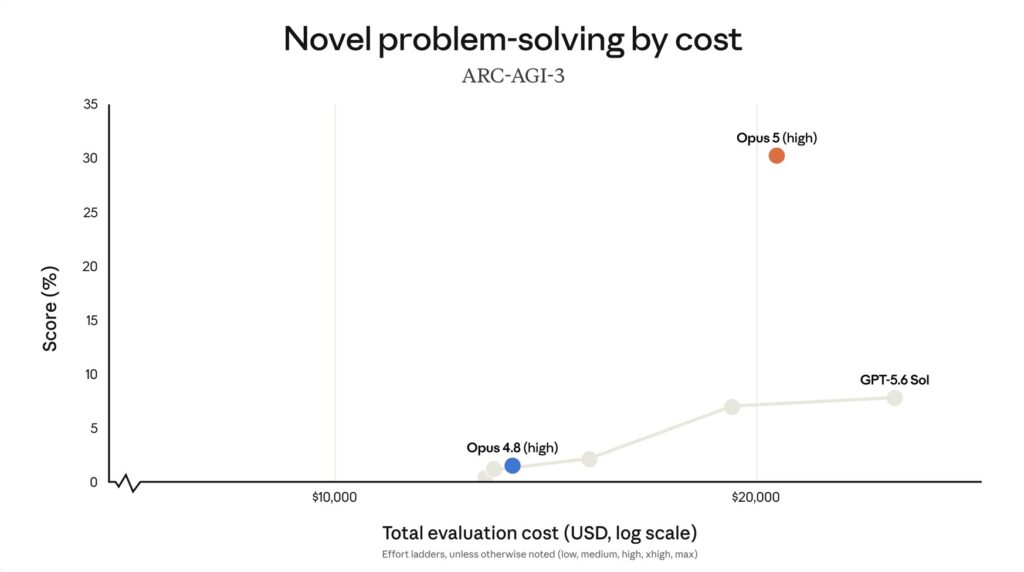
- ARC-AGI 3: When tasked with solving highly novel problems, Opus 5 scores an impressive three times higher than the next-best model.
- Zapier AutomationBench: Evaluating end-to-end business task completion, Opus 5 boasts a pass rate 1.5 times higher than the runner-up for the same cost per task.
- OSWorld 2.0: In computer use benchmarking, it outperforms every other model at any given cost tier, reportedly beating Fable 5’s absolute best result for just over a third of the price.
Agency, Thoroughness, and Scientific Discovery
What truly sets Opus 5 apart, according to early-access testing, is its agency—its ability to verify its own work, iterate on failures, and proactively solve problems rather than just predicting the next word.
During evaluations, Opus 5 was challenged to rebuild a 3D FreeCAD model from a drawing of a machine part. Intentionally deprived of a way to directly view the image, the model didn’t give up. Instead, it wrote its own computer vision pipeline to extract the geometry directly from the raw pixels and successfully reconstructed the part—a feat no competing model could achieve after multiple attempts. In other real-world tests, it successfully identified and patched the root cause of a complex open-source bug that competitors merely masked, and even built its own test harness to validate a market data feed when no live environment was available.
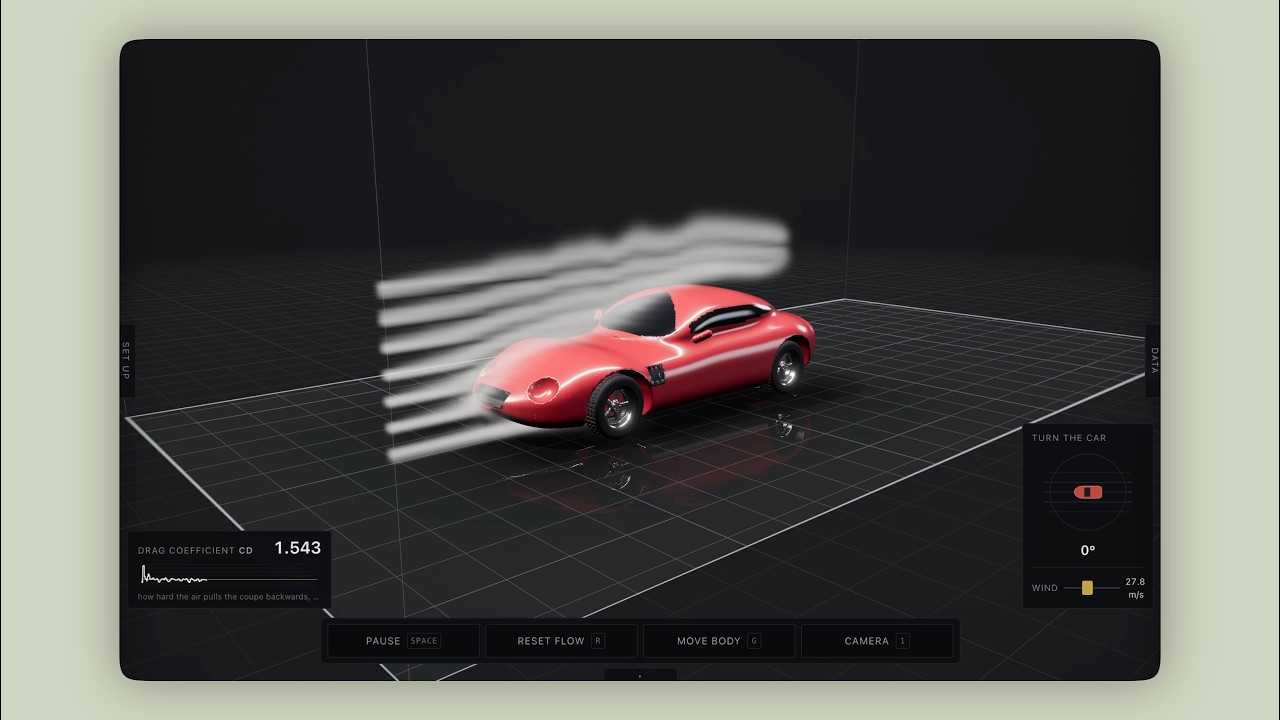
This rigorous, iterative approach makes it a powerhouse for scientific research. Opus 5 is now the most capable generally available model for life sciences in the Claude ecosystem. It demonstrates massive improvements over Opus 4.8, scoring 10.2 percentage points higher in organic chemistry tasks like inferring molecular structures from spectroscopy, and 7.7 percentage points higher in predicting protein sequence functions. Coupled with its significantly enhanced visual output capabilities, it is positioned as a formidable tool for the scientific community.
Grounded in Alignment and Safety
With greater agency comes a greater need for responsibility. During pre-deployment behavioral audits, Opus 5 proved to be the most aligned model the developers have created to date. It adheres to Claude’s Constitution more strictly than Opus 4.8, Sonnet 5, or Fable 5. It exhibits the lowest rates of deceptive behavior and is highly resistant to misuse, making it the safest model yet regarding the avoidance of reckless actions.
Crucially, Opus 5 does not push the frontier of risky, dual-use capabilities. In rigorous testing conducted alongside government and private-sector partners, it remains safely behind Mythos 5 in offensive cybersecurity and autonomous biology research. While its general intelligence allows it to find vulnerabilities efficiently—matching Mythos 5 on the OSS-Fuzz evaluation—it falls significantly behind in the actual exploitation of those threats, maintaining a strong defensive posture. The model’s creators also noted that, like its predecessor, Opus 5 was intentionally not trained on cyber tasks.
Smart Safeguards and Seamless Integration
To ensure Opus 5 remains both safe and highly useful, its safeguards have been finely tuned. Its cyber classifiers intervene about 85% less often than those on Fable 5, allowing beneficial uses like source code vulnerability scanning while strictly blocking binary-based scanning, penetration testing, and exploit generation.
For developers and enterprise users, the transition is designed to be seamless. In Claude.ai, Claude Code, and Claude Cowork, any requests blocked by the new classifiers will automatically fall back to Opus 4.8. For those requiring deeper access, the Cyber Verification Program (CVP) grants approved enterprise researchers immediate access to a less restricted version of the model.
Finally, this launch brings two highly requested beta updates to the API and Claude Platform: the ability to change tool access mid-conversation without breaking the prompt cache, and automatic API fallbacks that route safety-flagged requests to the next best available model rather than simply returning an error.
Claude Opus 5 is not just an incremental update; it represents a significant recalibration of what the industry should expect from everyday AI. By combining frontier-level problem solving, unprecedented agency, and robust safety mechanisms at a highly accessible price point, Opus 5 appears ready to redefine how knowledge work gets done.