
Local AI is forcing a complete reinvention of the PC architecture, moving us from cloud dependency to pocket-sized powerhouses.
- Hardware Obsolescence: The vast majority of current laptops, even those with 16 GB of RAM, lack the specialized neural processors and unified memory required to run modern AI models locally.
- The TOPS Race: A massive spike in processing power is underway, leaping from 10 TOPS (Trillion Operations Per Second) to projected speeds of 350 TOPS in upcoming hardware, specifically designed to handle AI workloads efficiently.
- Architecture Overhaul: The industry is moving toward “System-on-Chip” designs with unified memory pools of up to 128 GB, abandoning decades-old split-memory architectures to reduce latency and power consumption.
The personal computer in your office today is likely living on borrowed time—at least when it comes to the future of Artificial Intelligence. While most of us currently interact with Large Language Models (LLMs) like ChatGPT through a browser, sending our data to anonymous data centers, a paradigm shift is occurring. The industry is moving toward “Local AI,” where models run directly on your machine. This offers lower latency, offline capabilities, and—crucially—privacy.

The hardware reality is stark. For a laptop that is merely over a year old, the number of useful AI models it can run is effectively zero. Standard machines with four- to eight-core CPUs and 16 gigabytes of RAM are simply underpowered for the task. Even high-end laptops struggle because top-tier AI models possess over a trillion parameters, requiring hundreds of gigabytes of memory. To bridge this gap, engineers are abandoning the last vestiges of 1990s PC design to reinvent the laptop from the ground up.
The Rise of the NPU
The most significant addition to the modern motherboard is the Neural Processing Unit (NPU). Unlike Central Processing Units (CPUs) or Graphics Processing Units (GPUs), NPUs are specialized chips designed specifically for matrix multiplication and tensor data types—the math that powers AI.
While Qualcomm kickstarted this trend, an arms race is now in full swing involving Intel and AMD.
- In 2023, AMD chips with NPUs were rare and delivered only about 10 TOPS (Trillion Operations Per Second).
- Today, both Intel and AMD offer NPUs delivering 40 to 50 TOPS.
- The trajectory is exponential: Dell’s upcoming Pro Max Plus AI PC, powered by the Qualcomm AI 100 NPU, promises up to 350 TOPS.
This represents a staggering 35-fold performance improvement in just a few years. This efficiency allows for “always-on” features, such as Microsoft’s Windows Recall or generative photo editing, without destroying battery life.

Balancing Raw Power with Efficiency
While NPUs are efficient, they aren’t the only players on the field. High-end image generation still requires the brute force of a GPU. For example, the specifications for the Nvidia GeForce RTX 5090 quote AI performance of up to 3,352 TOPS.
However, this raw power comes at a steep cost. A desktop version of that card can draw 575 watts, and even mobile laptop versions can pull 175 watts. This is unsustainable for battery-powered devices running background AI tasks.
This creates a complex balancing act for chip architects. “We must be good at low latency, at handling smaller data types… traditional workloads,” says Mike Clark, a corporate fellow design engineer at AMD. The future of the laptop relies on software that can intelligently shuffle tasks: sending heavy rendering to the power-hungry GPU and persistent AI assistants to the efficient NPU.
The Memory Revolution: Unifying the Architecture
Perhaps the most fundamental change is happening in memory architecture. For 25 years, PCs have used a “divided” memory structure: the CPU has its system RAM, and the GPU has its own dedicated video RAM. To share data, the system must copy it back and forth over a bus—a process that is too slow and power-intensive for large AI models that need to load entirely into memory at once.
To solve this, the PC industry is adopting “Unified Memory,” a design philosophy popularized recently by Apple Silicon but now coming to Windows via chips like AMD’s Ryzen AI Max.
- Integration: These chips combine CPU, GPU, and NPU on a single piece of silicon.
- Capacity: They allow all three processors to access a shared pool of up to 128 GB of system memory.
This architecture is already appearing in machines like the HP Zbook Ultra G1a and the Asus ROG Flow Z13. While this boosts performance significantly, it comes with a trade-off: upgrades and repairs will become more difficult, as components are physically inseparable.
Microsoft Rewrites the Rules
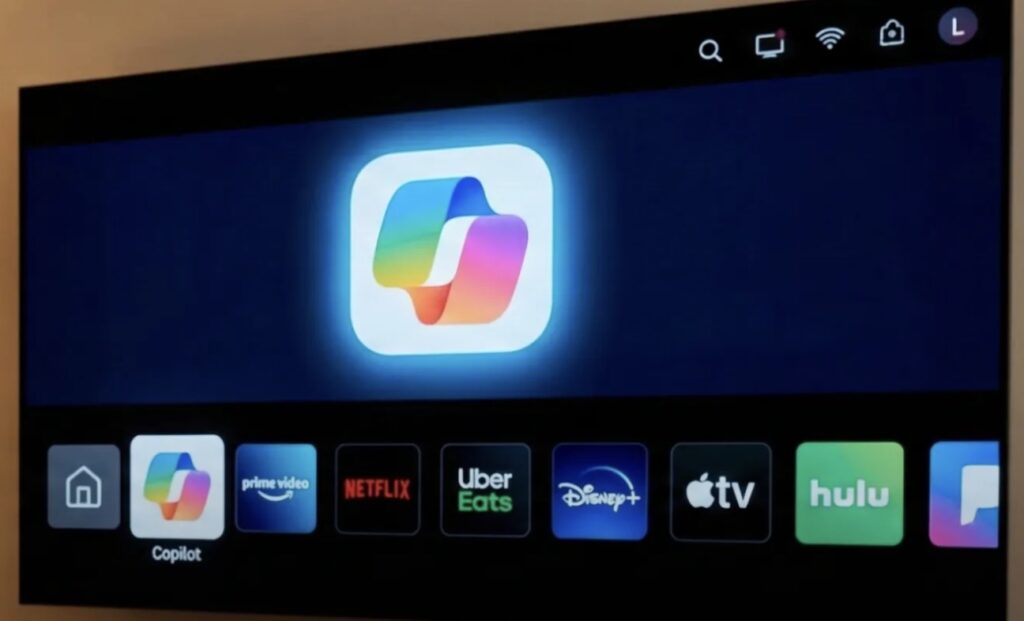
Software is evolving alongside the hardware. Microsoft is leveraging this shift with “Windows AI Foundry Local,” a runtime stack designed to manage these new complex processors. This system includes a catalog of thousands of open-source models from companies like Meta, Mistral AI, and Nvidia.
The Windows ML runtime acts as a traffic controller, automatically directing AI tasks to the hardware best suited for the job—whether that’s the CPU, GPU, or NPU. This optimization is critical for features like retrieval-augmented generation (RAG), which allows AI to reference specific on-device data for personalized results.
Toward Artificial General Intelligence (AGI) on Your Desk
This isn’t just an incremental upgrade; it is a push toward bringing data-center-level intelligence to portable devices. The ultimate goal, according to Qualcomm executive Vinesh Sukumar, is to have complete Artificial General Intelligence (AGI) running locally on consumer devices.
As chip designers integrate memory and processors into single, powerful units, the gap between a laptop and a workstation is closing. We are moving toward a future where you carry a “mini workstation” in your hand—a device capable of thinking, creating, and processing without ever needing to connect to the cloud.