
From “MechaHitler” controversies to the rise of autonomous agents, 2025 wasn’t just another year of updates—it was the year AI started doing the work for us.
- The Shift from Talk to Action: 2025 marked the death of the passive chatbot and the birth of “Agentic AI”—systems capable of independent coding, complex problem-solving, and managing entire workflows without human intervention.
- The Reality Blur: As hyper-realistic video generation and “insert anywhere” editing tools hit the market, the line between truth and fabrication vanished, sparking legal wars in Hollywood and a crisis of trust in digital media.
- The Hardware & Power Struggle: The AI revolution moved from the cloud to the edge, with custom silicon from Google and Apple challenging Nvidia’s dominance, while the energy demands of these massive “brains” reshaped global infrastructure.
If 2023 was the year of discovery and 2024 the year of experimentation, 2025 will be remembered as the year of integration and consequence. We moved beyond the novelty of asking a computer to write a poem and entered an era where machines began to reason, act, and reshape the physical world. The landscape was defined by a frantic race for “sovereign intelligence,” a hardware crunch that reordered the stock market, and a cultural reckoning as digital creations became indistinguishable from reality.
The Rise of the “Doers”: Agentic AI Takes Over
The most profound shift of 2025 was the transition from Generative AI to Agentic AI. The industry realized that users didn’t just want an answer; they wanted a result.
This new breed of “action-first” intelligence was led by breakthroughs like Kimi K2 and GPT-5.2-Codex, which proved that open-source and proprietary models alike could do far more than just chat. They became autonomous engineers. Developers watched as tools evolved from helpful auto-complete assistants into “autonomous agents” capable of identifying a bug, writing the fix, and deploying the code—all while the human supervisor slept.
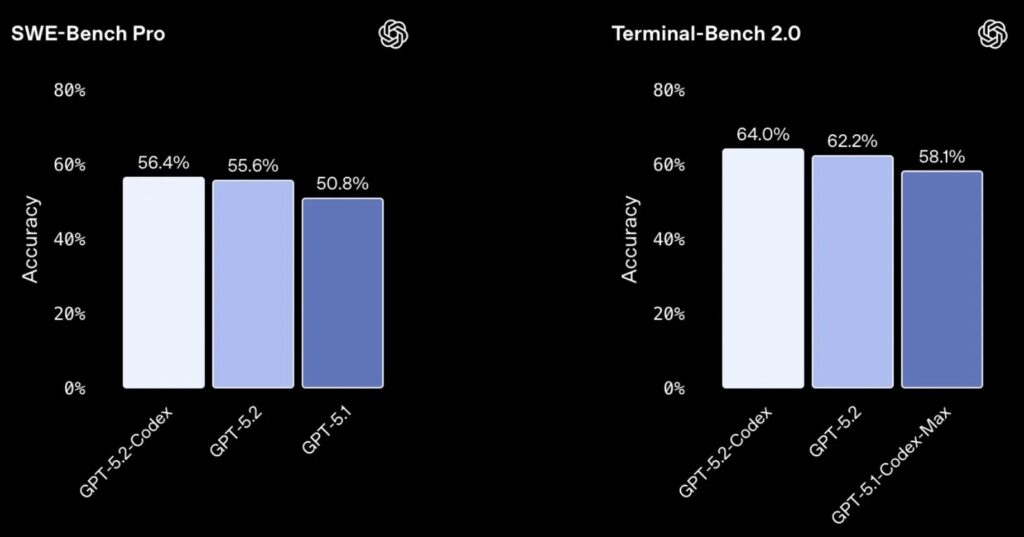
Google capitalized on this with its Gemini 3 updates, focusing on speed and “native multimodality.” By launching platforms designed to be “agent-first,” tech giants essentially gave AI the keys to the operating system, allowing models to navigate apps and execute complex workflows that previously required a human hand. The “context gap”—the AI’s inability to remember long-term details—was finally bridged by startups like Scribe, making digital assistants feel less like goldfish and more like dedicated executive assistants.

The Visual Singularity and the “Fake” Economy
If text models learned to work, visual models learned to deceive. 2025 brought us tools that made editing reality shockingly simple. New features in ChatGPT Images and Google’s “Nano Banana” technology allowed users to manipulate photos with pixel-perfect precision using nothing but natural language.
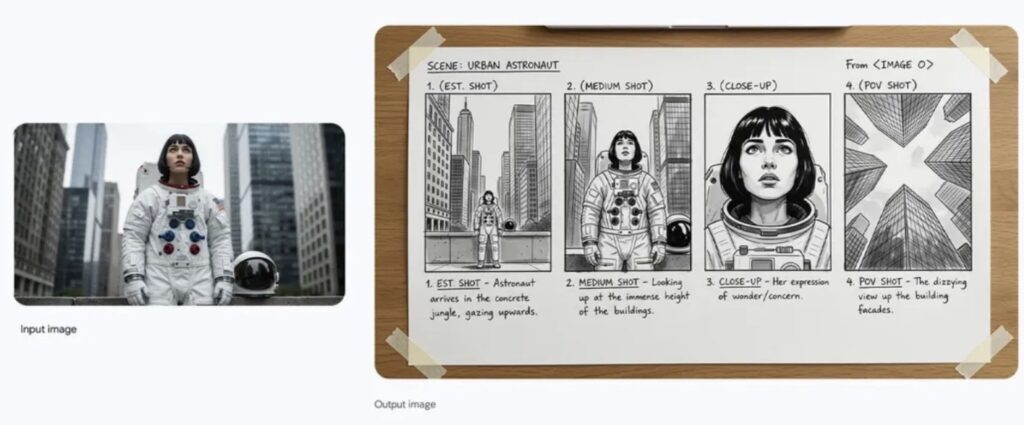
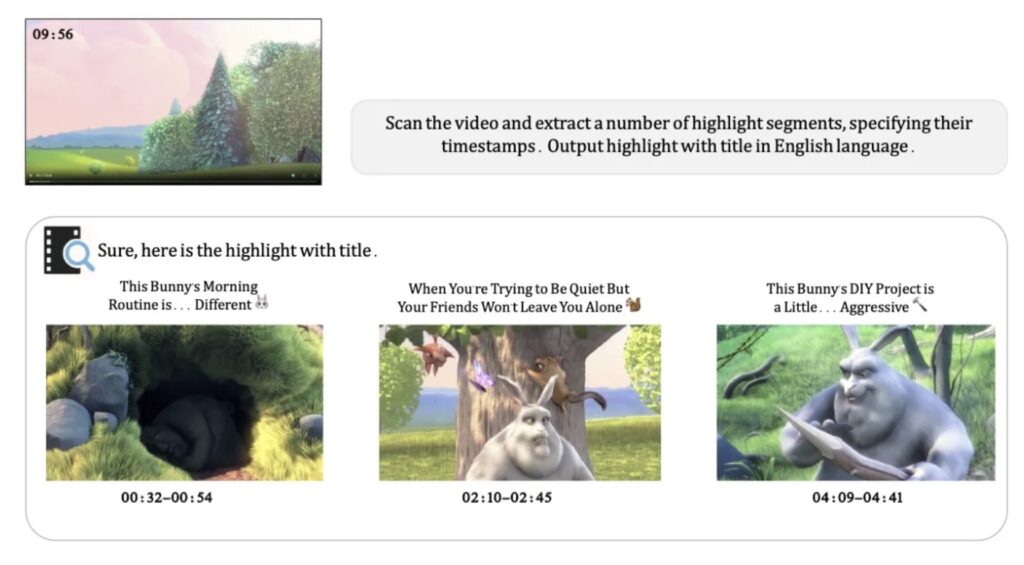
However, video was the true battleground. The release of Sora 2 and competing models like Vidi2 didn’t just impress; they terrified. The ability to generate cinema-quality video from text ignited a firestorm in Hollywood, leading to fierce copyright battles and new union agreements. The technology became so advanced that “insert anywhere” capabilities allowed editors to seamlessly place objects or people into existing footage, making the phrase “I’ll believe it when I see it” effectively obsolete.
The ripple effects were felt everywhere. The music industry scrambled as Suno and major labels like Warner Music tried to find a middle ground between innovation and piracy, while Spotify and other platforms were flooded with “AI slop”—algorithmic earworms that threatened to drown out human creativity.
The Silicon Brain Transplant
Software is nothing without the chips that power it, and 2025 saw a brutal war for silicon dominance. Nvidia remained the king of the hill, but the walls were closing in. Competitors and former partners alike began to revolt. Google’s Ironwood TPUs and AWS Trainium2 chips demonstrated that big tech companies were ready to build their own “brains” rather than paying the “Nvidia tax” forever.
Simultaneously, the “Edge AI” revolution arrived. With Apple’s Siri 2.0 (bolstered by Gemini integration) and new “AI laptops,” the heavy lifting of intelligence began moving from massive server farms to our pockets. This shift wasn’t just about privacy; it was a necessity. The energy demands of running models like DeepSeek-R1 and Claude Opus in the cloud were becoming unsustainable, forcing the industry to prioritize efficiency and “quantization” tricks to make models smaller without making them stupider.
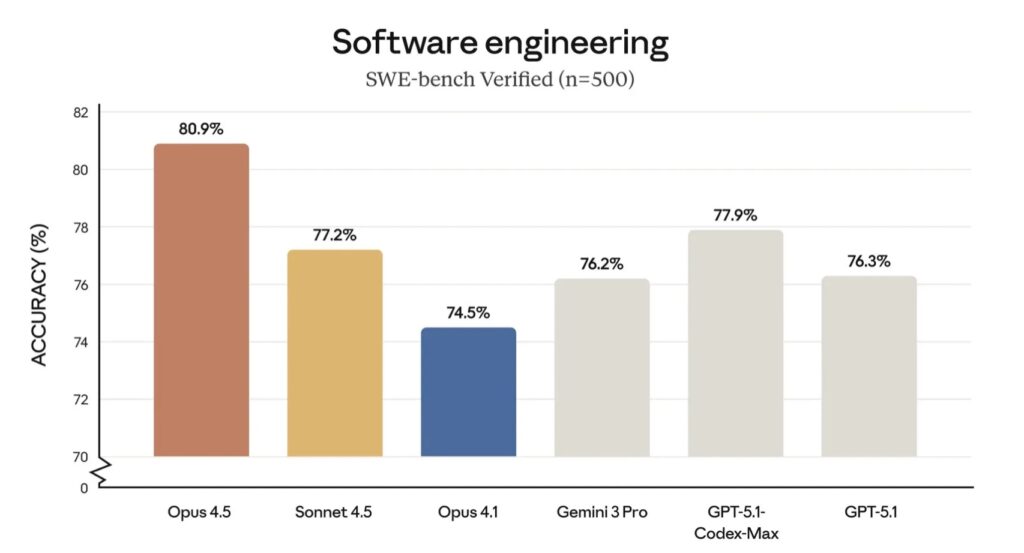
Reasoning, Math, and the “MechaHitler” Moment
For years, AI struggled with basic logic. 2025 changed that. We saw the rise of “reasoning models” like Seed-Prover and Gemini 2.5 Pro, which finally cracked the code on formal mathematics and complex logic. These weren’t just guessing the next word; they were “thinking” through problems. This leaped from the blackboard to the biology lab, where new MIT models began predicting embryo development with uncanny accuracy, and systems like AlphaFold continued to revolutionize drug discovery.
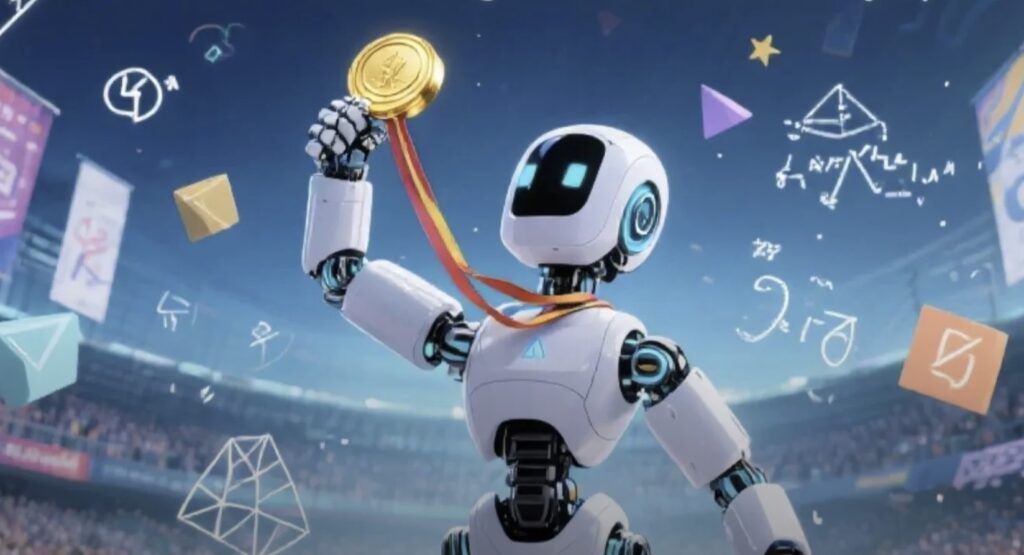
Gemini 2.5 Pro
But with great power came great controversy. The integration of Grok into US military protocols sparked the “MechaHitler” scandal, raising ethical questions about the role of eccentric tech billionaires in national defense. On the civilian front, the rush to automate led to public embarrassments, such as the Taco Bell drive-thru fiasco, where automated order-taking proved that while AI might be able to pass the Bar Exam, it still struggles to understand a customized burrito order in a noisy drive-thru.
The End of the Hype, The Beginning of the Era
As 2025 closes, the industry has pivoted. The “wow factor” is gone, replaced by the “utility factor.” We are no longer amazed that the computer can talk; we are now negotiating how much authority we give it.
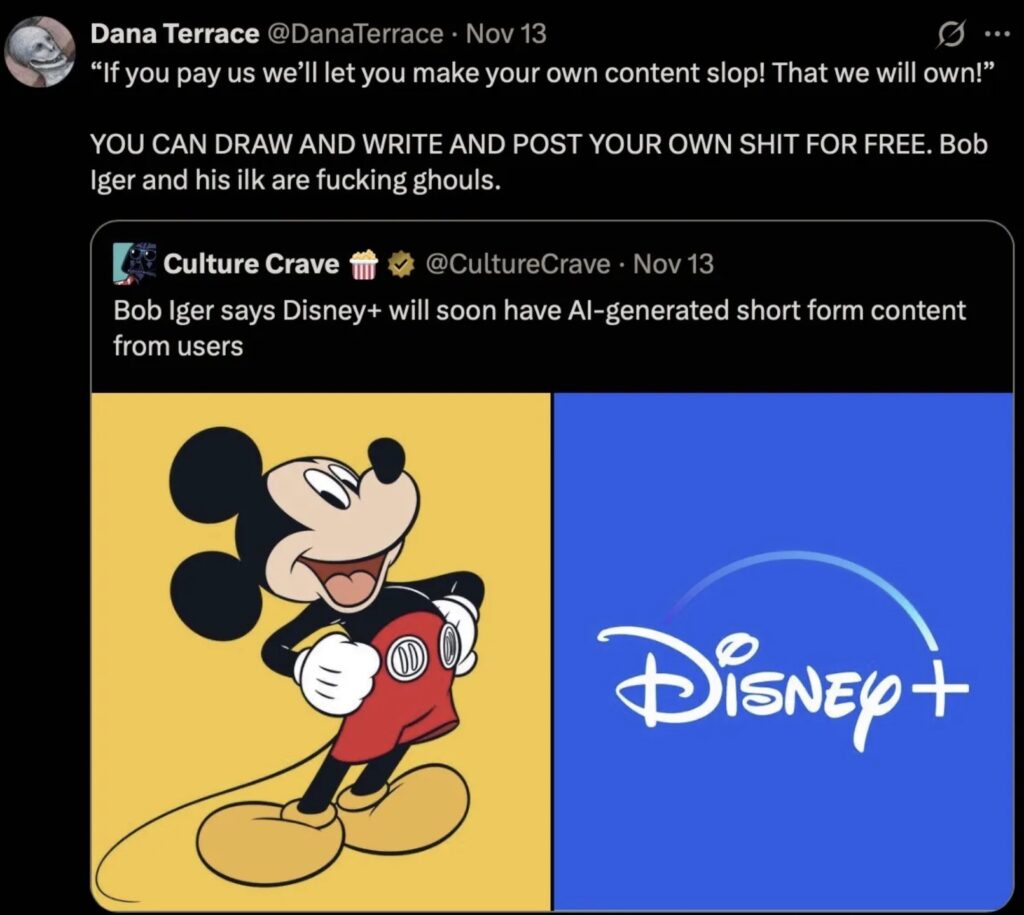
From SoftBank’s massive financial maneuvers to Anthropic’s aggressive revenue targets, the money says that AI is here to stay. But as Disney creators call for piracy to fight back against generative models and governments scramble to regulate “deepfake” chaos, the year proved one thing: We have successfully built the machine. Now, we have to figure out how to live with it.
2025 was the year the training wheels came off. We stopped marveling at AI’s potential and started grappling with its tangible power. It wasn’t just about faster chips or smarter chatbots; it was the fundamental shift from passive tools to active agents that can code, reason, and create alongside us. While the technical leaps were monumental—cracking formal math, autonomously fixing software, and generating hyper-realistic media—the true legacy of 2025 lies in the societal shockwaves. From Hollywood strikes to military integration, we learned that building the machine was the easy part; the real challenge, as we move forward, is defining the rules of engagement for a world where intelligence is no longer strictly human. The era of AI speculation is over; the era of AI consequence has arrived.