
Despite a staggering $700 billion fortune, Elon Musk demands a jaw-dropping payout from OpenAI and Microsoft in a legal battle that transcends mere money.
- A Historic Demand: Expert analysis claims Elon Musk is owed between $79 billion and $134 billion in damages, citing wrongful gains by OpenAI and Microsoft.
- The “Seed” Argument: The lawsuit argues Musk’s initial $38 million donation and early expertise entitle him to a venture-capital-style return of up to 3,500 times his investment.
- Principle over Profit: With Musk already worth $500 billion more than the next richest person, opponents view the suit as a strategic “pattern of harassment” rather than a financial necessity.
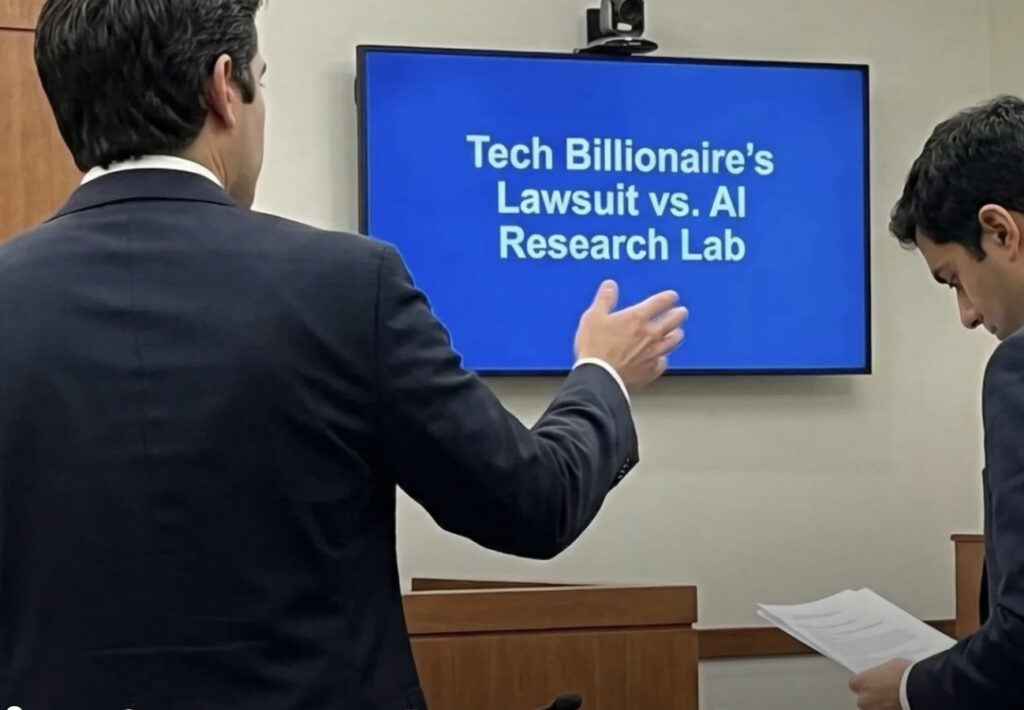
The legal war between Elon Musk and the creators of ChatGPT has escalated into astronomical figures. According to new court filings, Musk is seeking damages ranging from $79 billion to a staggering $134 billion from OpenAI and its primary backer, Microsoft. The claim, rooted in the assertion that the AI giant defrauded Musk by abandoning its original nonprofit mission, relies on the testimony of financial economist C. Paul Wazzan. A seasoned expert witness who has been deposed nearly 100 times, Wazzan’s calculations suggest that Musk is entitled to a massive slice of OpenAI’s current $500 billion valuation.
The Mathematics of a 3,500-Fold Return
The logic behind the damages is a complex mix of venture capital math and intellectual property valuation. Wazzan’s analysis posits that Musk should be compensated not as a charitable donor, but as an early startup investor whose contributions were pivotal to the company’s survival and success. The breakdown of the demand is specific: Wazzan calculates “wrongful gains” of $65.5 billion to $109.4 billion for OpenAI, and an additional $13.3 billion to $25.1 billion for Microsoft, which currently holds a 27% stake in the AI firm.
This valuation is based on Musk’s initial seed donation of $38 million when he co-founded the startup in 2015, combined with the “technical know-how and business contributions” he provided to the early team. If the court were to award the upper end of these damages, it would represent a 3,500-fold return on Musk’s capital—a figure his legal team argues is consistent with returns for early investors in unicorns that achieve “many orders of magnitude greater” success than their initial funding suggests.
The Wealth Context: A Drop in the Bucket?
While the dollar figures are immense, they are dwarfed by the sheer scale of Musk’s existing financial empire. Musk is currently the world’s richest person by a wide margin, with a personal fortune hovering around $700 billion. To put his dominance in perspective, his wealth exceeds that of Google co-founder Larry Page—the world’s second-richest person—by an incredible $500 billion. Furthermore, Tesla shareholders recently approved a historic pay package for Musk valued at $1 trillion.
Against this backdrop of limitless resources, even a $134 billion payout would be a relatively modest addition to his war chest. This disparity has led many observers to conclude that the litigation is less about restitution and more about an ideological feud. Musk maintains that OpenAI betrayed its founding promise to develop artificial intelligence for the benefit of humanity rather than profit, a narrative that clashes with OpenAI’s aggressive commercial expansion under Microsoft’s wing.
A Battle of Optics and Harassment
OpenAI has responded aggressively to the valuation claims, characterizing the lawsuit as part of an “ongoing pattern of harassment” rather than a legitimate grievance. Anticipating these headlines, the company reportedly sent a letter to investors and business partners warning them that Musk would make “deliberately outlandish, attention-grabbing claims” as the trial date approaches.
The legal showdown is set to begin in April in Oakland, California, just 15 miles from the San Francisco tech hub where OpenAI rose to power. As the date draws near, the courtroom is poised to become the stage for a high-stakes debate not just about billions of dollars, but about the history and future control of artificial intelligence.