
Jensen Huang reveals the nerve-wracking story of how a non-profit startup named OpenAI became the first customer for a supercomputer nobody else wanted.
- Zero Interest: After spending billions on R&D to build the $300,000 DGX-1 supercomputer, NVIDIA CEO Jensen Huang faced a terrifying reality: nobody wanted to buy it, except for Elon Musk.
- The “Non-Profit” Scare: When Musk requested the first unit for his new venture, Huang felt the “blood drain from his face” upon learning it was a non-profit, fearing they couldn’t pay for the expensive hardware.
- The Delivery that Changed History: In 2016, Huang personally delivered the first supercomputer to a cramped office in San Francisco, handing the keys of the future to a small team that would eventually become OpenAI.
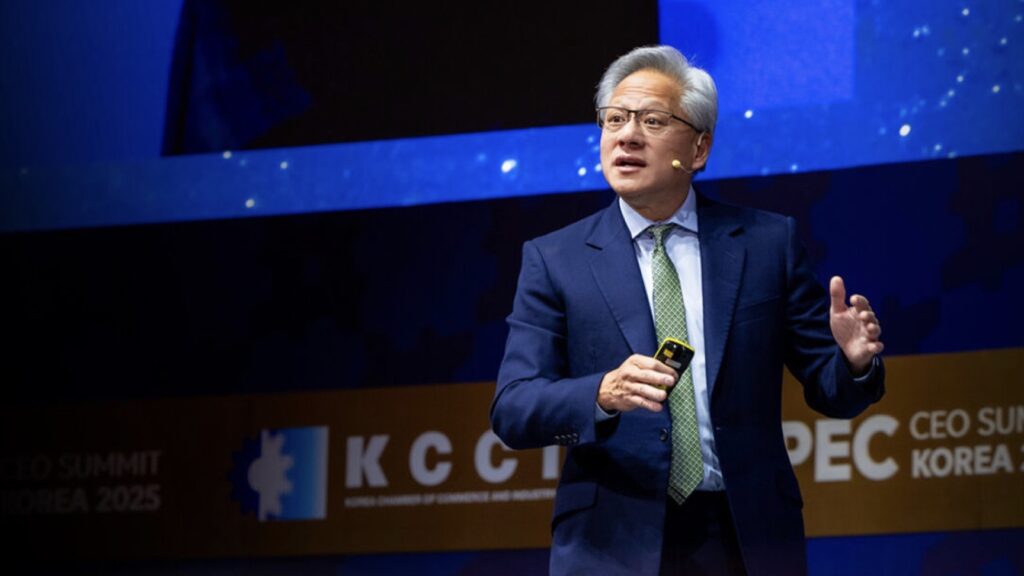
In the high-stakes world of Silicon Valley, timing is everything. Today, NVIDIA stands as the titan of the artificial intelligence revolution, a company whose chips power the world’s most advanced systems. However, in a recent appearance on the Joe Rogan Experience, NVIDIA CEO Jensen Huang revealed that the company’s path to AI dominance was paved with near-misses, anxiety, and a crucial intervention by Elon Musk when nobody else was interested.
The Supercomputer Nobody Wanted
The year was 2016. NVIDIA had just taken a massive financial risk, pouring approximately $2 billion into research and development to create the DGX-1, a specialized supercomputer designed for deep learning. The machine was a beast, costing $300,000 per unit, but it was a solution looking for a problem.
“When I announced this thing, nobody in the world wanted it,” Huang confessed to Rogan. “I had no purchase orders—not one. Nobody wanted to buy it. Nobody wanted to be part of it.”
For a CEO who admits he wakes up every morning with a fear of failure, the silence from the market was deafening. The tech industry hadn’t yet fully grasped the potential of large-scale AI training, and NVIDIA was left holding a very expensive bag.
The “Non-Profit” Panic
The turning point came during a fireside chat about the future of self-driving cars, where Huang was speaking alongside Elon Musk. Musk, who has a history of betting on fringe technologies, saw what others didn’t.
“He goes, ‘You know what? I have a company that could really use this,'” Huang recalled. The relief was instantaneous—until the details followed. Musk explained that his “company” was actually a non-profit organization dedicated to artificial intelligence.
“All the blood drained out of my face,” Huang said, describing the moment of panic. “I had just spent a few billion dollars building this thing. It cost $300,000. And the chances of a non-profit being able to pay for this thing were approximately zero.”
Despite the financial anxiety, Musk assured him, “It’s an AI company, and it’s a non-profit. And we could really use one of these supercomputers.” That company, as history would reveal, was OpenAI.
A Cramped Room in San Francisco
Trusting Musk’s vision, Huang decided to take the leap. He took the very first DGX-1 unit—originally intended for NVIDIA’s own internal use—boxed it up, and personally drove it to San Francisco in 2016.
The destination was a far cry from the sprawling tech campuses of today. “I walked up to the second floor, where they were all kind of crammed into a room smaller than this place here,” Huang told Rogan, gesturing to the podcast studio. Inside that small, nondescript room sat the founding team of OpenAI, ready to receive the hardware that would eventually train the models leading to ChatGPT.
The Art of “Suffering”
This story highlights a broader theme in Huang’s philosophy: the necessity of resilience and “suffering” in business. During the interview, Huang touched upon NVIDIA’s history of near-death experiences, including a time in the 90s when a failed contract with Sega almost bankrupt the company. He noted that the “torture” of uncertainty drives him more than the joy of success.
“I have a greater drive from not wanting to fail than the drive of wanting to succeed,” Huang admitted. This relentless paranoia—the feeling that the company is always “30 days from going out of business”—is precisely what allowed NVIDIA to bet the farm on AI years before it was profitable.
A Historic Bet
Looking back, that delivery in 2016 was one of the most consequential moments in tech history. If Musk hadn’t purchased that first supercomputer, or if Huang had refused to sell to a cash-strapped non-profit, the timeline of modern AI development might look drastically different.
As Huang noted with a laugh about OpenAI’s evolution, “It’s not really a non-profit anymore, though, is it?”
From a machine with zero customers to the engine behind a trillion-dollar industry, the story of the DGX-1 serves as a reminder that the biggest revolutions often start in cramped rooms with customers nobody else believes in.