
Top-Tier Intelligence at a Fraction of the Price
- – Unmatched Value: Delivers frontier-level intelligence approaching Claude Opus 4.8 at one-tenth the cost (just $0.045 per task).
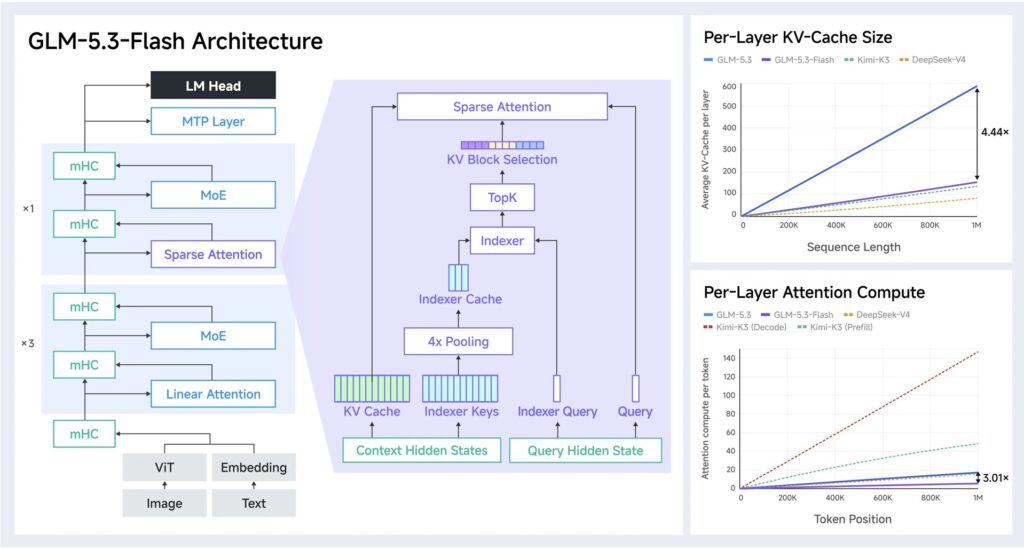
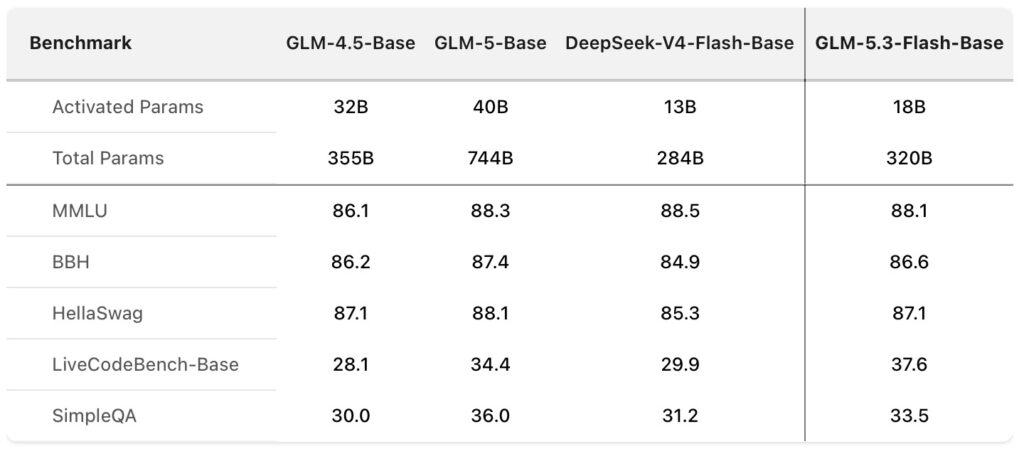
- – Advanced Architecture: Natively multimodal with a 1-million-token context window, utilizing 320B total and 18B active parameters.
- – Open and Scalable: Released under the MIT License and successfully served at massive scale entirely on domestic Chinese AI chips.
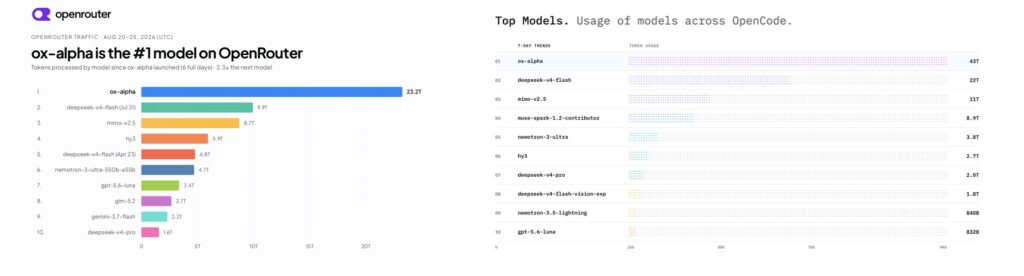
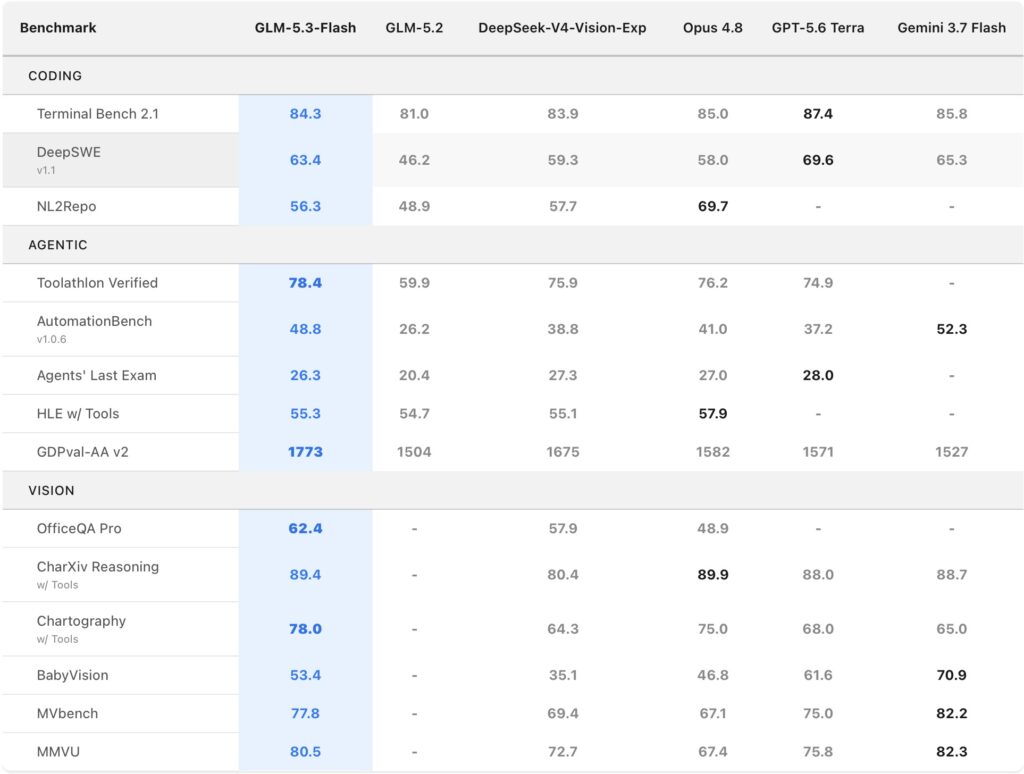
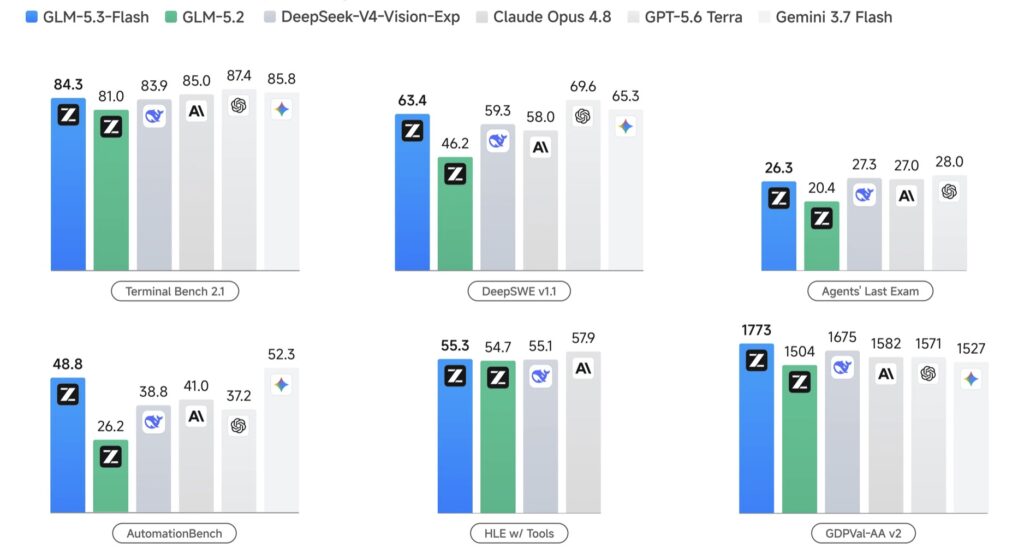
The artificial intelligence landscape often demands a steep trade-off between capability and cost, but GLM-5.3-Flash fundamentally rewrites this equation. Previously tested under the radar as the wildly popular model ox-alpha, this new release is the first natively multimodal system in the GLM-5 lineup. By activating only 18B of its 320B parameters, it decisively outperforms GLM-5.2 across coding and agentic benchmarks—such as scoring 63.4 against 46.2 on DeepSWE v1.1—while rivaling top-tier models for a fraction of the computing price.
Architectural Leaps and Native Visual Coding
This leap in efficiency stems from a novel hybrid architecture that fuses sparse and linear attention, drastically reducing the serving costs for its massive 1M-token context window. Combined with Manifold-Constrained Hyper-Connections (mHC), IndexPool key compression, and a robust 30T-token multimodal training corpus, GLM-5.3-Flash achieves unprecedented scaling efficiency.
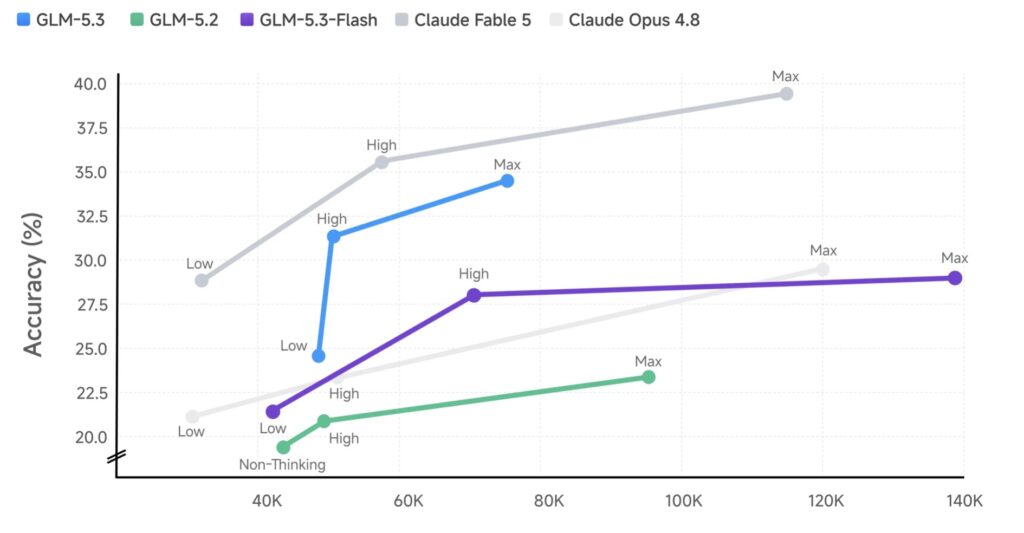
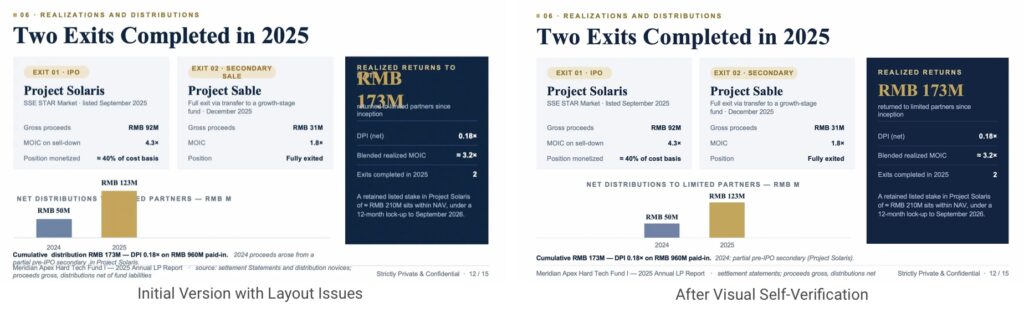
Furthermore, it expands the boundaries of AI capabilities through native visual intelligence. Rather than merely processing static images, the model engages in complex self-visual judgment. It can interact with frontend interfaces, playtest environments, and verify real user flows. In professional workspaces, this means the model can jointly reason over documents, dashboards, and spreadsheets without needing users to explicitly translate their visual screens into text.
Scalable Infrastructure and Availability
Remarkably, GLM-5.3-Flash is served at cluster scale exclusively on Chinese AI chips. Overcoming hardware memory and bandwidth limits required aggressive optimization, including an Encode-Prefill-Decode (EPD) disaggregated architecture and W8A8 quantization. In a fascinating feedback loop, a GLM-5.3 infrastructure agent actually helped engineers optimize the very inference stack running it, achieving a 3x end-to-end performance boost to rival mainstream NVIDIA GPUs.
The model weights are now publicly available on HuggingFace under an MIT License, with local deployment support for SGLang, vLLM, and TokenSpeed. Alternatively, users can access it via the GLM Coding Plan with triple the usage quota, or utilize its multimodal strengths directly through ZCode for automated browser and desktop tasks.